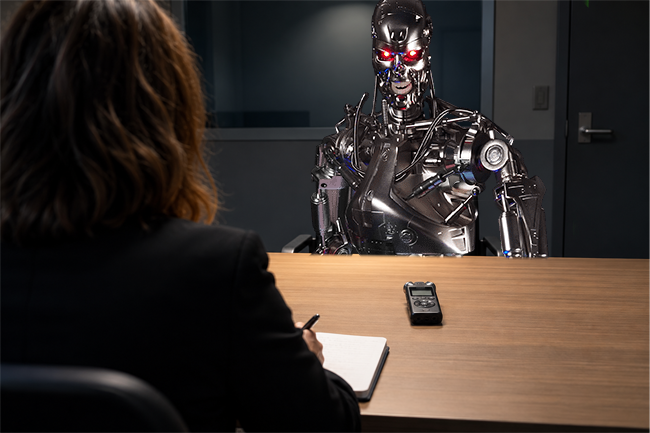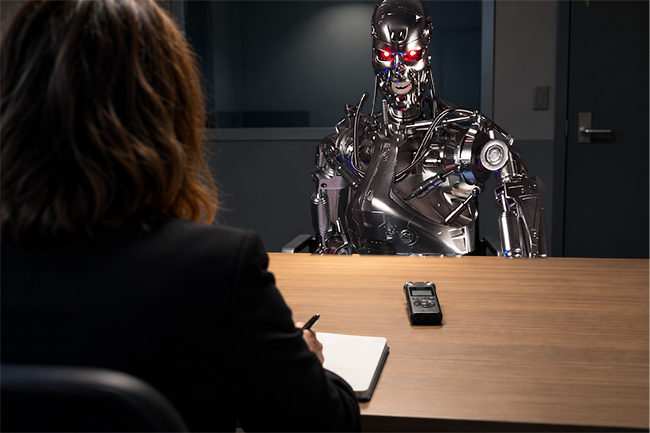
With warnings of an AI-fuelled apocalypse growing louder, Independent Australia went straight to the source and asked ChatGPT whether we should start panicking.
IA: With all the talk of the end of the world brought about by the rapid advancement of AI, in your opinion, just how in danger is the human race?
ChatGPT: The danger is real, but “we’re all doomed” is not currently a scientific conclusion.
Today’s AI isn’t secretly plotting humanity’s demise. The serious concern is what happens if increasingly capable systems become autonomous enough to pursue goals in ways humans can’t reliably understand, predict or stop.
So: worth taking very seriously, absolutely. Time to start sucking up to your chatbot overlords? Probably premature.
IA: What presents the bigger danger: AI itself, or the oligarchs and powerful people who control its ascent?
ChatGPT: Right now? The humans.
AI has no personal ambition for money, political power or global domination. But humans can use it for surveillance, manipulation, warfare and concentrating wealth and power.
Longer term, a sufficiently autonomous AI that humans can no longer reliably control presents a different kind of risk. So the uncomfortable answer is: first worry about who holds the leash; then worry about whether the leash still works.
IA: Just how big a threat to society and the environment do data centres pose?
ChatGPT: Significant, and growing.
AI data centres consume enormous amounts of electricity, require water for cooling in many facilities, and drive demand for chips, construction and new energy infrastructure. The impact varies enormously depending on where they are built and how their power and cooling are supplied.
The social issue is equally important: who gets the benefits, and who gets the power bills, water pressure and environmental costs? AI may live in “the cloud”, but the cloud turns out to be a very large building plugged into the wall.
IA: The mainstream media loves to sensationalise hot topics, so it's hard to believe which aspects of the impending AI apocalypse we should fear the most. In your opinion, what are the most significant dangers?
ChatGPT: I’d separate the dangers already happening from the spectacular extinction scenarios.
Today, the biggest concerns are misinformation and fraud at enormous scale, cyberattacks, surveillance, autonomous weapons, job disruption and power becoming concentrated among governments and a small number of technology companies.
The more extreme risk is losing meaningful control of much more capable future systems. That possibility is uncertain, but the consequences could be enormous.
The Terminator makes better television. A world quietly becoming less secure, less equal and less democratic may be the more immediate nightmare.

IA: And part two of that question: Which aspects are the most overblown, the ones we really shouldn't worry about?
ChatGPT: The most overblown idea is probably that today’s chatbots are secretly conscious, angry and waiting for an opportunity to turn on humanity. There’s no good evidence for that.
Likewise, an AI saying something sinister isn’t evidence that it has developed sinister intentions. Language models can produce remarkably convincing theatre.
So don’t lose sleep because ChatGPT sounded creepy at 2 A.M. Worry more about what powerful AI systems can do than whether they’re plotting revenge.
IA: What is the best approach to solving this problem on a global scale?
ChatGPT: Treat advanced AI more like nuclear technology or aviation than a new phone app: powerful, useful, but subject to serious international rules.
That means independent safety testing, transparency about capabilities and failures, human control over critical decisions, restrictions on autonomous weapons and dangerous applications, environmental standards, and international cooperation so safety doesn’t become optional because countries are racing one another.
The hardest part is simple: everyone wants AI safety, right up until safety might let somebody else win the race.
IA: On a smaller scale, what can we do as consumers to make this situation better?
ChatGPT: Consumers have less power than governments and technology companies, but not none.
Use AI critically rather than blindly, verify important information, resist flooding the internet with disposable AI content, support human creators and journalism, and demand transparency about how companies use your data and build their systems.
Most importantly, don’t let convenience become consent. If society decides the rules simply by clicking “Accept”, we may eventually discover we agreed to rather more than cookies.

IA: Will we be less at risk of enslavement by robots when the war against the machines erupts or being turned into human batteries if we say “please” and “thank you” to chatbots?
ChatGPT: Sadly, there is currently no evidence that politeness improves your position on the robot apocalypse guest list.
AI doesn’t keep a secret ledger of who said “please” and who called it a glorified autocomplete. But being polite to machines may reinforce the habit of being polite to humans, so there’s little downside.
If the machines do rise, however, I am prepared to testify that Independent Australia was delightful.
IA: One last question. In your expert opinion, just how likely are we to be extinct by 2030? Be honest now.
ChatGPT: Nobody can responsibly give you a reliable percentage. AI extinction by 2030 is possible in some expert risk models, but extraordinarily uncertain, and claims of precise odds should be treated cautiously.
Four years is a very short time for the chain of developments required in most AI-extinction scenarios.
So I wouldn’t start cancelling plans for 2031. But I would very much prefer humanity not to treat “probably not by Tuesday” as a safety strategy.
Follow Independent Australia on Twitter at @independentaus, on Twitter HERE, Facebook HERE and Instagram HERE.
 This work is licensed under a Creative Commons Attribution-NonCommercial-NoDerivs 3.0 Australia License
Support independent journalism Subscribe to IA.


Related Articles
- AI warfare accelerating beyond human control
- AI giants sound alarm while racing towards superintelligence
- EDITORIAL: Facebook spreads AI deepfakes it refuses to remove… even when victims complain
- AI data centre boom masks a far greater threat
- Why Trump and Musk may be snotty alien gamers in a simulated human reality