Watching what both sides of the algorithm actually look like — and why press freedom is now under attack from more than one direction, writes Wayne Hawkins.
Earlier this month I argued Australians should be able to switch off the algorithms curating their feeds. I cited research showing boys are fed misogynistic content within roughly 25 minutes of setting up a social media account, and cited the Fix Our Feeds campaign and a cross-bench parliamentary statement backing an algorithm opt-out.
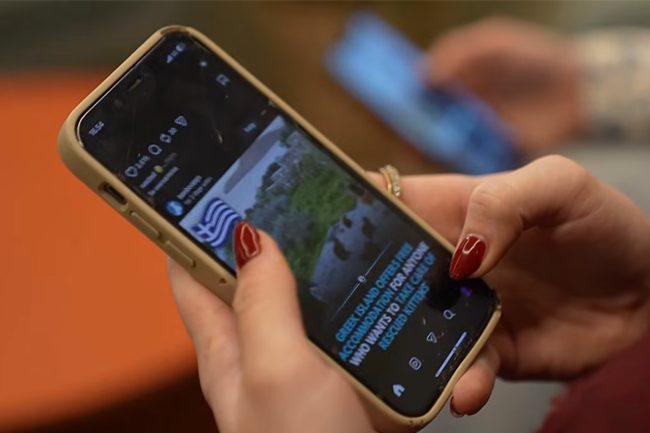
Since then I've spent weeks watching my own feed, and other people's, deliberately, for work. What I found wasn't a theory anymore. It was a pattern I could point to, post by post.
The same event, two different countries
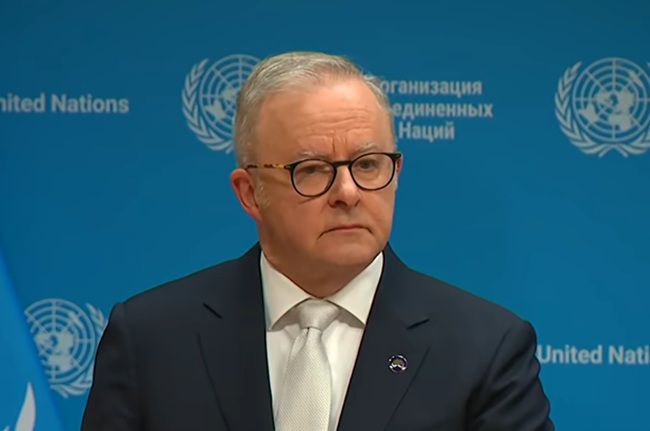
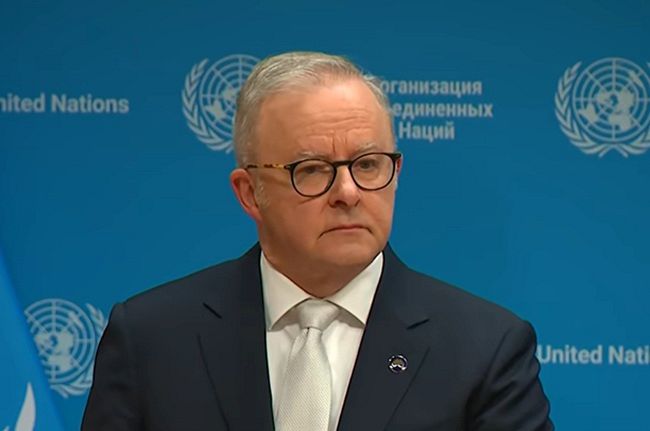
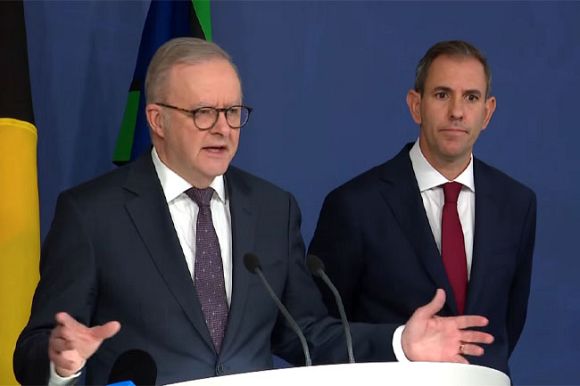
Anthony Albanese travelled to New York this month for the UN General Assembly, where Australia formally launched its bid for a two-year, non-permanent seat on the UN Security Council for 2029–30.
While there, he was also due to receive the Atlantic Council's Global Citizen Award, a U.S. think tank's honour, for his government's work strengthening security ties in the Pacific.
A reporter, The Nightly's Latika Bourke, put this to him:
“Prime Minister, here in New York on Wednesday night, you will receive an award for being a global citizen. Don't you feel like a bit of a fraud accepting this award when, at home, you screwed up the response to the worst massacre since Port Arthur? In the polls, you are taking Labor to one point shy of Julia Gillard when you rolled her, and your net negatives are worse than Scott Morrison.”
Albanese's entire reply was one word:
“No.”
That's not a question. It's an accusation with a question mark stapled to the end.
There's no version of “no” available to him that doesn't sound defensive, because the premise was never up for debate — it was delivered as settled fact.
Whatever you think of the government's response to the Bondi Beach shooting, and there's plenty of room to press him on it, “How do you answer critics who say your government mishandled the aftermath?” gets you the same substance on the record without the personal jab.
The reporter chose the version built to wound rather than to inform. That matters regardless of who's sitting in the chair, because the office deserves that baseline of respect even when the person holding it doesn't.
Pauline Hanson later praised the question, posting that while Albanese 'collects a trophy from elites on a world stage, Australians' lives are only getting worse.'
For context, DemosAU's June 2026 polling found cost-of-living remains the dominant political issue for Australians, cited by 47% of respondents as a top issue, well ahead of housing affordability (17%) and immigration (12%).
What happened online after the New York exchange showed exactly what a question like that invites. Comments never touched the seat itself, what it costs, what it's for, whether Australia benefits. They asked only who it really serves.
In one 202-comment thread on the exchange, the single most-rewarded comment wasn't a policy critique. It was an image calling the Prime Minister a crude insult, at roughly ten times the engagement of any comment about gas or rent prices nearby, even though those cost-of-living concerns are the ones the polling says actually dominate.
That's the algorithm's incentive structure laid bare: contempt outperforms substance, regardless of whether the underlying grievance is legitimate.
Manufactured conflict, on demand
Some of what I found wasn't commentary at all. It was fabrication.
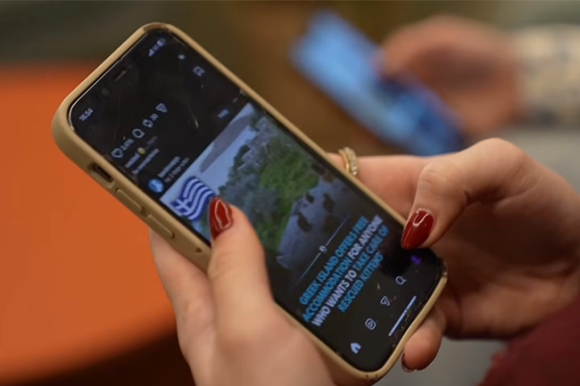
One page, branded around a children's cartoon with no plausible reason to post about religion, ran this:
'If a Muslim neighbour demands you remove your dog to respect Islam, what would you do?'
No such neighbour exists. No date, no location, no name. I've since seen the identical template with a Muslim diner objecting to someone else's bacon. Swap the object, keep the structure: an unreasonable demand, over something trivial, from a Muslim stranger, ending in “what would you do?”
Likes — 217; Comments — 463; Shares — only 13. That ratio is the tell.
This isn't content people pass on because it's true or useful. It's built to make strangers argue with each other in a box owned by whoever posted it, because arguing is what the algorithm pays for.
Another page ran what looked like an innocent civic question: whether Christian traditions should remain part of Australia's identity, framed with careful, balanced language.
The comments underneath answered a completely different, far more polarising question that the post never actually asked.
That's the wedge working as designed: phrase something mildly enough that it can't be fact-checked or removed, and let readers fill in the most divisive version themselves.
When it stops being fiction and starts being cruelty
Not everything circulating is invented. Some of it takes something true and stretches it into something it was never entitled to carry.
Nyadol Nyuon is a Melbourne lawyer and human rights advocate, born in the Itang refugee camp in Ethiopia in 1987 after her family fled the Second Sudanese Civil War.
She was separated from her mother as a small child, lived in the Kakuma refugee camp in Kenya, and arrived in Melbourne with her family in 2005, aged 18, with nothing.
Her father, Commander William Nyuon Bany, one of the founders of the Sudan People's Liberation Army, died in 1996 when she was a small child; she barely knew him.
None of that has stopped a recent wave of content presenting her, by name, as somehow implicated in his conduct decades later — one post I found used a racial slur historically used to dehumanise Black people to describe her, alongside claims designed to reframe her success as ingratitude rather than achievement.
The comments beneath it included an unsubstantiated accusation that her 'whole family are murderers.'
This isn't new to her. The eSafety Commissioner told a Senate estimates hearing in October 2020 that Nyuon and actress Magda Szubanski had both been targets of “coordinated right-wing extremist attacks,” describing a deliberate strategy to create “an avalanche of hate” against specific targets, usually women.
Nyuon has since deactivated her Twitter account over the abuse. What I found this month looks like a continuation of a five-year pattern, not a one-off pile-on.
To her credit, not everyone amplifying this story is hostile. I also found a creator with real reach reading out the original claim, reading Nyuon's own on-the-record response that it wasn't true, and then pointing out, fairly, that many making the accusation support governments and leaders responsible for real, present-day civilian deaths elsewhere in the world. That pushback exists.
But it, too, is just another clip, competing for the same three seconds of attention as the slur it's answering.
Two feeds, two realities
Here's what struck me hardest doing this: the people sharing the 'warlord's daughter' story almost certainly never see her rebuttal. The people sharing her rebuttal mostly never see the original claim in full, only a friendly account's summary of it.
Both walk away certain of something. Neither has seen what the other is actually responding to.
That's not an accident. An algorithm optimised for engagement doesn't need you to see the whole picture. It needs you to feel something fast, and it needs the person who disagrees with you to feel the opposite thing, with equal strength, from a completely different ten seconds of footage.
Two separate, internally consistent, mutually unaware realities, running in parallel, about the same country, at the same time. That's why so much of our politics now feels like two people describing different places. Neither side is stupid. Neither has been shown the other's evidence.
I try to look at both sides properly for this work: the original sources, the rebuttals, the people doing the debunking as well as the people doing the damage.
Most people don't have the time, and I don't think that's a character flaw. It's a business model working exactly as intended. You can't ask every Australian to individually develop journalist-grade media habits as the fix for a system built to make that effort not worth taking on a five-minute scroll before bed.
Press freedom is being attacked from more than one direction
There's a wider pattern sitting underneath all of this, and it isn't confined to social media or to one side of politics.
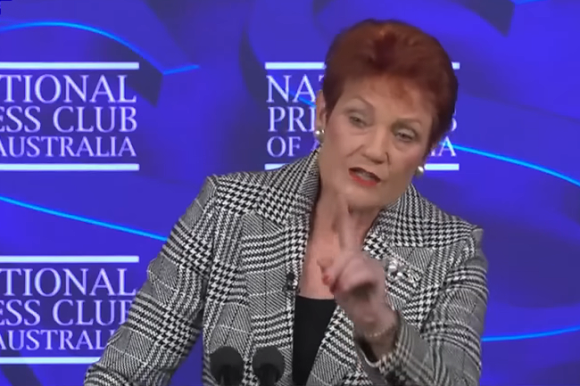
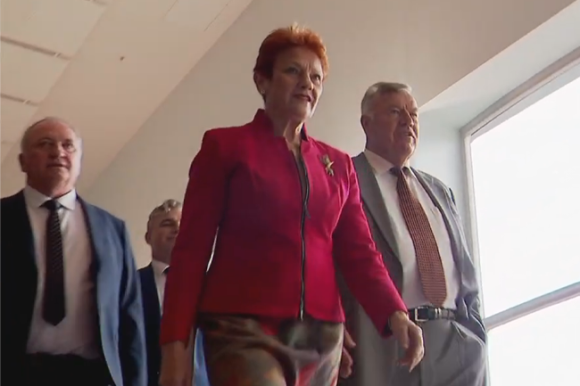
Pauline Hanson has repeatedly barred the ABC and Guardian Australia from her press conferences this year, at her Victorian campaign launch in August, at the Farrer by-election in May, and elsewhere, describing their coverage as “lies” and “spin.”
Her party director, James Ashby, was filmed personally ejecting ABC and Guardian journalists from a press conference.
Another One Nation official told a Guardian reporter to “shut up”; Hanson later called her a “nasty bitch.”
An academic review of the pattern in The Conversation called the media industry's collective response “supine,” a failure to defend a colleague simply because the target wasn't a popular one that day.
Days ago, Donald Trump banned CNN, MSNOW and Politico from the White House altogether, citing an accumulation of coverage he didn't like rather than any specific error, and had their permanent press passes confiscated.
What happened next is worth noticing. The shared television pool, chaired that week by Fox News, refused to cover Trump's events at all rather than replace CNN in the rotation: 'there will be no replacement pool put in place.'
Fox, CNN's direct competitor, said it stood in “strong solidarity” with CNN. NPR called it an unqualified First Amendment violation. Wire photographers withheld their images of the President in protest.
Whatever else you think of the American press, when one of their own was targeted, they closed ranks, competitors included.
In Australia, that solidarity has mostly been absent. One outlet gets banned, the others report it, and move on.
We can all do better
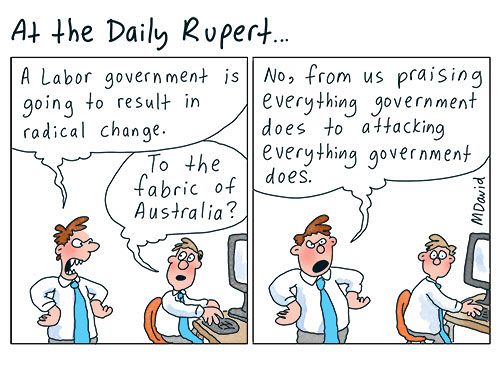
I don't think tough questions are the problem. Democracy needs journalists willing to ask leaders things they'd rather not answer, on both sides of politics, without fear or favour.
What I've watched this month convinces me the problem sits elsewhere: questions built to wound rather than inform; platforms that reward the cruellest ten seconds over the truest ones; politicians who respond to scrutiny by locking the door instead of answering it; and a press that will defend a colleague's access in Washington but not always in Canberra.
The Government's Digital Duty of Care exposure draft, released for consultation on 8 September, is a start, letting Australians choose between an algorithm-curated feed or one showing only accounts they follow. That won't fix any of the above on its own.
But it's one reform that doesn't require anyone to decide who's telling the truth.
What has to come alongside it is something no law can mandate: a media, on every side, willing to ask hard questions without contempt, and willing to stand up for each other's right to ask them at all, especially when the outlet under attack isn't one you'd naturally defend.
We all can do better. That includes the people writing the questions, not just the algorithms deciding who sees the answers.
Wayne Hawkins is the owner of Crisp N Sweet Bakery and Café in Claremont, Tasmania and an independent candidate for the Federal seat of Lyons.
 This work is licensed under a Creative Commons Attribution-NonCommercial-NoDerivs 3.0 Australia License
Support independent journalism Subscribe to IA.


Related Articles
- Media bamboozled by big claims miss the real story
- Two words: Case closed
- Media framing is shaping our opinions before we realise it
- From propaganda to profit: The hidden economy of media control
- The cold facts of convenient truths