Strong business investment is laying the foundations for higher productivity, stronger growth and a more resilient Australian economy, writes Stephen Koukoulas.
AS THE ECONOMY negotiates an economic slowdown, which is essential to drive the inflation rate down towards the Reserve Bank (RBA) target, there is a shining light in the make-up of economic growth — private sector business investment.
In the year to the March quarter 2026, business investment in real terms rose 10.5%, the strongest result in nearly five years and the third strongest annual growth rate since 2014.
The good news is that further rapid growth in business investment is expected into the next financial year, with firms reporting that their expected investment in FY2026-27 is 11.6% higher than in the same survey for the prior year.
If realised, this would represent the strongest two-year growth in business investment since 2014 and will provide key support to bottom-line economic growth over that timeframe.
This continuing strength in business investment is not just good for bottom-line GDP growth and maintaining a relatively low unemployment rate, but it will be a huge benefit for productivity. This is why the strength is so welcome.
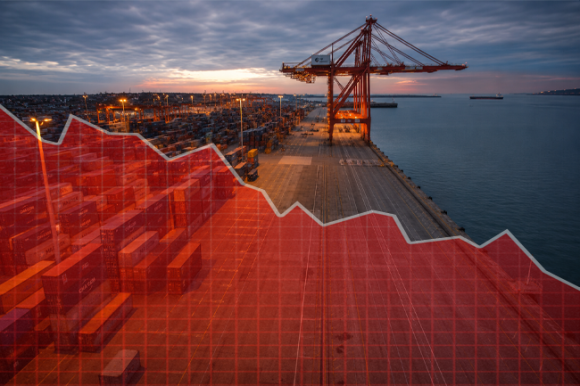
One key reason for Australia’s poor productivity performance in the past decade was the prior collapse in business investment. From the peak in 2013 to the low point in 2022, business investment fell from 18% of GDP to 11.5% of GDP.
Things were so grim that investment was only marginally higher than the low point in the early 1990s recession.
This lack of investment in new equipment, machinery, warehouses, hotels, AI and other technology held back productivity growth. In broad terms, businesses were not embracing the new technology and, therefore, were losing their competitive edge.
From the low point in 2022, business investment has already recovered to 13% of GDP and, based on the expectations survey of the business sector, it will inevitably rise further over the next two years.
The importance of business investment for productivity and the economy more broadly can be demonstrated in a simple illustration.
If, for example, ten workers were given a pick, a shovel, a wheelbarrow and a small dump truck and asked to mine iron ore, the output per person would be relatively low.
If, for the same ten workers, there was investment in several diggers, huge dump trucks and a rail network to port, the output of iron per person would increase massively. This would not be the result of the workers working any harder, but rather it would be the result of the investment in machinery and equipment making their jobs easier and, indeed, more productive.
It is a similar picture with other forms of investment. Using technology and the most up-to-date equipment will increase output per worker. Rising productivity, in other words.
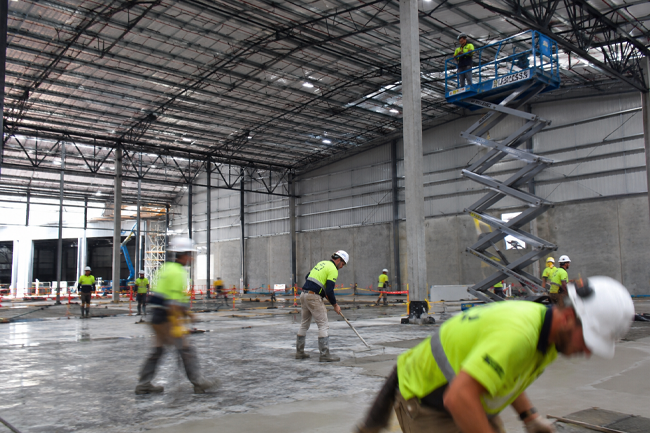
The current unfolding boom in business investment is concentrated in data centres, but is also being seen in the construction of new warehouses, accommodation at education facilities.
As these investments come online and start to deliver additional output, the rate of economic growth will lift, with a payoff inevitable in a pick-up in productivity.
It will take some time for these trends to evolve. The current investment needs to be completed and put into action. But with a skilled workforce, many tens of billions of dollars flooding into what will be hugely productive assets, the outlook for a long overdue recovery in productivity seems certain.
This is a shining light in an otherwise uncertain economic climate with high interest rates, the oil price shock, falling housing prices and particularly weak consumer sentiment all negative influences.
Stephen Koukoulas is one of Australia’s most respected economists, a past chief economist of Citibank and senior economic advisor to an Australian Prime Minister. You can follow Stephen on Twitter/X @TheKouk and on Bluesky @thekouk.bsky.social.
 This work is licensed under a Creative Commons Attribution-NonCommercial-NoDerivs 3.0 Australia License
Support independent journalism Subscribe to IA.


Related Articles
- Investors applaud resilient economy while newsrooms refuse to report it
- Australia's export slump quietly dragging down the economy
- Economists and newsrooms collaborate to lie about Australia’s economy
- Australia’s newsrooms continue to suppress vital information
- Flailing newsrooms flog fears of a fictional recession