They don’t make politicians like George Georges and Tom Uren anymore, writes Dr Norm Sanders.
THESE DAYS IT IS RARE to find politicians who have real passion for a cause and the courage to act on it. The Labor and Liberal parties are in a race for the centre — the Laborials. One Nation is a mini MAGA. The Greens abandoned the environment to become mere political opportunists.
It wasn’t always that way.
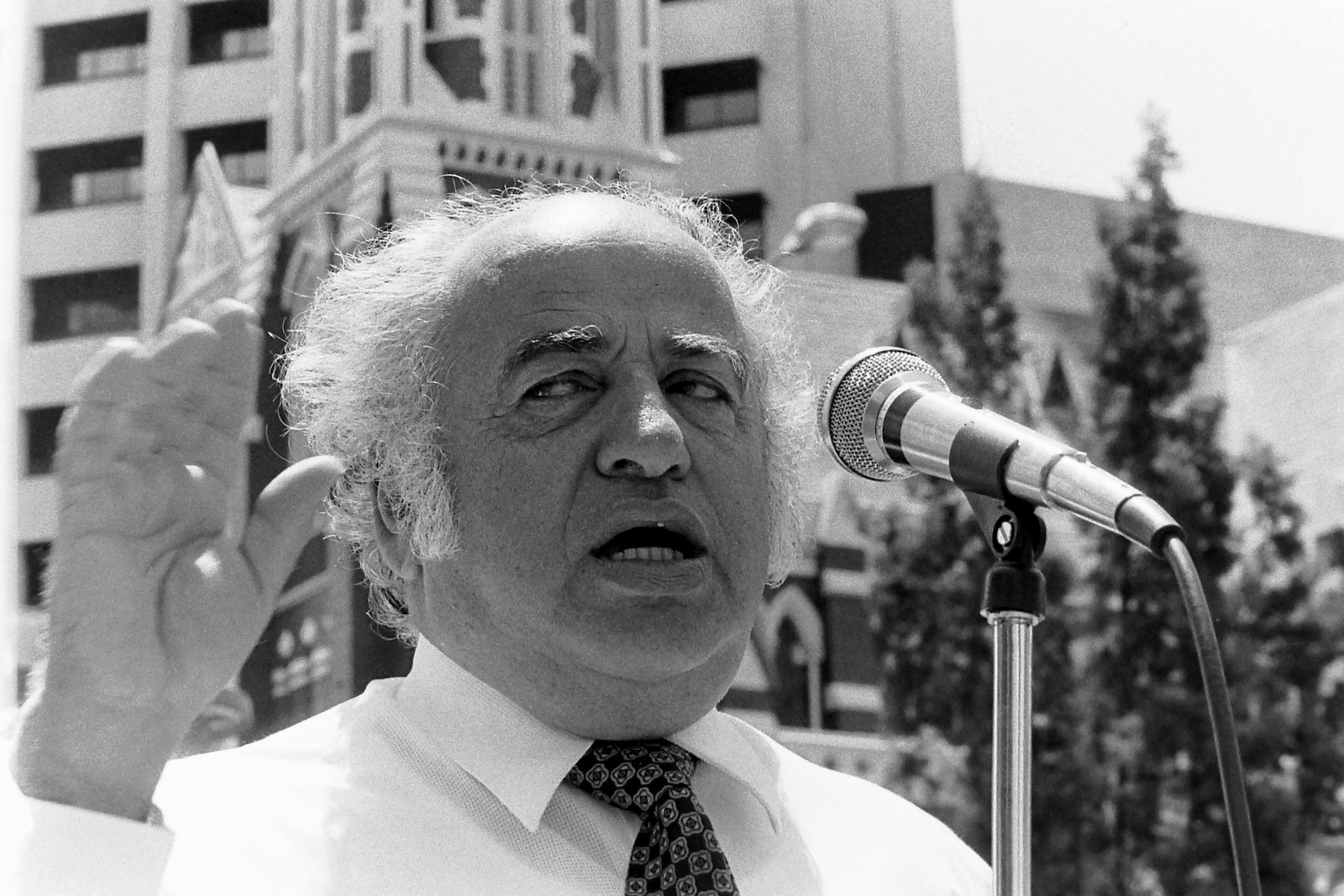
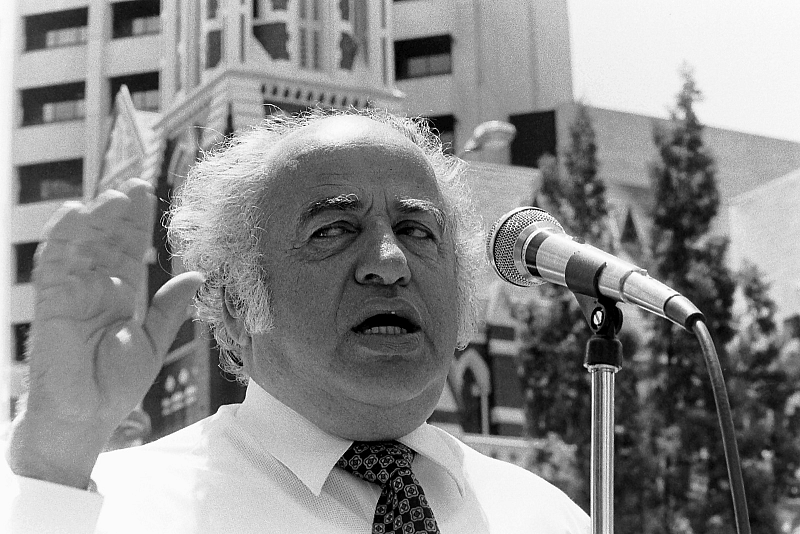
When I was in the Senate, I was fortunate to sit with George Georges. A truly honourable man, a passionate supporter of the workers and, surprisingly, animals.
In 1982, the Senate Select Committee on Animal Welfare was established with George Georges as Chairman.
The Committee investigated major animal welfare issues in Australia, raising national awareness and priority for the topic. It eventually produced 10 substantive and influential reports before concluding its work in 1991.
George travelled with Australians for Animals coordinator Sue Arnold to Geneva for a hearing before the International Court of Justice for Animal Rights in 1987. The Court had put the Australian Government and its ministers on trial for the helicopter shooting of horses.
Ms Arnold said:
“The hideous cruelty taking place in the Top End of Australia must be exposed to the world.”
During my first term in the Senate, I was appointed as the Australian Democrat member of the Animal Welfare Committee.
The Committee held hearings across Australia investigating live sheep exports, kangaroo slaughter, and intensive livestock production. The hearings could last for days in various locations, often in the Queensland outback.
In the evenings, we would retire to the local pub for refreshment.
One night a portly gentleman in a blue singlet and shorts came up to George and asked:
“You George Georges?”
George admitted he was guilty as charged. “Mate, I want to buy you a beer!” And he did.
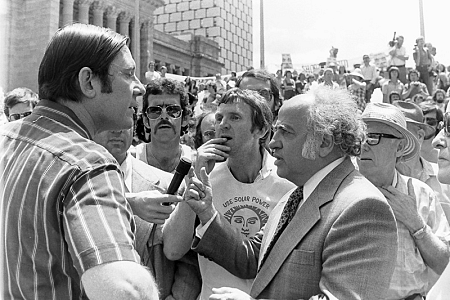
On 4 September 1977, Queensland Premier Joh Bjelke-Petersen launched one of the most serious attacks on democratic rights in Australian history, declaring:
“The day of the political street march is over. Don’t bother applying for a permit. You won’t get one. That’s government policy now.”
There was no debate in parliament. The ban was rubber-stamped by his cabinet and put to state parliament two weeks later. But between September 1977 and August 1979, a right-to-march movement, initially called the Civil Liberties Co-ordinating Committee, rose to challenge the ban.
There were at least 29 organised rallies and marches, many more pickets of government offices, disruption of press conferences, protests at watch-houses and court hearings and protests outside the Boggo Road prison. There were over 3000 arrests of more than 2000 people.
Among those arrested was George Georges. He and two other men had gathered illegally on a Brisbane sidewalk. George and Joh Bjelke-Petersen were bitter enemies, and when Joh learned that George had been arrested, he threw the book at him.
George told me of his ordeal:
“They took me to Boggo Road, stripped me down to my underwear and threw me into a solitary confinement cell in the basement.”
He was not a young man and he thought he was going to freeze to death.
“But then the cell door opened and there was a man carrying a tray of hot food. He said that he was in charge of the prison kitchen and if George Georges didn’t eat, nobody eats!”
George thought that meal saved his life.
Joh wasn’t the only politician who ran afoul of George Georges. In 1985 the Hawke Labor Government proposed the Australia Card, a national identification card for citizens and resident foreigners:
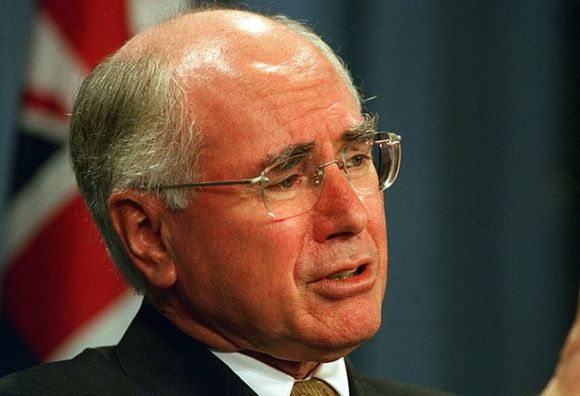
The card was supposed to amalgamate a number of government identification systems and act against tax avoidance and health and welfare fraud.
The government introduced legislation in 1986, but it did not have a majority in the Senate and was repeatedly blocked by the Australian Democrats and the Liberals.
George Georges was violently opposed to the card and resigned from the ALP to vote against it as an Independent in December 1986. Without the numbers in the Senate, Hawke called for a double dissolution, which was followed by an election on 11 July 1987.
The Labor government and I were both returned, and Hawke still didn’t have a majority in the Senate.
He kept trying to pass the legislation, but without the numbers he was unsuccessful. Hawke finally gave up when a flaw was found in the drafting of the legislation that nobody on either side had previously noticed.
Even if the bill had been passed in a joint sitting, certain regulations necessary for the functioning of the system could be overturned by the Senate alone. By that time, very significant popular opposition had arisen from widely disparate groups. The more people heard about the Australia Card, the angrier they became.
Hawke had reluctantly given up his Australia Card dream, but George Georges was collateral damage. A Labor man through and through, he was shattered by being expelled by the party to which he had dedicated so much of his life. Most of his friends now shunned him and he was almost alone.
Except for me. George had so much seniority in the Senate that he had been given one of the best offices in the Old Parliament House, with a view overlooking Lake Burley Griffin.
However, he often came to chat with me in my shoebox of an office in the basement of the building. It was already crowded with my two staff, but we always made room for George.
I had a toaster and regularly made toasted raisin bread. George, always thinking of others, would go out in the hall and invite startled staffers in for a slice.
George Georgouras was born in Darwin on 15 April 1920. His father had emigrated to Australia from Greece in 1912. At an early age, George simplified Georgouras, which he later said was "unpronounceable at first sight in English and … also unpronounceable in Greek", to the less forbidding Georges.
He was educated in Queensland and was captain of the Brisbane State High School Rugby team. He later received further education at Brisbane North TAFE in business management.
Georges combined his broad socialist principles with an entrepreneurial flair when he established the Union Cooperative Society Ltd, which bought goods in bulk and sold them at a discount to union members. He would remain associated with the organisation for the rest of his life. Georges stood unsuccessfully for the inner-city seat of Windsor in the Queensland Legislative Assembly in 1960 and 1963. Eventually he secured second place on the ALP ticket at the 1967 half-Senate elections. As he gained a winnable position at the expense of a Trades Hall candidate, he found himself offside with some influential sections of the ALP from the start of his parliamentary career.
Georges gave his first speech in the Senate on 28 August. His vehement opposition to Australian involvement in the Vietnam War contrasted with the moderate approach of the ALP leadership at this time.
Georges compared the actions of Australia in Vietnam to the Russian invasion of Czechoslovakia.
In September 1970, he declared:
"Our very might in Vietnam makes us the aggressors. … We make the action in Vietnam respectable merely because America needed the support of at least one other white nation."
Georges maintained his reputation for outspokenness throughout his career.
(excerpt from The Biographical Dictionary of the Australian Senate)
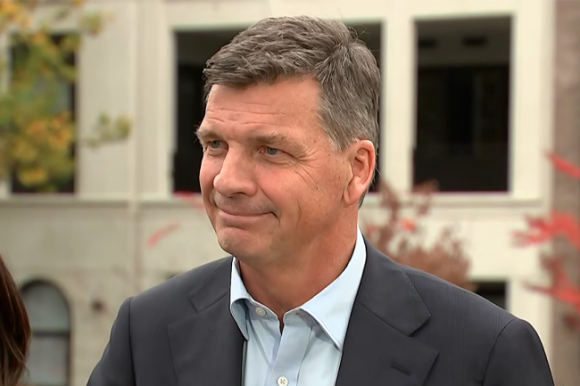
Another Committee brought Tom Uren and me together. The Joint Committee on the Australian Capital Territory had the responsibility for the management of Canberra. This committee was unusual in that it included members from both the Senate and the House of Representatives.
I had met Tom long before in 1965 when I was a graduate student at the University of Tasmania.
My friends had dragged me off to an ALP function featuring Tom Uren as guest speaker. He was so impressive that I signed up for the ALP on the spot. I soon learned that the Tasmanian ALP branch was chock full of Hydro Electric Commission workers, hell-bent on destroying Tasmania’s wilderness and terminated my membership.
Tom was an ALP heavyweight. He had been Deputy Leader, Minister for Urban and Regional Development, Minister for Territories and Local Government and Minister for Local Government and Administrative Services. He helped to establish the heritage and environmental movement in Australia and worked to preserve the heritage of inner Sydney.
Uren was born in Balmain and played Rugby League for Manly Warringah. He was a strong competitive swimmer and had an early career as a professional boxer. He eventually challenged Billy Britt for the Australian heavyweight championship.
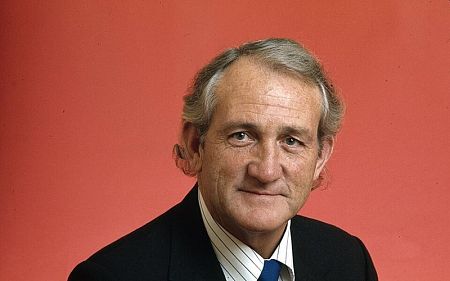
In May 1939, Uren joined the Australian Army. He was deployed to Timor, where he was captured by the Japanese in 1942. Uren was forced to work on the Burma Railway and was subsequently sent to Japan to labour in smelting factories.
While living with local workers, Uren realised he did not hate the Japanese, but rather militarism.
After the war, Uren worked as a Woolworths manager at Lithgow. It was there he was inspired to join the ALP after attending Ben Chifley’s funeral.
In 1957 he was elected to the House of Representatives in the seat of Reid in Western Sydney. He campaigned against the Vietnam War, conscription and nuclear testing. He had witnessed first-hand the bombing of Nagasaki and was well aware of the destruction nuclear war would bring.
On the ACT Committee, Tom and I were very concerned about the way that Canberra was sprawling. This was particularly troubling as development chewed westward towards the Molonglo River.
Tom would turn to me and say:
“We have to stop them at the Molonglo Norm. Stop them at the Molonglo!!”
They don’t make politicians like George Georges and Tom Uren anymore.
Dr Norm Sanders is a former commercial pilot, flight instructor, university professor, Tasmanian State MP and Federal Senator.
 This work is licensed under a Creative Commons Attribution-NonCommercial-NoDerivs 3.0 Australia License
Support independent journalism Subscribe to IA.