I don't know much about art... and that's why I like modern art*.
The only art history I ever picked up was an airy Melbourne Uni fine arts student at the Picasso Museum in Paris in 1998. Thankfully, Melanie was more of an early Picasso, before the great painter’s eyesight all but disappeared and, as his psilocybin addiction neared its ultimate phenomenal peak, he began to paint women as hideous triangular nightmares.
Now, like Picasso in his later years, I can’t draw and I’m also half blind, but that’s no problem at all in the modern art lurk? Because modern art is democratic. You don’t need a jot of technical skill, you just need a gimmick. Which is also why I love it! Because, like me, modern art is by and large lazy, dumb and absurd.
I was first struck by this during a 2001 visit to London’s iconic Tate Modern (now known as Tate Britain) gallery. The Tate was displaying several high-profile finalists for the Turner Prize over the years. Naturally, since going to an art gallery without pleasant romantic company is something I rarely do (the Louvre being my one exception), I was again there with another young lady.
The first display Belinda and I saw as we wandered into this louche hipster mecca was a medium-sized room with four arched entrances. In the middle of the room, on a plinth, just below eye-level, sat a large, rectangular, transparent – seemingly completely empty – Perspex box. Belinda and I walked around this “artwork”, but noticed nothing of interest, either inside or outside. Eventually, I went over to the burly attendant, palms out and shrugged. He nodded and pointed towards a very small copper plaque, just visible on the lower right-hand corner of the display.
We went back to the box and together bent over to study the plaque up close. Engraved in tiny italics was the following: 'Engraving with an engagement ring'. Immediately above the copper plaque, we saw a small number of vertical and slightly diagonal scratches. Ah ha! It was the empty, heartbroken art of a jilted lover, left at the altar, transparently broken. Or alternatively, it was a message from the gallery warning people about the damage they could cause by standing too close to the exhibits. Either way, it worked and I later married Belinda.
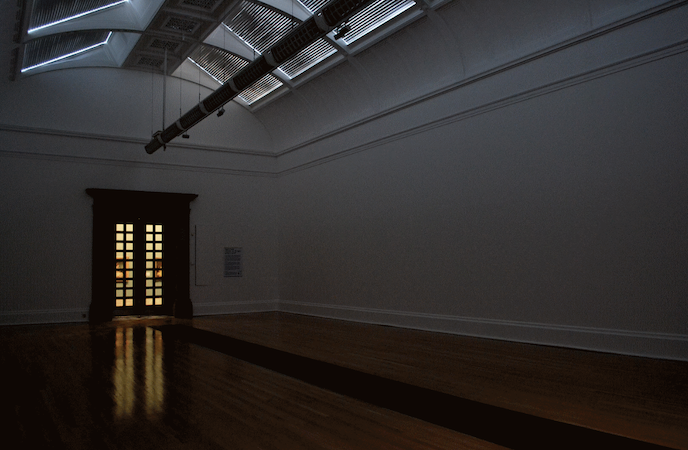
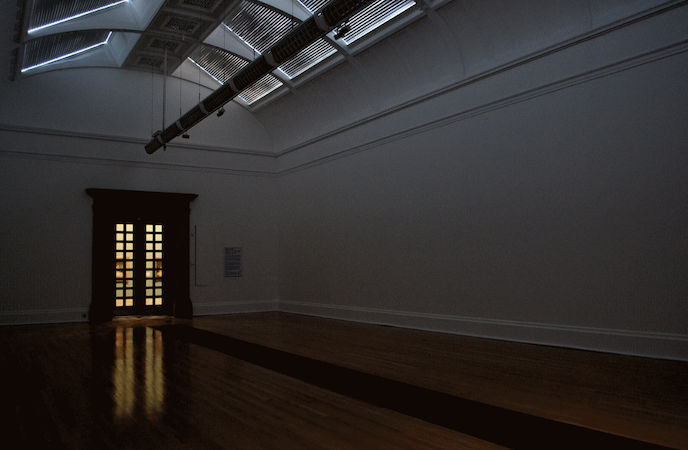
The confusion about whether something was art or just a mistake continued. Walking out of that room, we strolled over to another, somewhat larger rectangular one. It was lit by two bare hanging globes. Then after five seconds or so, we saw them blink off. But then, again, five seconds later, they snapped back on, casting the room again in light. Wise now to the ways of modern art, we read the sign at the entrance.
The notice read: ‘Work No. 227: The lights going on and off’.
It was accurate. Martin Creed won the prestigious Turner Prize that year for that installation. In 2013, it was acquired by Tate Britain for its permanent collection. It is now valued at £110,000.
Which seems a lot, given turning lights on and off by the simple use of an electrical timer was something Creed does all the time, as Wikipedia explains:
'Lights switching on and off form a recurring motif in Creed’s works, including Work No 127: the lights going on and off (1995) and Work No 254: The lights in a building going on and off (2000), in which lights switch on and off in 30- and 1-second intervals, respectively.'
And this is why I adore modern art. I may not even be able to draw a respectable stick man, but I certainly can set a timer and graciously accept large sums of money.
Next up was an installation by perhaps Britain's most acclaimed modern artist Damien Hirst, which had won the Turner Prize in 1995, called 'Mother and Child Divided'. It featured a cow and its calf cut into sections and displayed in formaldehyde in separate vitrines. Hirst is fascinated by putting dead and sometimes rotting animals on display, over the years including more cows and cows’ heads, a bull, a shark and many, many maggots and flies. What an imaginative genius! How does he come up with these novel ideas?
Finally, there was a bed. It was upstairs and thankfully not there for a quick nap, but another installation “artwork”. The bed was covered in used condoms and other contraceptives, cigarette butts, ash, food scraps, dried vomit, semen, snot, old magazines, vodka bottles, newspapers, dirty underwear, and other assorted and indeterminate refuse and stains.
It stank. Didn't get too close to see that piece to sniff it and find out. It was by acclaimed artiste, Tracy Emin, who, according to the description at the front, spent six weeks or so in that bed. She did everything she usually did in a bed, but without changing the sheets or cleaning up. Whether she normally cleaned and changed the sheets every six weeks, I don't know. But now, briefly looking over her career, I doubt it.
It is lesser known that the Tate has a separate exhibit for post-modern art (whatever that is). It is actually located outside on the street. However, the Tate does have an example of post-modern art in the form of a red pill box, with the insignia “Royal Mail” on the front. This artwork is emptied twice daily by people in postal worker uniforms. This realistic ongoing post-modern exhibit attracts quite a few visits daily from the public.
A few years later, Belinda and I returned to Australia. I was eager to see what was on offer in my future career. Tuning into ABC's The Art Show, I saw two gentlemen who appeared to have just left an opium den talking to each other in quietly pompous voices.
The first segment was on a Victorian performance artist appearing in a leafy part of Melbourne. It was an outdoor installation, if you can call a grass tennis court that. The artist was dressed up in tennis attire: white plimsolls, wristband, tennis racket, with tennis balls and a headband to hold back a curly mop of mousey hair. His performance consisted of standing at the service line, throwing the ball up in the air and trying to serve it over the net, which he never did, even on the rare occasions he managed to connect with the ball. After each attempted serve, he would run to the net and scream, “You can not be serious!” à la John McEnroe in his pomp.
Then, the television report showed the tennis artist (tartist?) trudging around to the other side of the net and doing exactly the same thing. All to no spectators at all.
The fruity ABC presenters lauded this as groundbreaking modern art. But I was not convinced it was a performance at all, thinking it could be merely a symptom of savage cuts to the mental health budget by then then Kennett Liberal Government. Or, he might have just been warming up, waiting for his playing partner to turn up. Melbourne people, after all, are all rather strange.
In any case, if it was an example of modern art, I didn't care for it. Too much hard work, in my book. Just like the Damien Hirst butchery exhibit and even that Emin bed. No thanks. I’m more a lights go on and off, engraving with an engagement ring sort of potential modern artist. I’m sure I can come up with something even more insubstantial and pseudo-ironic than those. Keep watching this space.
I’m going to be rich! Probably.
* Some authorities suggest the modern art period ended in the 1990s and the current era should be known by a different name, contemporary art, but who really cares?
Follow IA founder Dave Donovan on X/Twitter @davrosz and Bluesky @davrosz.bsky.social, Independent Australia on Bluesky @independentaus.bsky.social, X/Twitter @independentaus and Facebook HERE.
 This work is licensed under a Creative Commons Attribution-NonCommercial-NoDerivs 3.0 Australia License
Support independent journalism Subscribe to IA.