The capital gains tax break lays bare a system that rewards wealth over work, writes Carl Rhodes.
IT HAS BEEN more than a quarter of a century since then-treasurer Peter Costello introduced the 50% capital gains tax (CGT) discount on investment properties. In all that time, serious talk of reform has been conspicuously absent. Until now.
By 2025, economic injustice had moved to the centre of Australia’s political agenda. The cost‑of‑living crisis, housing unaffordability, and widening intergenerational inequality dominated public debate and shaped the Labor Government’s Economic Reform Roundtable last August. While concrete policy changes are yet to emerge from that process, it offered an important mandate to talk about tax reform.
The Australian Greens moved swiftly. Their Senate motion established the Select Committee on the Operation of the Capital Gains Tax Discount on 4 November 2025. The committee’s number one priority is to investigate how the CGT discount has fuelled inequality and to assess whether it deserves a future at all.
The Overton window is shifting. The question is whether it will shift far enough to allow real change.

A $247 billion engine of inequality
Parliamentary Budget Office analysis commissioned by the Senate committee has already shown that the CGT discount will drain $247 billion from the budget over the next decade.
Even more staggering, from next year, almost 60% of the benefit will flow to the richest 1% of income earners. These are the people least in need of tax concessions.
The unfairness is amplified by the fact that, as the Australian Council of Social Service reports, Australia spends more on tax breaks for property investors than it does on social housing, homelessness services and rent assistance combined.
Greens Senator Nick McKim has called the CGT discount 'the most unfair tax rort in the country'.
ACTU President, Michele O’Neil, describes it as:
'... a tax avoidance scheme with most of the benefit going to the richest 1% of Australians.'
This reckoning is long overdue. Poverty is rising, the concentration of wealth is accelerating, and every year Australia produces more billionaires. Without structural tax reform, economic inequality will continue to get worse.
The current CGT debate has become a tipping point for the Labor Government, which has historically treated this terrain as a political no-go zone. In the lead‑up to May’s budget, however, CGT reform is no longer being dismissed outright.
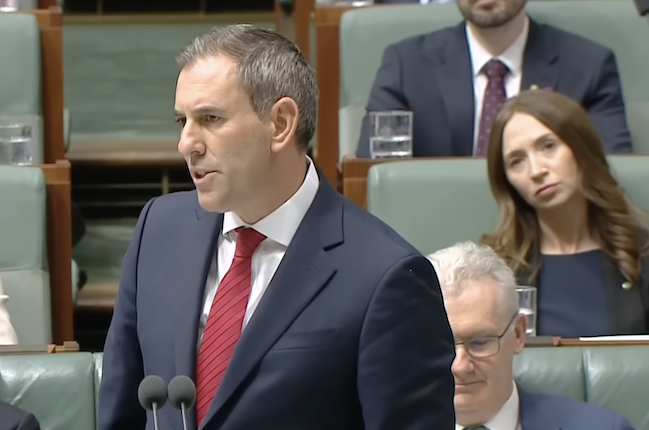
Prime Minister Albanese has declined to rule it out and Treasurer Jim Chalmers has said:
'...we’ll consider whether more steps can be taken on tax reform.'
The inequality crisis runs deeper than CGT
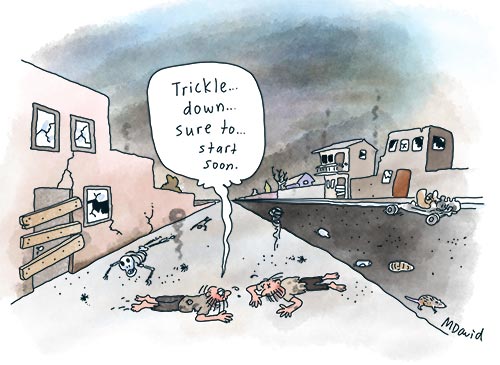
If we are serious about tackling inequality, Australia must confront the basic fact that we tax income heavily and wealth lightly. The result is a system that continues to deepen economic inequality by rewarding those who already own assets and penalising those trying to acquire them.
The CGT discount is a visible expression of that imbalance, but it is only one element of a tax architecture designed to privilege unearned gains over earned income.
Real reform would go beyond scaling back the CGT discount and at least include closing off the loopholes that allow high‑income earners to reclassify income as capital gains, and confronting the distortionary role of negative gearing, which continues to inflate asset prices and widen the wealth gap. Anything less leaves the structural drivers of inequality firmly in place.
Despite this, Labor remains uncommitted to bold reform. Both the Prime Minister and the Treasurer have ruled out touching negative gearing.
Last year, Albanese reportedly insisted:
'... the only tax policy that we’re implementing is the one that we took to the election.'
Broader fiscal measures needed to address inequality, including inheritance and estate taxes, have been dismissed outright.
Momentum is building, inside and outside of parliament
Despite the timidity of Albanese’s centrist politics, change is still possible if the public and political pressure are there. Chalmers had previously ruled out changes to the CGT discount and look where we are now as the budget approaches.

The push for CGT reform did not originate inside government. It came from the broader political landscape.
The Australian Greens, long-time advocates of tax reform, instigated the Senate Inquiry into the CGT discount. The union movement has played a crucial role as well, supporting reform and engaging in public campaigns that have helped shift the national conversation.
Think tanks such as the Grattan Institute, the Australia Institute and Per Capita have also played important roles in shifting the policy debate through sustained analysis.
It's time to reward work, not wealth
This is the moment for the Government to decide whether it wants to tinker at the edges of inequality or meaningfully reduce it. CGT reform is necessary, but it is only one piece of a much larger puzzle.
Australia’s inequality crisis is, in large part, driven by a tax system that privileges wealth over work. Negative gearing, superannuation concessions, trust structures and the complete absence of inheritance taxes all entrench advantage and accelerate the concentration of wealth.
Without confronting these deeper structural settings, CGT reform alone will barely scratch the surface. The decisions made now will shape Australia’s economic justice for a generation.
With a parliamentary majority, the Government has the power to make decisive changes. The Senate Inquiry has opened the door. Public sentiment has shifted. The evidence is overwhelming. What remains is the courage to act.
Carl Rhodes is Professor of Business and Society at the University of Technology, Sydney. He has written several books on the relationship between liberal democracy and contemporary capitalism. You can follow him on X/Twitter @ProfCarlRhodes.
 This work is licensed under a Creative Commons Attribution-NonCommercial-NoDerivs 3.0 Australia License
Support independent journalism Subscribe to IA.