The Rich List does not reveal a nation of boundless opportunity for anyone who wants to "have a crack", it reveals a system that concentrates wealth and narrows the pathways to economic security, writes Professor Carl Rhodes.
THE YEAR GLOBAL neoliberal economic reforms hit full swing? 1984. In the United Kingdom, Margaret Thatcher confronted the miners to break the union's power. In the United States, Ronald Reagan entrenched tax cuts and deregulation.
Across the developing world, the International Monetary Fund (IMF) and World Bank rolled out structural adjustment programs that forced governments to privatise, liberalise, open markets and cut public spending.
The direction of global economic policy was clear. Markets were prioritised over states, and capital over labour. But neoliberalism was never just an economic project; it was a cultural one. It reshaped how we think about success, fairness and who deserves to get ahead.
In Australia, one of neoliberalism’s most enduring cultural artefacts emerged at precisely this moment. In 1984, Business Review Weekly published the first BRW Rich List, a ranking of the nation’s 200 wealthiest individuals and families. Rebranded as the Financial Review Rich List in 2017, it remains a fixture of national life, setting the terms on which wealth is publicly understood and admired.
The deserving rich?
More than 40 years on, the formula has not changed, but the stakes have. The recently released 2026 edition reported that the richest 200 had a combined wealth of $707 billion.
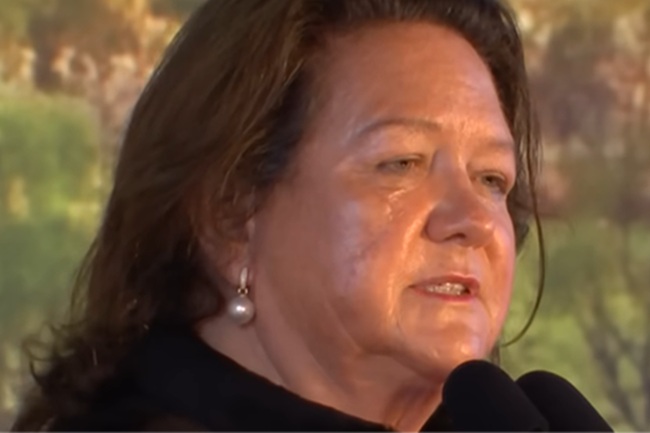
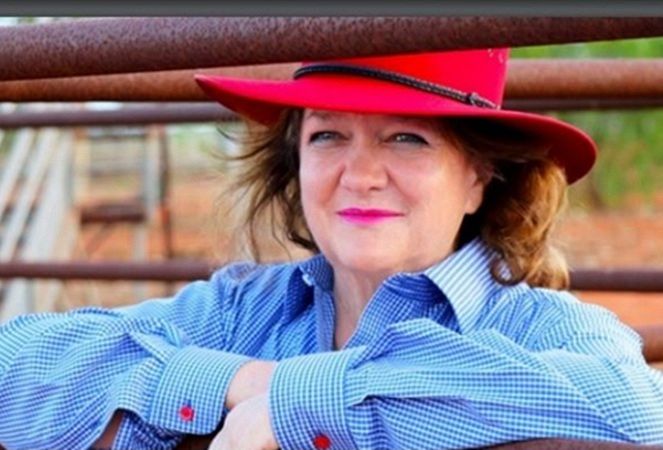
The growth in the fortunes at the top is astounding. Adjusted for inflation, the total wealth of those on the 1984 list was just under $25 billion. The personal wealth of Australia’s richest person, mining magnate Gina Rinehart, is now more than one and a half times that much.
But "The Rich List" does more than catalogue riches and chronicle the fates of those who benefit from gross inequality. It serves to justify extreme wealth as both deserved and desirable.
The story peddled by the AFR is one of meritocracy. Wealth appears as the reward for aspiration, hard work, talent and risk-taking. The moral of this story is that those at the top have earned their place and those below them have not.
This ethos was summed up by business journalists James Thomson and Anthony Macdonald on the Australian Financial Review’s Chanticleer podcast, referring to the list as the “greatest single project in Australian journalism”.
Anthony said:
“These are people that are out there doing stuff, and for me, that’s what The Rich List is about”
James, former editor of The Rich List, responded:
“Yeah, great call... We’ve got a 17-year-old son at home and he’s wondering what he should do with his life. In a way, the rich list says just go and have a crack at something”.
This is the story contemporary Australia tells itself. Everyone can "have a crack" and anyone can make it if they try hard enough.

The closing of opportunity
The reality is that more and more people are being left behind.
Over the decades since The Rich List began, Australia has undergone a profound transformation. It has shifted from a wage-based, relatively egalitarian economy to one in which wealth is both unevenly distributed and increasingly determined by asset ownership.
The result is stark. The top 10% of people ranked by wealth now own around 57% of all wealth, while the bottom 40% hold just over 5%.
For most working Australians, the pathways to economic security have narrowed. Wage growth has stagnated. Secure employment has become less certain. And home ownership, once the cornerstone of middle-class life, is slipping out of reach.
For younger Australians in particular, the idea of building wealth through property is increasingly a privilege reserved for those who already own assets or inherit them.

A scoreboard for a broken system
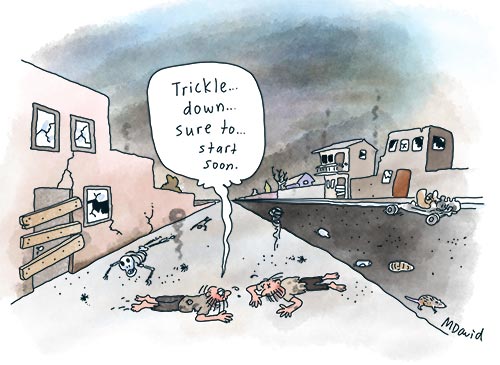
What The Rich List presents as a celebration of individual success is, in reality, the outcome of structural changes that have been entrenched through decades of neoliberal policy reform. These same policy settings have made it harder for others to get ahead.
The Rich List both obscures widening economic inequality while providing it with a moral justification. By heralding individual fortunes, it invites admiration for extreme wealth while diverting attention from the unfair economic system that produces it.
In doing so, it performs an important ideological function. It sustains the belief that Australia remains a meritocracy where success is open to all, and that inequality simply reflects differences in effort and ability.
The evidence points in the opposite direction. Opportunity is becoming more unequal, not less. Access to wealth is increasingly determined by what you own, not what you do.
The Rich List does not reveal a nation of boundless opportunity for anyone who wants to "have a crack". It tells a different story of a system that concentrates wealth and narrows the pathways to economic security.
It is a scoreboard for a system that has steadily closed off the very opportunities it claims to celebrate.
Carl Rhodes is Professor of Business and Society at the University of Technology, Sydney. He has written several books on the relationship between liberal democracy and contemporary capitalism. You can follow him on X/Twitter @ProfCarlRhodes.
 This work is licensed under a Creative Commons Attribution-NonCommercial-NoDerivs 3.0 Australia License
Support independent journalism Subscribe to IA.