Australia’s housing crisis isn’t just a clash between generations, but a deepening class divide hidden beneath the rhetoric of the “fair crack”, writes Professor Carl Rhodes.
WITH JUST DAYS until the release of the Labor Government’s May Budget, it has now been confirmed that property tax is finally going to be reformed. While details are yet to emerge, capital gains tax and negative gearing will be overhauled in a move to rein in investor-driven inflation in the housing sector.
How quickly politics can change. Going into the Federal Election this time last year, Labor had categorically ruled out any such reforms. Touching the property tax status quo was framed as electoral suicide.
Today, the same ideas have been recast as political common sense. What has changed is that intergenerational economic inequality has finally become a mainstream political concern, with housing affordability at its core.
But this is where the current debate starts to mislead. The housing crisis is not simply a generational story. It is a class story, too.
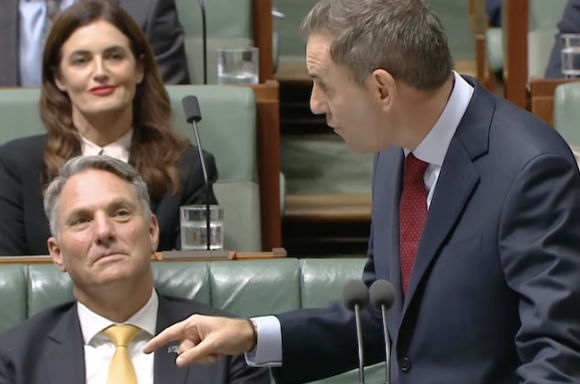
A "fair crack", but for whom?
The appetite to change property tax settings is, in part, a political response to a demographically shifting voting population. Australians aged 18 to 35 now make up around a quarter of the population – roughly 6.2 million people – and outnumber the once dominant Baby Boomer generation.
This growing cohort of voters is increasingly presented as the primary group affected, with housing affordability identified as a key driver of intergenerational inequality.
As reported by the Actuaries Institute, among millennials, the ratio of house prices to income is now double what it was in the 1980s, with rising rental costs preventing them from saving for a home loan deposit. It is hardly surprising that since 2000, home ownership rates for those aged 25 to 34 have fallen from just over 50% to around 39%.
Prime Minister Anthony Albanese appears alert to this shift, remarking last weekend:
“I want Australia to be a land of opportunity for the future and the truth is, young people feel like they’re not getting a fair crack at the moment.”
What this fails to acknowledge, however, is that some young people are getting far less of a “fair crack” than others.
No class
Treating “young Australians” as a single, homogenous group conceals more than it reveals.
Some young people enter adulthood backed by inherited wealth, family property portfolios, or the "Bank of Mum and Dad", allowing them to step onto the housing ladder early and to benefit directly from the tax concessions now under scrutiny.
Others, lacking family assets or financial support, are locked into permanent renting, absorbing rising costs with a vastly lower prospect of capital gains, tax advantages, or long‑term security.

This divide is already stark. Grattan Institute data shows that among households aged 25 to 40, the poorest quarter holds less than $78,000 in net wealth, none of which is in home equity. The richest quarter holds more than $554,000 and the top 5% exceed $1,500,000. Wealth inequality, in other words, is already deeply entrenched within younger generations themselves.
Framed purely as an intergenerational conflict, property tax reform risks becoming a symbolic gesture rather than one focused on creating a fair economy in which everyone has the opportunity for a secure life.
Without a class lens, it is entirely possible to claim to help “young Australians” while leaving large numbers of them little better off and the most privileged more protected than they were before.
Property reform is not enough
The upshot is that while meaningful reform to capital gains tax and negative gearing is important, if economic equality is the goal, it should be understood as only a beginning.
Property tax reform can reduce speculative pressure and soften the worst excesses of investor‑driven inflation, but it leaves untouched the deeper dynamics that sort winners from losers long before housing enters the equation.
The scale of intergenerational inequality demands far more fundamental reform. It means resetting the policies that determine how income and wealth are accumulated, protected and transferred over time.

If the Government is serious about restoring a “fair crack” for everyone, the focus cannot stop at property. It must extend to the broader structure of income and wealth taxation
What needs to be on the tax policy agenda going forward is wealth taxation, and the concessional treatment of capital relative to labour, the light taxation of large inheritances and a tax system that routinely favours existing wealth over earned income.
Without developing and implementing a policy that changes these structural settings, reforms to CGT and negative gearing risk operating as targeted corrections within a much larger system that continues to reward ownership over work and inheritance over effort.
It’s time to confront class
The changes expected in the May Budget would be welcome. Reforming capital gains tax and negative gearing would mark a clear departure from a model that has treated housing primarily as a tax‑advantaged investment. But unless these reforms are understood as only a first step, progress will be limited.
The real test of seriousness in tax reform lies beyond property. If inequality is being reproduced through unequal access to stable housing, inherited wealth and lightly taxed capital, then economic fairness will not follow property tax reform alone.
A broader reckoning with how Australia taxes wealth, rewards capital over labour and normalises inheritance as a substitute for opportunity and effort is needed. Generational inequality is part of that agenda, but not all of it.
Real changes will depend on whether policymakers are willing to name and confront class.
Carl Rhodes is Professor of Business and Society at the University of Technology, Sydney. He has written several books on the relationship between liberal democracy and contemporary capitalism. You can follow him on X/Twitter @ProfCarlRhodes.
 This work is licensed under a Creative Commons Attribution-NonCommercial-NoDerivs 3.0 Australia License
Support independent journalism Subscribe to IA.


Related Articles
- Forum reveals widening divide over housing strategy and affordability targets
- First home buyers finally get the upper hand in Australia’s housing market
- The human cost of Australia’s housing crisis
- The Great Australian Dream now belongs to landlords
- Why this Labor term may not see sufficient housing reform