The West’s betrayal of Western Sahara threatens not just one people’s freedom, but the integrity of international law itself, writes Kamal Fadel.
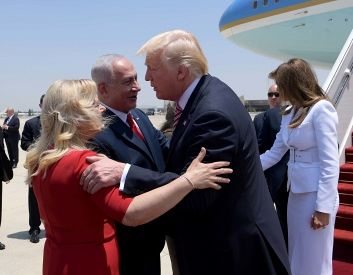
ON 8 APRIL 2025, the U.S. State Department made a troubling announcement: it reaffirmed recognition of Moroccan sovereignty over Western Sahara and declared Morocco’s autonomy proposal the only viable solution to the long-standing conflict. It called on the parties to negotiate without delay, using Morocco’s framework as the sole basis for talks, offering U.S. support to facilitate progress toward that goal.
This move represents a stark shift from the long-standing international consensus grounded in the right of peoples to self-determination. It effectively dismisses decades of United Nations resolutions, legal opinions, and the clear and repeated rejection of Moroccan sovereignty by the Sahrawi people.
Let’s be clear: autonomy under Moroccan rule is not a solution. It’s a rebranding of occupation. Western Sahara is not a domestic Moroccan issue — it is a decolonisation issue and the people of Western Sahara have a right to determine their own future. No solution can be legitimate unless it begins and ends with that right.

The right to self-determination is a foundational principle of international law. It’s enshrined in the UN Charter, the International Covenant on Civil and Political Rights, and the International Covenant on Economic, Social and Cultural Rights — all of which declare that all peoples have the right to freely determine their political status and pursue their economic, social and cultural development.
The 1970 Declaration on Principles of International Law (Resolution 2625) reinforces this, affirming that the right to self-determination includes the possibility of independence. This is not a negotiable aspiration or a political bargaining chip, it is a jus cogens norm, a peremptory principle of international law from which no derogation is permitted.
According to Resolution 2625, every state has a duty to promote the realisation of this right in accordance with the UN Charter and to refrain from any forcible action that would deprive peoples of their freedom and independence. These are not abstract ideals; they are binding obligations. Respect for self-determination is also an obligation erga omnes — a duty owed by all states to the international community as a whole. In other words, every state has a legal interest in ensuring this right is protected and fulfilled.
This collective responsibility was further affirmed in Resolution 2105 (XX), adopted by the UN General Assembly in 1965. It explicitly recognised the legitimacy of the struggle of colonised peoples to achieve self-determination and independence. Crucially, it called on all states to provide material and moral support to national liberation movements fighting colonial domination.
These principles matter. They define not just the legality of state actions but the integrity of international law itself. And right now, they are being ignored.
Attempts to impose autonomy under Moroccan rule, without a legitimate process of self-determination, are a direct violation of this principle.
Western Sahara remains on the UN’s list of non-self-governing territories, the last unresolved colonial case in Africa. The International Court of Justice (ICJ), in its landmark 1975 Advisory Opinion, found no legal ties of territorial sovereignty between Morocco and Western Sahara.
In the Court’s own words:
‘The materials and information presented to it do not establish any tie of territorial sovereignty between the territory of Western Sahara and the Kingdom of Morocco.’
In other words, Morocco has no legal claim to the territory.
Following Spain’s withdrawal in 1975, Morocco occupied Western Sahara by force, an act condemned by the UN General Assembly in Resolution 34/37 (1979), which “deeply deplores” the continued Moroccan occupation.
Autonomy might work to resolve internal disputes within a single sovereign state. But Western Sahara is not a case of internal conflict. It is a question of decolonisation. It is a separate and distinct territory whose people have never consented to Moroccan occupation of their homeland.
Imposing autonomy under Moroccan sovereignty assumes Moroccan sovereignty — an assumption that is contrary to international law. Any such arrangement would constitute the denial of the Sahrawi people’s right to freely choose their political status and would be a grave violation of the UN Charter and its resolutions on Western Sahara.
The Sahrawi people, through the UN-recognised Frente Polisario, have rejected Moroccan autonomy plans time and again. They demand what they were promised: a referendum on independence.
That promise was formalised in the 1991 UN peace plan. It remains unfulfilled.
In 2007, the Frente Polisario submitted a comprehensive peace proposal to the United Nations. It called for a referendum offering three options — independence, integration with Morocco, or autonomy. It also committed to negotiating strategic partnerships with Morocco if independence were the chosen outcome.
The UN Security Council responded with Resolution 1754, which welcomed both the Moroccan and Polisario proposals and urged negotiations without preconditions. Follow-up resolutions like 1783 (2007) and 1813 (2008) reaffirmed this balanced approach.
The record shows that Polisario has acted in good faith. The same cannot be said for Morocco, which continues to block any process that might lead to a vote on independence.
Supporting Moroccan autonomy proposals over genuine self-determination sends a dangerous message: that a state can acquire territory through force and be rewarded for it.
It undermines the rules-based international order. It threatens global stability. And it betrays the promise of decolonisation — a promise made by the international community in the 1960 Declaration on the Granting of Independence to Colonial Countries and Peoples.
Western Sahara will not disappear from the map and the Sahrawi people will not abandon their right to be free.
Autonomy is not decolonisation. It is not justice. And it is not peace.
The only lawful and lasting solution to the conflict in Western Sahara is a process of self-determination that allows the Sahrawi people to freely and fairly decide their future, including the option of independence.
Anything less is an endorsement of occupation and a violation of international law.
It’s time for the international community to stop enabling injustice and start upholding its principles.
Kamal Fadel is the Polisario Representative in Australia and New Zealand. You can find him on Twitter: @Alfudail.
 This work is licensed under a Creative Commons Attribution-NonCommercial-NoDerivs 3.0 Australia License
Support independent journalism Subscribe to IA.


Related Articles
- Fortescue's Moroccan venture is deeply concerning
- The time is now: Western Sahara must gain independence
- Trump and U.S. betray the people of Western Sahara