Across party lines, political ambition is outpacing environmental protection and leaving Australia’s wildlife without a future, writes Sue Arnold.
WITHOUT A DOUBT, the environment is the biggest loser in the battle to win the next federal election.
Climate change impacts are not a priority. The plight of Australia’s rapidly disappearing biodiversity has only gotten worse with Angus Taylor’s win as Opposition leader.
Taylor has pushed back against tighter climate policies and has often promoted the role of technology in reducing emissions, supporting Carbon Capture and Storage (CCS).
His record speaks for itself.
In 2016–2017, a company partly owned by Taylor and his brother was linked to the poisoning of 30 hectares of endangered native grasslands on the Monaro plains,
Angus Taylor has consistently voted against measures to increase marine conservation and consistently voted in favour of live animal export.
On forestry, in 2020, as Energy Minister under the Morrison government, Taylor had this to say:
The Government is committed to supporting forestry jobs by enabling the sector to participate in the Emissions Reduction Fund (ERF).
Reducing red tape for projects located in the five Regional Forestry Hubs will support regional jobs and investment, including in communities hard hit by last summer’s bushfires.
This will make it easier for the private sector to invest in new Australian forestry projects, supporting jobs and reducing emissions.
Taylor’s Assistant Minister Jonno Duniam added:
“The Morrison Government supports the development and expansion of sustainable plantation forests that will capture more carbon, grow jobs and provide the timber that Australia will need into the future.”
The initial locations are: South West (Western Australia), Green Triangle (South Australia), North/North West (Tasmania), North East (New South Wales) and the South West Slopes (New South Wales and Victoria).
The Government will consider adding future forestry hubs on a case-by-case basis, subject to appropriate arrangements being in place to manage water impacts.”
But there’s stiff competition as to which party has the worst environmental credentials. One Nation now soaring in the polls is seeking to take over the conservative vote.
The environmental record of One Nation makes dismal reading.
The party’s environmental policy prioritises traditional conservation, natural disaster mitigation (back-burning), and opposes the rapid expansion of renewables, favoring nuclear energy and coal. The party challenges mainstream climate science, advocates for withdrawing from the Paris Agreement, and opposes large-scale solar/wind projects on prime agricultural land.
One Nation argues against cutting greenhouse gas emissions,proposes abandoning net-zero targets. The party supports building new nuclear power plants, dams and expanding forestry plantations to move towards timber self-sufficiency, promoting local timber, and protecting regional jobs.
The addition of Barnaby Joyce ensures One Nation belongs to the Dark Ages.
In September 2018, National Party MP Barnaby Joyce dismissed scientific reports suggesting koalas in NSW could face extinction by 2050 due to land clearing as "sensational rubbish".
In 2017 Deputy PM Joyce called for removing protections for species if they conflict with industry. He advocated for removing the endangered status of the Leadbeater’s possum to allow logging in Victoria’s central highlands.
As Agriculture Minister, Barnaby Joyce supported the commercial kangaroo industry, which involves massive culling of kangaroos across several Australian states.
However, the lack of substantive environmental policies is not confined to the conservative side of politics.
In 2025, the Albanese government indicated any change in Australia’s environmental laws would not include a climate trigger that could block coal and gas projects.
Given his government has approved between 31 and 34 new or expanded coal, oil and gas projects since taking office in 2022, Labor’s failure to include a climate trigger is a gift to the fossil fuel industry. Projects approved are estimated to generate over 6.5 billion tonnes of CO2-e in their lifetimes.
Major project proponents are obliged to disclose their expect emissions and a plan about how they intend to reduce them.
Companies that breach new environmental laws could be stripped of the profits made from the undefined “ unacceptable impacts”.
The new National Environment Standards (NES) are considered by the environmental movement to be grossly inadequate as they rely on offsets.
The Albanese government’s explanation of the NES is nothing more than gobbledegook.
‘NES must provide outcomes or objectives, and may also include parameters, principles, processes or actions for achieving the outcomes or objectives. These standards are designed to ensure quality and consistency in environmental approvals, and hopefully to also provide greater certainty for proponents and industry. ‘
Similarly, the objective of the Offset Standard is to ‘provide a framework where offsets adequately compensate for residual significant impacts to contribute to the protection and enhancement of protected matters. As proponents must demonstrate that offsets deliver a measurable net gain to the affected protected matter, rather than just avoiding net loss, this will increase the threshold for project approvals. There are eight principles that must be satisfied that include the timing, delivery and form of offsets.
Draft standards for environmental offsets and matters of national environmental significance (MNES) sets out the objectives, outcomes, and principles for protecting and managing MNES, including:
- threatened species,
- ecological communities,
- wetlands,
- heritage places, and
- marine areas.
It applies to all actions requiring approval under the EPBC Act.
It sets specific objectives for each category of protected matter under the EPBC Act. For example, for Ramsar wetlands, the objectives include that the ecological character of a declared Ramsar wetland must be maintained, protected, conserved and (where it is in decline) restored.’
Offset requirements have been the subject of countless inquiries and significant criticism.
According to the Federal Department of climate change, energy, environment and water:
“If you need an offset, it must relate directly to the environmental impact of your project. For example, suppose your action will affect a protected animal’s foraging habitat. In that case, you need to create, improve, protect or manage that same animal’s foraging habitat on your offset site.”
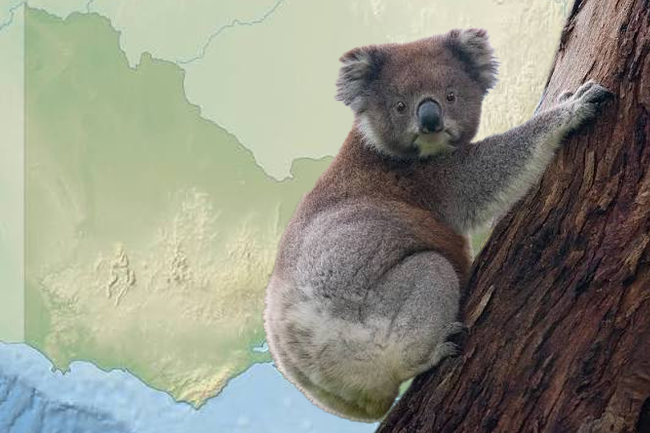
The logic of the offset requirement for listed species makes no sense. If a koala habitat is destroyed by a project, there’s no gain for another koala habitat to be improved or protected. The destroyed habitat and resident animals are lost.
Changes in the EPBC Act are complex, difficult to understand, how no clear definitions and fail to address climate change impacts and protect biodiversity. Bilateral agreements will continue to allow state governments to destroy critical habitats, and major projects will be self-managed.
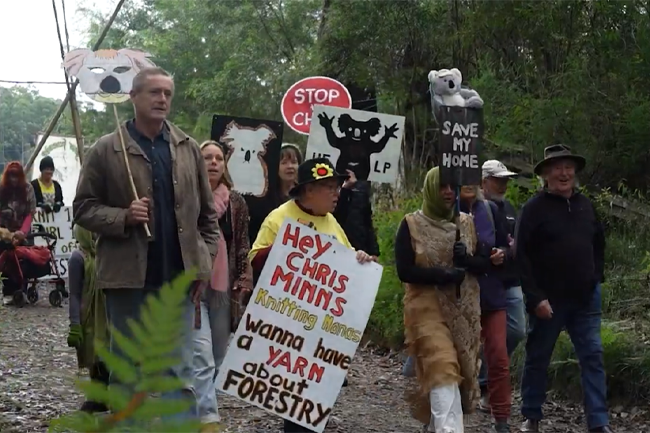
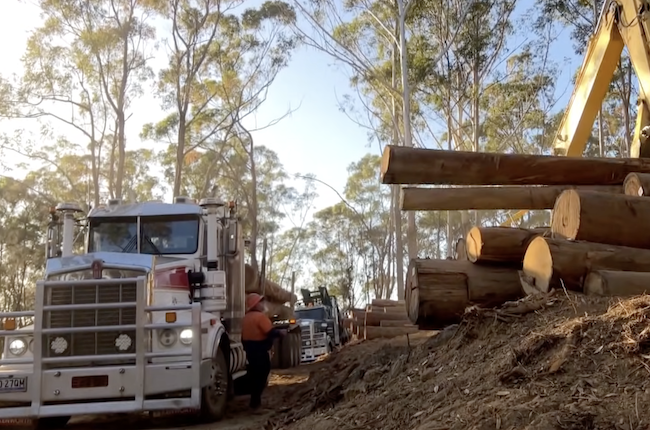
Although the Regional Forestry Agreements exemption from Part 3 environmental provisions of the EPBC Act which establish the legal framework for protecting matters of national environmental significance will end on July 1 2027, it’s unclear whether forestry corporations will have to submit environmental impact statements for proposed harvesting of native forest with habitats of endangered species. Logging will continue.
The Western Australian Audit office is currently assessing whether offset conditions are implemented effectively and achieve the intended environmental outcomes.
Criteria will include but is not limited to:
Are environmental offset conditions implemented effectively?
Do offsets achieve the desired environmental and biodiversity outcomes?

Australia has over 2,200 species listed as threatened with more than 100 already extinct and another 144 species added to the national threatened list in 2023 – driven by habitat loss, fire, drought, flood – climate impacts. Australia holds the record as the world’s highest rate of mammal extinction.
Political parties of all shades appear to have pushed the loss of over 3 billion species in the 2019-2020 bushfires into the policy closet with expectations that ‘everything will grow back quickly’.
The Australian Greens must push biodiversity loss together with climate change impacts as neither issue can be divorced from the other.
With no political party ensuring the environment is top policy priority when global environmental crises are threatening the planet, Australia’s wildlife, ecosystems, native forests, are in dire straits with no relief or recognition in sight.
An outrageous, unacceptable situation which can only result in more environmental crises and losses, with biodiversity and future generations paying the price of a nation run by ignorance and greed.
Sue Arnold is an IA columnist and freelance investigative journalist. You can follow Sue on Twitter @koalacrisis.
 This work is licensed under a Creative Commons Attribution-NonCommercial-NoDerivs 3.0 Australia License
Support independent journalism Subscribe to IA.