Australia’s slowing economy, easing house prices and weaker wage growth show policies to curb inflation are beginning to work, writes Stephen Koukoulas.
LATE IN 2025, it was becoming clear that the Australian economy was overheating.
Quite simply, the pace of economic and domestic demand growth was stronger than is sustainable. This problem of the economy growing too strongly was showing up in an unwelcome upturn in inflation.
In simple terms, addressing this growth surge required a number of policy levers that needed to be pulled to slow the economy so that inflation would return to target in an orderly way, without sparking a significant deterioration in the labour market.
2026 started with the Reserve Bank (RBA) and the Government’s budget settings coming into sharp focus.
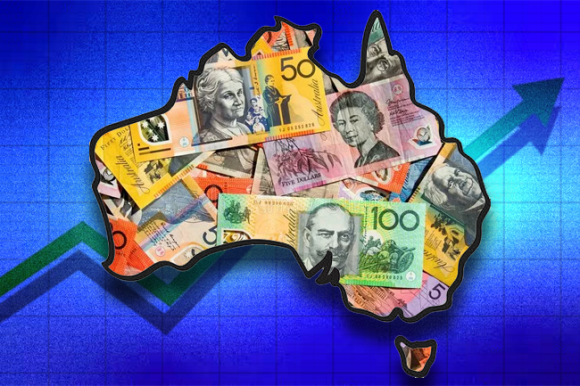
The RBA reacted in a normal way — it increased official interest rates three times from February to May, meaning that the cash rate was equal to a 14-year high of 4.35%. This strategy was aimed at discouraging borrowing and spending, all the while encouraging people to save.
This was explicitly designed to reduce the growth rate in the economy.
At the same time, the Government tightened fiscal policy. Its policy reaction culminated in the 12 May Budget, where cuts to spending – the National Disability Insurance Scheme (NDIS) in particular – and a series of tax changes (capital gains tax, negative gearing and trusts) were introduced to slow the rate of growth and improve the budget position.
House prices were a specific target for many of the Budget policies.
Fast forward to today
The policy changes are working. The rate of economic growth has slowed.
GDP grew by just 0.3% in the March quarter. This followed the previous three quarters of growth, which averaged 0.8% per quarter (1%, 0.4% and 0.9%). Forecasts for the June quarter (due for release on 2 September) are for sluggish GDP growth at around 0.3%, a result that would bring annual GDP growth down from 2.5% to around 1.8%.
The latest RBA forecasts are for annual growth to be tepid, at around 1.5%, through to 2028.
More evidence of the slowing economy is in the labour force data. The unemployment rate was low at 4.1% in December 2025 and January 2026, and it has risen to 4.4 or 4.5% in the three months to June. With the softer economy now looking entrenched and based on various job vacancy data, the unemployment rate is expected to approach 5% in the next 12 to 18 months.
At the same time, wages, measured by changes in the wage price index, have slowed to an annual pace of 3.2% in the June quarter, from the peak of 4.3% in late 2024. Wage growth at current levels is entirely consistent with inflation returning to or even below the midpoint of the RBA 2-3% target band.
Indeed, if these trends for economic growth, unemployment and wages continue for even one year, inflation will fall back to target via the policy changes in the first half of 2026.
What about house prices?
Another area where policy changes are working is housing.
Incentives to boost new dwelling construction via cuts in red tape and incentives for councils to reform their zoning rules have been introduced progressively in the last few years. The number of building approvals has risen by a strong 40% from the low point two years ago. New dwelling supply is a critical issue for mending the supply problems that have undermined improved housing affordability for many years.
While it is early days since the May 2026 Budget, the tax changes announced then have seen investor demand fall, with particularly sharp falls in demand for established dwellings.
With remarkable strength in investor demand for newly constructed dwellings, which can still be negatively geared, the pieces are falling into place for the boost to housing supply.
Australia-wide house prices have fallen by around 3% from the peak in March 2026, with larger falls evident in Sydney and Melbourne and just the early stages of a more moderate drop in most other cities.
Fast-tracking improved housing affordability is enhanced by an easing in house prices with moderate wage growth.
With house prices clearly trending down and likely to do so for several more months, at least, and wage growth continuing, house affordability will be further enhanced for some time.
This is exactly what the policy mix was aiming to achieve.
All of which goes to show that well-directed and well-managed policy reforms can work.
Stephen Koukoulas is one of Australia’s most respected economists, a past chief economist of Citibank and senior economic advisor to an Australian Prime Minister. You can follow Stephen on Twitter/X @TheKouk and on Bluesky @thekouk.bsky.social.
 This work is licensed under a Creative Commons Attribution-NonCommercial-NoDerivs 3.0 Australia License
Support independent journalism Subscribe to IA.


Related Articles
- Merchants of anger, fear and hatred thrive in Australia
- Real wage increases ensure living standards are rising
- Why wealth matters and why Australia is a world leader
- Flailing newsrooms stymied by household luxury spending splurge
- Forty-three years after Hawke, Australia needs a new economic debate