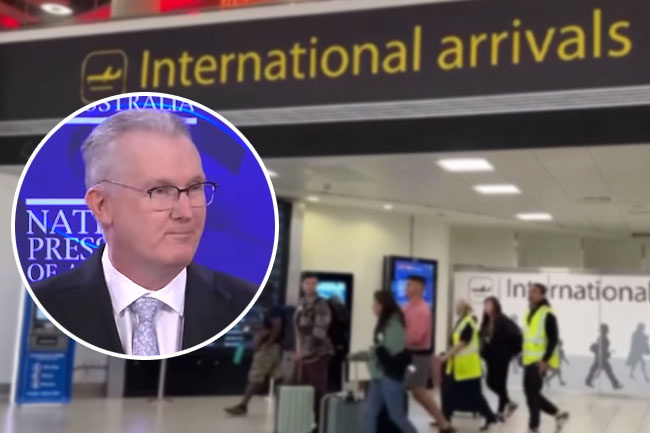
Reducing the asylum backlog is welcome but the Government needs to do more to counter the unscrupulous agents and labour hire companies involved, as well as removing unsuccessful asylum seekers, writes Dr Abul Rizvi.
LOSING CONTROL OF the asylum caseload has been a crucial factor leading to governments in Europe and North America losing the public’s trust in their ability to manage migration.
While it was former Home Affairs Minister Peter Dutton and Home Affairs Secretary Mike Pezzullo who first lost control of the onshore asylum caseload in Australia from 2015, the new Labor Government acted very slowly to address the issue.
That is likely to have contributed to Australians losing trust in both the Coalition and Labor’s ability to manage migration and to be attracted to One Nation’s calls for mass deportation.
It was not until late 2023 Labor announced a $160 million strategy to address the massive and growing asylum backlog it inherited. That has started to reduce the backlog of asylum applications at both the primary stage (see Chart 1) and the review stage (see Chart 2).
But reducing the asylum backlog is not sufficient. The Government needed to do more to counter the unscrupulous agents (registered or otherwise) and labour hire companies involved, as well as removing unsuccessful asylum seekers.
The problem of unscrupulous and prominent migration agents gaming the asylum system was highlighted by journalists Nick McKenzie and Amelia Ballinger in late 2022.
But it was not until well into 2026 that the Government started to take effective action against such agents. Why it waited so long remains a mystery.
In September 2026, the Government announced it would recruit/train more immigration compliance staff after this function had been run down under Dutton/Pezzullo, as well as expanding detention capacity for those who are located.
That was after it had watched the number of asylum seekers who were unsuccessful at primary and review stages but not departed consistently grow since well before it came to office (see Chart 3).
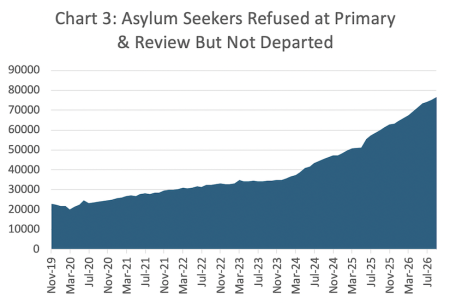
This was inevitable once the Government had invested in faster processing (which it had to do). Why it didn’t plan for a larger removal capacity in conjunction with that is also a mystery.
Was it not advised to do so by the Department of Home Affairs, or was it too squeamish to make the investment?
A stronger but lawful and carefully managed removals system (quite unlike ICE in the USA) is desperately needed to increase monthly removals of unsuccessful asylum seekers well above the current 20 per month.
The Government has recently taken two further steps in this space.
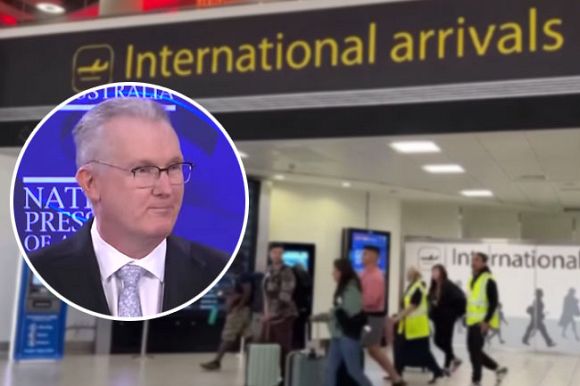
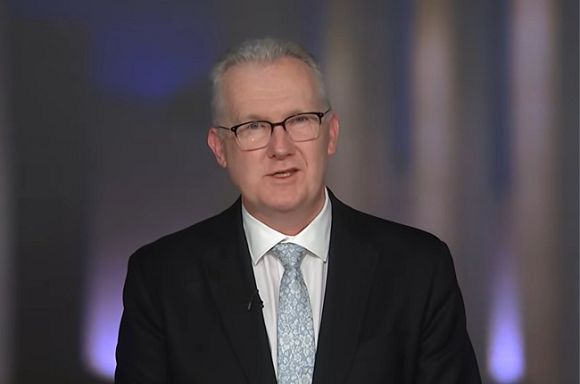
The first is to significantly tighten onshore visa applications for further stay in Australia in order to reduce Net Overseas Migration (NOM) to its NOM targets (announced by Home Affairs Minister Tony Burke, in his address to the National Press Club).
It will know that this creates the risk there will be another surge in onshore asylum applications. It needs to keep monthly asylum applications to around 1,500 per month or less and well below the record set under Dutton/Pezzullo of 2,700.
In addition, it has introduced an upfront refundable fee for appeals against asylum refusal decisions at the primary stage. Not surprisingly, asylum advocates have also criticised that decision.
What asylum advocates fail to consider is that a lax asylum system will eventually lead to asylum and removal policies such as those under the Trump Administration and in many nations in Europe.
If asylum advocates truly want to protect the asylum system for genuine asylum seekers, they would do well to support government efforts to minimise unmeritorious asylum applications and the removal of unsuccessful asylum seekers. They should have been encouraging Labor to act sooner.

We will know if the Government’s strategy is working if:
- Primary asylum applications settle at or less than 1,500 per month;
- Review asylum applications also fall below 1,500 per month;
- Removals rise to well above 100 per month; and
- Voluntary departures of unsuccessful asylum seekers rise such that the number of unsuccessful asylum seekers in Australia stops rising and steadily falls from the current 75,000.
It needs to do this not just because it would be good policy but also to counter One Nation’s mindless calls for mass deportation.
Dr Abul Rizvi is an Independent Australia columnist and former Deputy Secretary of the Department of Immigration. You can follow Abul on Twitter @RizviAbul or Bluesky @abulrizvi.bsky.social.
 This work is licensed under a Creative Commons Attribution-NonCommercial-NoDerivs 3.0 Australia License
Support independent journalism Subscribe to IA.


Related Articles
- Australia’s migrant communities are filling the gaps in refugee protection
- How Australia exploited the Iranian women’s football team
- The future of Australia's asylum seeker system
- Compassion for refugees can undo Trump's influence on Australia
- Urgent call to halt Migration Amendment Bill 2024