It’s been almost 25 years since 9/11, but its consequences continue to shape the world inherited by a generation born in its shadow. Digital editor Dan Jensen takes a look at a new Netflix documentary that examines how the tragedy shaped a new world.
TWENTY-FIVE YEARS after the September 11 terrorist attacks, there can be few people unfamiliar with the images.
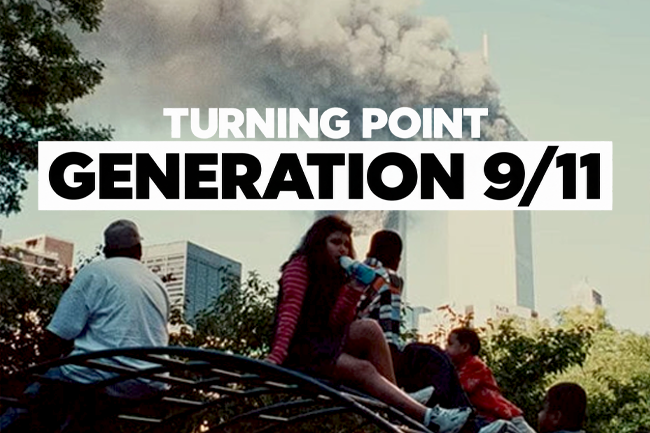
The planes. The burning towers. The terrified faces staring towards the sky. The collapse. The dust-covered survivors stumbling through streets suddenly transformed into a war zone.
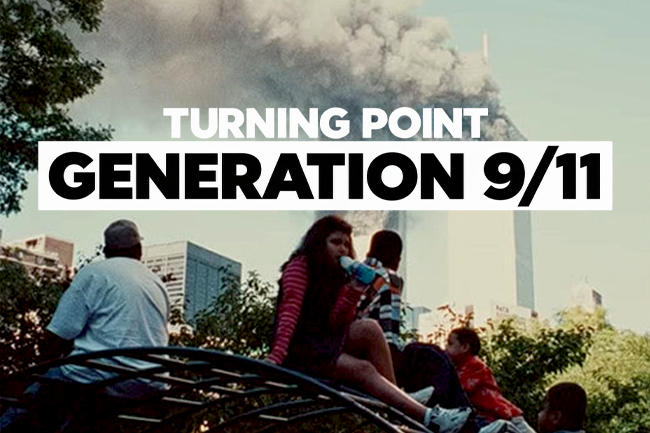
Yet Netflix documentary Turning Point: Generation 9/11 finds a compelling new perspective from which to examine one of the most documented events in modern history: What about the generation that inherited the world 9/11 created?
Directed by Brian Knappenberger, the film is a follow-up to his excellent 2021 five-part series, Turning Point: 9/11 and the War on Terror, which we reviewed here.
Where that series explored the attacks themselves and the disastrous War on Terror that followed, Generation 9/11 turns its attention to those who were children on that terrible day, or who weren't even born yet.
Some were robbed of parents before they ever had the chance to know them.

Laurel Homer, for example, was just ten months old when her father, LeRoy Homer Jr, the first officer of United Airlines Flight 93, was killed. Others featured in the documentary have similarly grown up knowing a lost parent largely through photographs, recordings and the memories of other people.
It is an extraordinarily sad concept. These children did not merely lose someone on 9/11. Their entire childhoods were shaped by an absence they were too young to understand when it occurred.
The documentary brings that emotional reality crashing home by returning to the attacks themselves. Recordings of final telephone calls from people trapped inside the World Trade Centre remain almost unbearably powerful.
A quarter of a century has done little to dull their impact. These are people who knew they were probably going to die, using their remaining minutes to contact those they loved.
But Generation 9/11 is interested in something much larger than remembrance.
It asks what happened to the world after the cameras stopped filming Ground Zero.
The answer is staggering.
The attacks unleashed wars, expanded government surveillance, transformed airport security, changed attitudes towards immigration and helped create an atmosphere of suspicion in which Muslims and other minorities were increasingly treated as potential threats.
The film's most fascinating argument is that the consequences didn't stop there.
Conspiracy theories flourished around 9/11, eventually colliding with the rise of social media. Claims once confined to fringe communities could suddenly reach millions of people, helping create an information environment in which distrust of governments, institutions, journalists and even objective reality itself became increasingly normalised.
For the children of those killed, there is something especially grotesque about growing up only to encounter strangers online insisting that the event that took their parents was somehow fabricated.
And then came Donald Trump.
Generation 9/11 draws a disturbing line between the fear and racial hostility unleashed after the attacks and Trump's eventual rise to power.
The “us versus them” mentality of the War on Terror did not disappear when America's attention moved away from Afghanistan. It evolved.
Muslims could be characterised as dangerous outsiders. Immigrants could be presented as an invading force. Entire groups of people could become threats against which increasingly extreme government powers were justified.
Trump understood the political potency of that fear remarkably well.
His calls for a ban on Muslims entering the United States, attacks on immigrants and relentless exploitation of racial and cultural division drew upon anxieties that had been cultivated throughout the post-9/11 era. The machinery of homeland security and suspicion built after the attacks also helped create a pathway towards the militarised immigration enforcement now associated with Trump's Immigration and Customs Enforcement (I.C.E.).
It is perhaps the documentary's most unsettling observation: Osama bin Laden's attack lasted a matter of hours, but the political and social shockwaves have continued for 25 years.
One event created an extraordinary butterfly effect.
Wars were launched. Governments accumulated new powers. Communities were demonised. Conspiracy theories proliferated. Social media poured petrol over existing divisions. Trust collapsed and politicians discovered that fear could be an extraordinarily effective electoral weapon.
Children born into that world simply grew up accepting much of it as normal.
That is what makes Turning Point: Generation 9/11 such a powerful companion to 9/11 and the War on Terror.
The earlier series asked how September 11 happened and examined America's response. This film asks an arguably more haunting question: What did that response leave behind?
There have been countless documentaries about 9/11 over the past quarter-century and there will undoubtedly be countless more. But Generation 9/11 justifies returning to the subject because it isn't simply looking backwards.
It is looking around us.
Twenty-five years later, the children of 9/11 are adults. Some never knew the parents they lost. Others have no personal memory of the attacks at all.
But every one of them inherited the world September 11 helped create.
So did the rest of us.

Turning Point: Generation 9/11 is now streaming on Netflix.
You can follow digital editor Dan Jensen on Bluesky @danjensen.bsky.social or check out his podcast, Dan and Frankie Go To Hollywood. Follow Independent Australia on Bluesky @independentaus.bsky.social and on Facebook HERE.
 This work is licensed under a Creative Commons Attribution-NonCommercial-NoDerivs 3.0 Australia License
Support independent journalism Subscribe to IA.