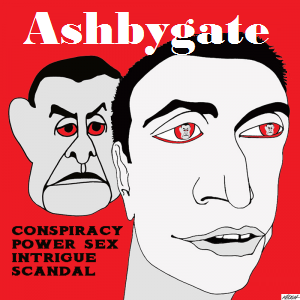
Fairfax embarrassment Paul Sheehan says the unprovoked killing of black teenager Trayvon Martin is not a story of festering injustice, writes Stuart Rollo.
IT CAME AS A GREAT SURPRISE to me last week to read the headline ‘Injustice festers far beyond the Zimmerman case’ printed under Paul Sheehan’s squinting visage in the pages of the Sydney Morning Herald.
Could Sheehan possibly be treating the Herald’s readership to an expose on the racism and injustice that so pervades the American legal system?
Was Paul about to blow the lid on the fact that it is not only easier to dodge a murder rap in America when your victim is black, as the Zimmerman case has just shown, but that if you are African-American man you are seven times more likely to be in prison than a white man?
Would Paul be bold enough to make the link between education and incarceration? Would he show that, in America, you are 6 times more likely to be sent to prison if you have not received a high school diploma?
Would he highlight the fact that just 52 per cent of African Americans complete high school, compared with 77% of whites, and that if you are black and without a high school diploma you are far more likely to be in prison than in employment? Would he then go on to draw a causal connection between poverty and crime?
Was this ‘festering injustice’ that Paul was about to speak of that which has pervaded the American social, political, and economic system since slavery? Which of the myriad ways, both formal and informal, that black people have been disadvantaged throughout American history, and remain today, was Paul going to draw on in his bold attack on the festering injustice in the United States?
It will not surprise any of the Herald’s regular readers that Paul did none of this.
Paul has consistently demonstrated an incredible lack of self-awareness in his writing for years now. As a man in his 60s, he recently treated the herald readership to a laughably out of touch exposé on ‘sexting’ amongst Australian youths — the creepy voyeuristic tone of which well complemented the perverse panegyric he composed in honour of a 29-year old TV host that he had taken a shining to last Melbourne Cup day.
His commentary on domestic political issues is lacklustre to say the least. The consistent toddler style name calling of members of the Labor cabinet, and rabble rousing commentary on asylum seekers ‒ or ‘boat people’ as he likes to call them ‒ are good indicators of the level of intellectual rigour he is wont to bring to the political discourse.
But regardless of how accustomed one becomes to Paul’s level of insight and journalistic ability, his assessment of the ‘festering injustice’ highlighted by the Zimmerman case will not fail to stun you.
The core facts of the Zimmerman case are beyond question.
Zimmerman, 29, armed with a concealed 9mm pistol, saw Martin, 17, carrying skittles and an iced tea, leaving a neighbourhood convenience store. With no reason, other than the colour of his skin, to suspect him of committing any crime, Zimmerman pursued Martin, confronted him (expressly against the directions of police) and, in an ensuing struggle shot him through the heart. Zimmerman was not even charged with committing a crime for 6 weeks. 18 months later he was found innocent by a jury of his (white and latino) peers.
In the wake of this tragedy, which so starkly highlighted the racial profiling of African American youth, and the inequity of the American legal system, Sheehan undertook to fearlessly confront the ‘festering injustice that goes far beyond the Zimmerman case’.
What followed was the most shameless exercise in deflection of attention and blame to have emerged from Sheehan since he outed Anthony Albanese and Wayne Swan as the people creating a political issue out of the death of John Gillard. Sheehan chose this moment of anger and grief for the African American community, to make the case that the supposed wilful ignorance of black-on-black crime is the real ‘festering injustice’ in America.
Sheehan bizarrely draws on the case of Emmett Till to support his argument. Till was a 14 year old African American boy kidnapped, tortured, and murdered by two white men for the alleged crime of flirting with a white grocery store proprietor. His murderers, who later admitted to their crimes and continued to live out their days unpunished, were acquitted by an all-white jury.
But there is no comparison with Trayvon Martin here, according to Sheehan. No, in fact, the only thing that bears comparison to the brutal, racially motivated, murder of Emmett Till is the murder of Darryl Green, a teenage victim of black-on-black crime from Chicago, murdered because he refused to join one of the local gangs.
But what, you ask, do these two murders 60 years apart have to do with each other?
Well both victims were black … and that’s it. Sheehan seamlessly segues from the salient fact that both Emmett Till and Darryl Green were black, into a discussion on why black-on-black crime is the real story of ‘festering injustice’ in America. ‘Forget the Zimmerman case, it’s over, the good guys won. It wasn’t a race thing it was a gun control thing’. Now we can move back onto the real subject raised by the murder of a black teenager by a non-black vigilante in a suburban gated community; black-on-black crime amongst America’s urban youth.
Even at this point, some kind of instructive or insightful commentary could have gone some way into turning this apologia for white people in positions of power everywhere into a legitimate article on why black-on-black crime needs to be addressed — albeit one that is confused, ill-timed, and unrelated to the issue at hand. But, dear reader, you know Paul too well.
What you get is a smattering of statistics that demonstrate black criminality without the slightest attempt to understand or contextualise it, followed by the insight that, in areas with America’s highest murder rates:
In every case these cities have a large African-American underclass and that is where the murders are clustered. I don't get heartfelt emails about this slaughter. I don't see protests in the streets. What I do see is a collective national flinching from even naming this blight. The people to be blamed for murder are the people who pull the trigger or push the blade. And the people who have pulled the trigger in most murders of African-Americans are African-Americans.
In fact, Paul concludes, poverty is just an excuse used to defend black people.
Well this one takes the biscuit. If Paul Sheehan were a piece of absurdist performance art, created to hyperbolically mock the wilful ignorance of the conservative commentariat, he would have a prime time slot on the ABC. The sad truth is that he is a (supposedly) serious journalist at the Sydney Morning Herald.
An unarmed black teenager is pursued and murdered by a gun toting self-appointed lawman. The murderer is then acquitted. Thousands protest across America. Commentary surrounding the racism that pervades the judicial system in the world’s most powerful country reverberates across the global media, and the best thing the Herald can muster are the diversionary blabberings of a man who should have been put out to pasture long ago.
It’s time the editorial staff at the Herald replaced their resident conservative talking head with one that still contains a few marbles.
This work is licensed under a Creative Commons Attribution-NonCommercial-NoDerivs 3.0 Australia License