How interviews and reporting on figures like Elon Musk and Pauline Hanson show a wider failure — and why that failure feeds the division we're seeing everywhere, writes Wayne Hawkins.
DEMOCRACY RUNS ON A SIMPLE, UNGLAMOROUS AGREEMENT — that facts are facts, truths are truths, and lies are lies, and that we can broadly tell the three apart.
It doesn't require everyone to agree on values, policies, or who should govern. But it does require enough shared ground on basic reality that disagreement can actually be resolved through debate, evidence, and elections, rather than through two groups living in entirely different versions of the world.
That shared ground is exactly what's eroding. And a lot of that erosion happens in plain sight, in interviews and news reports that let big, confident, wrong claims pass without challenge — because confrontation is awkward, access is valuable, and a bold claim makes better television than a careful correction.
Look closely at how two very different public figures get treated by the media, and the same gap shows up both times.
The pattern: Elon Musk's promises that don't arrive
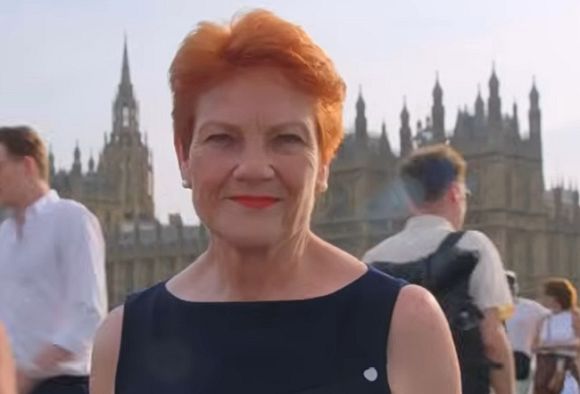
When Elon Musk sat down with The Economist in July 2026, he made a claim he's made in different forms for years: give everyone money, don't worry about inflation, because AI-driven abundance will make up the difference. Editor Zanny Minton Beddoes pushed back and asked where the money would actually come from — one of the rare moments in the interview where a claim was tested rather than just reported.
That kind of pushback is rare, because this is a pattern going back over a decade, not a one-off. Self-driving cars have been described as "basically solved" and arriving "next year" almost every year since around 2015.
A driverless taxi fleet has been promised repeatedly since 2019 and still isn't running freely in most places. Brain-chip trials, mass-produced robots, and crewed trips to Mars have all followed the same shape: a bold, specific promise, a big miss, and then a brand-new confident promise that replaces the old one, with barely a mention of what didn't happen last time.
Each new prediction gets reported as fresh news. Almost nobody in the room asks the obvious follow-up: you said this before, and it didn't happen — so why should we believe you now?
The same pattern, closer to home: Pauline Hanson
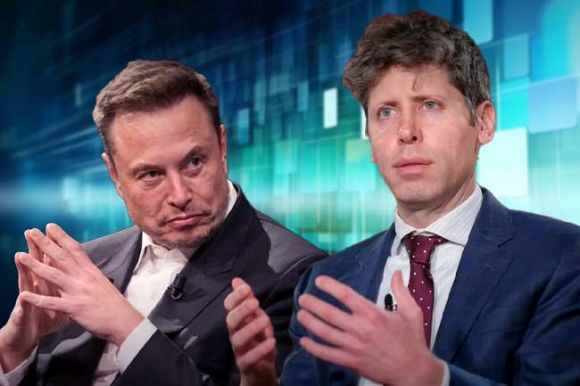
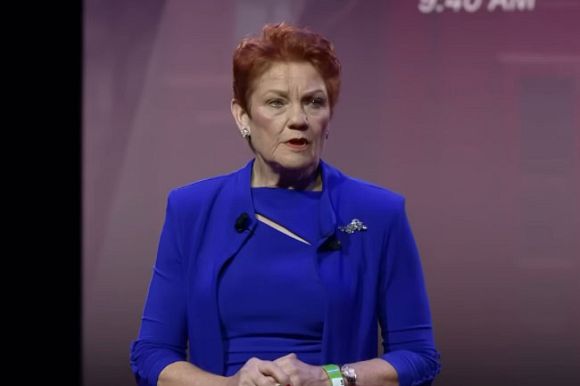
Australia has its own version of this. At her 2026 National Press Club address, Pauline Hanson claimed women were terminating pregnancies the day before giving birth — a claim that doesn't match how late-term abortion actually works in Australia.
In the same speech, she compared Australia's migrant population to the United States, citing a U.S. figure of around 14%. The real figure, according to Pew Research data, is closer to 37% — more than double what she said.
Independent fact-checkers picked both claims apart afterwards. But that scrutiny happened in follow-up articles, days later, reaching a fraction of the audience who heard the original claims live.
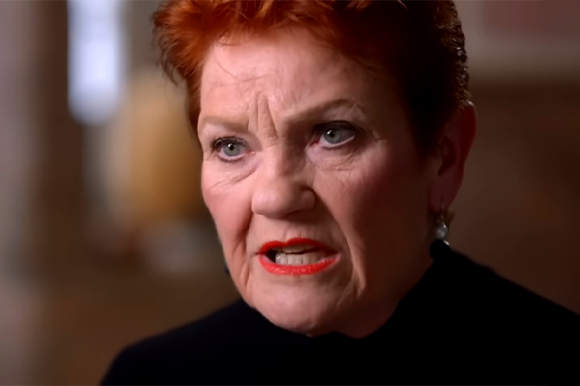
Channel 7 shows the same gap on the interview side. Its Spotlight program followed Hanson around the UK, framed as a tough, probing piece — but the questions stuck mostly to her personality and patriotism rather than testing her specific factual claims against the record.
It made for dramatic television. It didn't leave viewers any better informed about what was actually true.
Why the media lets it slide
This isn't really about laziness or bias. It's about incentives that apply just as much to a tech billionaire as to a domestic political figure.
Access is leverage. Big names generate headlines whether or not the claim holds up, and pushing too hard risks losing the next interview.
Big, bold claims make better television than careful correction. A confident prediction or an emotive line is more shareable than a fact-check.
Calling out the pattern takes homework. Naming the exact date of a past promise, or the real statistic behind a claim, means walking in prepared — and most interviews aren't built that way.
The result is the same in both cases: the claim becomes the story, and the correction – if it happens at all – arrives too late and reaches too few people to matter.
Why this is a democracy problem, not just a media problem
This is where the stakes go well beyond any one figure.
Democratic debate assumes that when two people disagree, at least one of them can be shown to be wrong by pointing at the same shared set of facts. That's how disagreement gets resolved without violence: not by everyone agreeing on what to do, but by everyone agreeing on what's actually happened, what's actually true, and what's actually false.
When interviews and reporting let bold, false, or unfalsifiable claims pass unchallenged, that shared foundation quietly disappears. People aren't just disagreeing about policy anymore — they're operating from entirely different sets of "facts," each reinforced by the media environment that let the original claim go unchecked.
One audience hears "robotaxis are coming" and "51% versus 14%" as settled truth. Another audience, further down the fact-checking trail, hears something completely different. Neither side is being irrational — they're responding rationally to two different realities they were each handed.
Is it any wonder, then, that division is spreading everywhere — not just in Australia, not just around any one billionaire or one senator, but across democracies worldwide?
When the mechanism that's supposed to keep everyone anchored to the same reality stops doing its job, division isn't a mysterious cultural mood that appeared out of nowhere. It's the predictable result.
What better journalism would look like
None of this requires hostility or "gotcha" journalism. It just means treating each big claim as part of a pattern, not a stand-alone story:
Remind them what they said before, and when. "You promised this by this date." "You've made a similar claim before."
State plainly what actually happened. It didn't happen, or the numbers don't match reality.
Ask what's different this time. Is there real evidence behind the new claim, or just the same confidence with nothing new underneath it?
If there's no real answer, that becomes the headline — not the claim itself, but the fact that it was made with no track record to back it up.
That one shift – treating each new claim as part of a pattern rather than a fresh story – would change the entire relationship between media and the people who talk this way, whether they're running a car company or leading a political party.
Right now, the claim is the story. It should be the pattern that's the story.
Facts, truths, and lies need to be agreed upon for democracy to function. Every unchallenged claim, every interview that skips the follow-up, is a small withdrawal from that shared account — and the division we're watching build across the world is what happens when the balance runs out.
Wayne Hawkins is an independent commentator based in Tasmania and an independent candidate for the federal seat of Clark.
 This work is licensed under a Creative Commons Attribution-NonCommercial-NoDerivs 3.0 Australia License
Support independent journalism Subscribe to IA.


Related Articles
- Two words: Case closed
- Media framing is shaping our opinions before we realise it
- From propaganda to profit: The hidden economy of media control
- The cold facts of convenient truths
- ABC News shamelessly spreads Liberal Party’s blatant lies