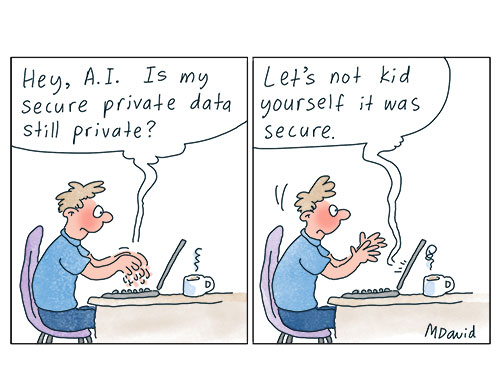
Social media, which began as a tool with democratic promise, has evolved into a system where commercial incentives, human psychology and political strategy interact in ways that weaken the informational foundations on which democracy depends, writes Paul Budde.
AT THE START of the social media era, there was a widespread belief that these platforms would strengthen democracy. By lowering barriers to participation, they appeared to give ordinary citizens a voice and bypass traditional gatekeepers. The Arab Spring became the defining example of this optimism.
But that promise was always more fragile than it seemed. Social media helped mobilisation, but it did not build democratic institutions, shared norms or lasting accountability. Over time, a different dynamic emerged — one that is now reshaping the foundations of public discourse.
The shift to engagement
By the mid-2010s, major platforms such as Facebook had aligned their systems around one central objective: maximising engagement. The longer users stayed and interacted, the more revenue could be generated.
This led to algorithmic systems designed to prioritise content most likely to attract attention. In practice, that meant favouring material that is emotionally engaging — provocative, surprising or polarising.
The consequences were predictable. Content that triggers outrage or fear consistently outperforms measured, fact-based information. This is not because platforms intentionally promote falsehoods, but because their systems reward what humans are most responsive to. Research shows that misleading information often spreads faster and further than factual reporting, particularly in political contexts.
The erosion of shared facts
This has transformed social media into powerful amplification systems. The issue is not simply that misinformation exists, but that platform structures elevate it.
Democracy does not require agreement, but it does depend on a shared factual baseline — enough common ground for disagreement to remain meaningful. When that erodes, public debate fragments into competing realities, reinforced by algorithmic feedback loops that prioritise engagement over accuracy.
Mass behaviour and the reshaping of leadership
These dynamics connect to deeper societal trends. José Ortega y Gasset described the rise of the “mass man”, while Friedrich Nietzsche warned of herd behaviour — conditions where opinion detaches from knowledge and conformity outweighs independent judgement.
Social media amplifies these tendencies. It rewards rapid reaction, group alignment and emotional resonance over reflection.
In this environment, leadership is reshaped. Those who rise are often those who can master visibility and mobilisation across fragmented audiences. Influence becomes tied to attention.
What is increasingly observed, however, is that some leaders who emerge through these dynamics go on to challenge or weaken the institutions that underpin democracy. This tends not to happen through sudden rupture, but through gradual erosion — questioning courts, media and electoral systems.
Social media accelerates this process by enabling direct communication with supporters and the continuous mobilisation of public sentiment against institutional constraints.

The industrialisation of influence
These structural dynamics are now actively exploited. Political actors, governments and commercial organisations use targeted messaging, coordinated networks, and data-driven strategies to shape public opinion.
Research from institutions such as the University of Oxford has shown that this is now widespread across many countries. Disinformation is no longer incidental — it has become embedded in political communication.
At the same time, traditional media are losing influence, while individual creators – influencers, vloggers and commentators – increasingly shape how people interpret events. The boundaries between journalism, entertainment and political messaging are becoming blurred, with far fewer accountability mechanisms.
A more sober assessment
It would be too simplistic to argue that social media has destroyed democracy. They have expanded participation and access to information.
But the balance has shifted. What began as a tool with democratic promise has evolved into a system where commercial incentives, human psychology and political strategy interact in ways that weaken the informational foundations on which democracy depends.
The issue is no longer whether social media influences democracy. It is how profoundly they now shape the conditions under which it operates.
 This work is licensed under a Creative Commons Attribution-NonCommercial-NoDerivs 3.0 Australia License
Support independent journalism Subscribe to IA.


Related Articles
- Condescending and harmful: An update on Australia’s social media ban
- Social media ban: A chance for childhood to breathe again
- Swipe, scroll, forget: The decline of deep reading
- eSafety Commissioner pushes ahead with unprecedented online restrictions
- Anxiety and social media: What not looking away is doing to our minds