Italians have voted decisively in a referendum to defy its authoritarian Government. Adriano Tedde says this is a positive development for supporters of democracy in both Italy and the world.
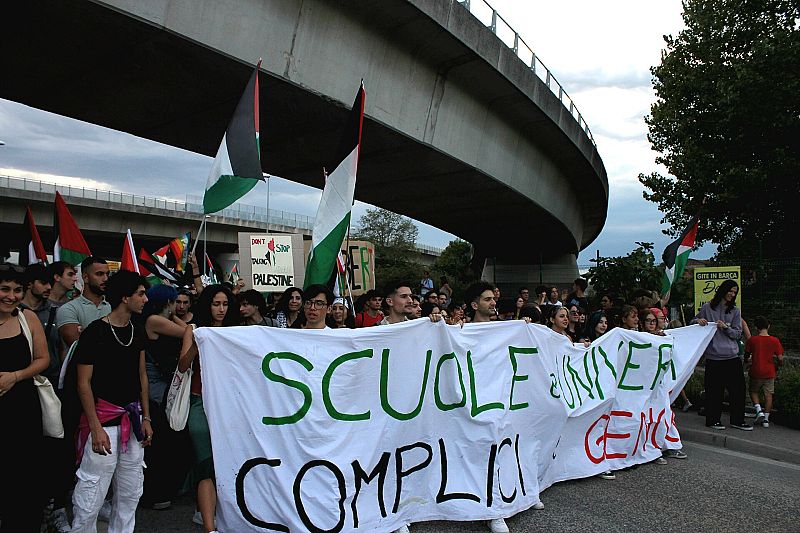
DANIELE, a friend’s 22-year-old son, was arrested in Pisa last year for blocking train traffic to protest Italian complicity in the Gaza war. He belongs to a group of young activists whom the media quickly labelled the “Gaza Generation” after their loud protests and strikes across the country in 2025. They are citizens aged between 18 and 30, often overlooked by public opinion and by a ruling class in a country overwhelmingly run by older people.
Yet on 22 and 23 March, Daniele and his peers made history by participating en masse in a Referendum that was meant to shake the foundations of the republican form of state Italy adopted after World War II. Their decisive preference for the “No” option surprised the media, pollsters and, more importantly, politicians. It also played a decisive role in safeguarding democracy in Italy.
Italians were called to the polls to vote on a Constitutional reform of the judicial system designed by the far-right Government led by Prime Minister Giorgia Meloni. The reform aimed to separate the career paths of judges and prosecutors, create two distinct governing bodies for the judiciary with members selected through a lottery system, and establish a new court for disciplinary actions against magistrates.
This highly technical restructuring of the judicial branch was presented by its proponents as a step towards a more impartial system. Opponents, however, argued that the new rules were crafted to subject the judiciary to political will and to shield those in power from judicial inquiries — a recurring issue in Italy since the 1990s, when magistrates began investigating corruption at all levels of the political sphere.
Since the referendum was called at the end of last year, pollsters had indicated that the “Yes” camp would win comfortably. Meloni could count on the strong support of mainstream media and major opinion leaders to advance a reform that many described as incomprehensible to the average citizen.
As the vote approached and polls showed the “No” camp gaining momentum, Meloni appeared on a popular podcast to encourage young people to support the constitutional change. As she had hoped, young people did turn out to vote — but they did not follow her advice to vote “Yes.” The referendum drew around 60% of voters, a remarkably high turnout for such a technical issue. The “No” vote secured 53.7% of the ballots, against 46.1% for the “Yes,” plunging Meloni’s coalition into disarray.
While Meloni’s political opponents in Rome celebrate the victory of the “No” camp, observers note that the result was made possible by 3 million cross-party voters who had abstained from the 2022 Italian General Election, which recorded the lowest turnout in Italian history. In other words, although trust in politics remains at historic lows, democracy was protected by a reawakening of social conscience in a country where the anti-fascist Constitution of 1948 is still seen as the nation’s anchor and lifeline.
This outcome was made possible by grassroots organisations and magistrates themselves, who worked tirelessly through social media to organise community meetings and door-to-door outreach and educate voters about the risks of the Government’s proposed reform. At stake was the independence of Italy’s magistracy and the integrity of a constitutional framework designed to guarantee a perfect balance of state powers. The media and political class failed to anticipate this shift, in a world where elites and citizens are increasingly disconnected.
LESSONS FROM ITALY'S VOTE
At least three lessons can be drawn from Italy’s vote.
First, one should never underestimate the power of grassroots movements, which form the backbone of any healthy democracy. People want to participate in the political system and have their voices heard. That is why they march and protest when they disagree with their governments. And when politicians fail to listen, they will eventually squander their support and lose office.
Second, Italy’s referendum is a warning sign for the rest of Europe as illiberal politics gains ground across the continent, where countries have been dangerously flirting with authoritarian tendencies — from Germany to Poland, from Hungary to Finland. The desire for more democracy has emerged loud and clear through the participation of Italy’s civil society in the Referendum. This offers hope that a similar dynamism exists in other nations and that it can prevail against the darker forces looming over Europe.
Third, much of the resentment voiced by young people against Meloni’s Government stems from its foreign policy, which has aligned with Trump and Netanyahu. Often treated as the domain of geopolitical experts, foreign policy choices can have a significant domestic impact. Meloni’s refusal to acknowledge Italians’ preference for moderation and peace was ultimately reflected in the referendum results.

Since the time of Machiavelli, Italy has often served as a political laboratory ahead of other European countries. After the vote, I spoke with Daniele’s father, who had been frustrated when his son was arrested during last year’s protests. This time, he told me how proud he was of him.
Voters like Daniele, in the prime of their lives, must now translate their ideas and energy into new political initiatives, finding representation in local and national institutions – as their parents and grandparents once did – to reinvigorate Italy’s ongoing democratic experiment.
Dr Adriano Tedde is a lecturer in Strategic and American Studies at Deakin University.
 This work is licensed under a Creative Commons Attribution-NonCommercial-NoDerivs 3.0 Australia License
Support independent journalism Subscribe to IA.