As the Western alliance fractures under raw power politics, Australia faces a stark strategic choice, writes Dr Adriano Tedde.
ON 22 JANUARY 2025, Foreign Minister Penny Wong spoke of Australia and America’s “shared interest and ambition” on the occasion of the first meeting with her U.S. counterpart, Marco Rubio. Who could have guessed that the Minister’s words would have become unthinkable and unpronounceable in a matter of only 12 months?
The phrase “shared values and shared interests” had been a refrain for many years, pronounced by Australia and several other countries that pledged their allegiance to a family of rich economies with a supposedly superior political system (liberal democracy), called the “West”.
That family today has been disintegrated by the reckless politics of U.S. President Donald Trump, which broke up with decades of customary reassurances about the ethical and humanitarian character of Western politics. Abandoning the rhetoric of his predecessors, the 47th U.S. President has exposed in all its frightening simplicity the stark differences in national interests and values within the Western family.
Three recent episodes have signalled the final disintegration of the West as we have known it for some 80 years.
Firstly, on 3 January, the USA conducted a military action against a sovereign state, Venezuela, taking its President, Nicolás Maduro, to U.S. soil to face drug charges. Trump announced his country will run Venezuela and seize its massive oil reserves, which Venezuelan past economic policies made inaccessible to America.
The open admission of using force to satisfy its national interest only is the blatant refusal of common, agreed-upon, written and customary rules. International law was one of the great achievements of the West along the difficult and utopian path of Kant’s perpetual peace.
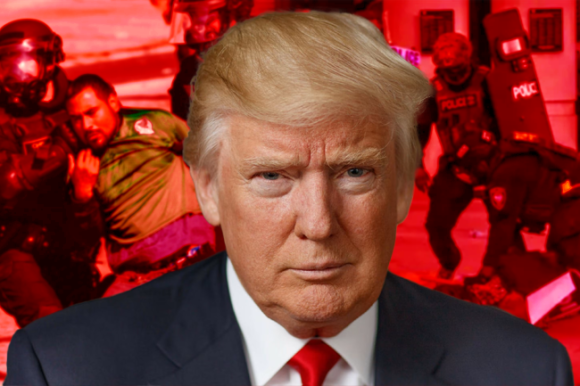
Four days later, the President and his deputy, JD Vance, justified the killing of an unarmed woman by a federal agent because she was a dangerous radical individual. Those words, which were partially rectified later, undercut the very foundation of Western tradition: the rule of law.
Executing citizens for their ideas was a specialty of totalitarian regimes a century ago, but even those regimes had the decency to set up a trial before sentencing death against someone. Today, state agents are protected by “absolute immunity”, according to Vance. Readers of Orwell’s 1984 will have no problem in recognising the transposition to real life of the offence of “crimethink”.
While these alarming acts of violence were taking place, Trump resurrected a topic that remained dormant for several months. The U.S. expansion into Greenland. Again, the main drive of such an action is the national interest, namely the intent to control a resource-rich land in a strategic region, like in the case of Venezuela.
What is extraordinary about the Greenland case is that the U.S. is openly threatening its own allies of the Western family for the first time, revealing the multiple fractures within that family.
U.S. and European interests had been at odds since the end of the Cold War, but Europe – instead of asserting a cohesive, integrated power through its Union – has remained a collection of medium and small satellites of U.S. military interventions, and various wars (from ex-Yugoslavia to Libya, Iraq and Afghanistan) have been carried out to promote and protect American interests first.
The clash between European and U.S. interests could not be more evident than in Victoria Nuland’s cry (“Fuck the EU”) when America meddled with regime change in Ukraine in 2014. Yet, European countries, also on that occasion, remained faithful to their big ally and carried on until their recent industrial collapse, which is the main effect of the U.S. will to sever the economic relations between Europe and Russia — something made possible only through the Ukrainian crisis.
Today, Trump’s appetite for Greenland makes the enduring European loyalty no longer justifiable. It is now sad to witness how the impoverished European satellites with their politically meaningless Union are trying to confront the bully, acting disjointedly. Some attempted a symbolic military deterrence by sending soldiers to Greenland, in a manner that would enact the end of NATO.
France and Germany are finally reconsidering a timid return to dialogue with Russia, a partner that could share the same security interests in the polar region. Meloni’s Italy, although expressing concern for Greenland, remains Trump’s most faithful friend. Meanwhile, the UK, Poland and the Scandinavian and Baltic bloc remain convinced of the imminent Russian invasion of the West.
To deepen the fractures within the West, Canadian Prime Minister Mark Carney, in his speech at Davos on 21 January, used explicit terms to distance his middle-power country from the Pax Americana. While we can rest assured that the phrases “rules-based order” and “shared values” will not be pronounced often in 2026, one question remains.
Where will Australia stand in this fragmentation of the West?
Will it join Canada in pronouncing its middle-power pride and affirm its own interests? Or will it follow a business-as-usual path, hoping for better times to come?
Dr Adriano Tedde is a lecturer in Strategic and American Studies at Deakin University.
 This work is licensed under a Creative Commons Attribution-NonCommercial-NoDerivs 3.0 Australia License
Support independent journalism Subscribe to IA.