A disruption in the Strait of Hormuz could leave Australia facing fuel shortages within weeks, exposing just how fragile our energy security has become, writes Dr Norm Sanders.
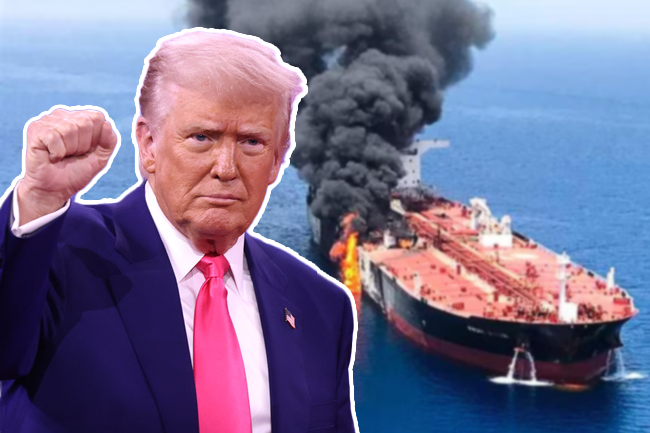
THE YANKS are bleating because their gas (petrol) prices have gone up by 27 per cent since President Donald Trump started his war on the rest of the world.
CNN, ABC, MS NOW and the rest of the U.S. media say nary a word about what is going to happen to us in Australia. In fact, Trump’s war is about to cause a major hit to our economy and entire way of life.
With the war stopping shipments of crude oil, the Australian Government will almost certainly have to start rationing. Coal mining and farming will be given priority. Coal mining is exempted because of the necessity of furnishing fuel for electrical power stations.
The situation is rapidly getting worse, with China telling refineries to halt all fuel exports that customs had not yet cleared. This would have flow-on effects for jet fuel supplies in Australia as China furnishes a third of our supply.
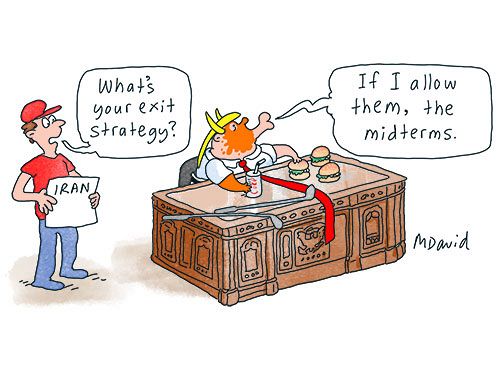
Overall, Australia sources about 90 per cent of its petrol, diesel and jet fuel from overseas refineries. This includes Singapore, Korea, Japan and China, which rely on crude oil from the Middle East coming through the Strait of Hormuz, where close to a quarter of the world’s supply transits.
But the Strait of Hormuz will be closed for weeks. Donald J Trump closed it with his war of choice against Iran. The Strait is what political scientists call a “choke point”. It is 39 kilometres wide and generally quite shallow, with the deepest point near the southwestern shore. This is the location of the two shipping lanes, which are 3 kilometres wide in each direction. It is bounded to the north by Iran and to the south by the oil producers of Oman and the United Arab Emirates (UAE).
What is keeping the tankers from transiting the Strait is the threat of Iranian attacks. The Iranians are looking for revenge after the death of Supreme Leader Ayatollah Ali Khamenei, his daughter, son-in-law and daughter-in-law in a bombing raid. His son, the new Supreme Leader, Mojtaba Khamenei, was reported to have lost part of a leg.
The Iranians have the equipment needed to cause great economic pain in the form of mines to control the Strait of Hormuz. Some float on the surface. Some rest on the seafloor. All could further complicate efforts to restart shipping in the Persian Gulf. Iran has more than 5,000 naval mines in its arsenal, according to estimates by the Defence Intelligence Agency. And Iran is beginning to deploy them, U.S. officials said.
The geography of the strait and the surrounding waters works to Iran’s advantage. A long southern coastline affords ample opportunity for small boats to dart out with mines. Tight shipping lanes leave little room to navigate. And the water at the strait’s narrowest point is only about 60 metres deep, shallow enough to lay minefields. It could be hugely expensive and dangerous for the U.S. Navy to have to conduct what would most likely be a weeks-long mine-clearing operation in the Strait of Hormuz, according to military officials.
The most common mines are moored to the bottom and contain explosives, with a pocket of air above to provide buoyancy. Thick horns pointing outward contain devices that cause the mine to explode upon contact with a ship’s hull.
During the Cold War, “bottom mines” became more widespread. They contain a much larger quantity of explosives than moored mines and lie on the seafloor. These mines use a combination of sensors, magnetic, acoustic, pressure and seismic in order to determine when a ship is nearby. Then they detonate with hundreds of pounds of force, sending a large gas bubble upward against the targeted ship.

Iran also has limpet mines — small explosive charges placed by swimmers or divers to disable an anchored ship, often by targeting the propulsion and steering gear underwater. They typically explode after a preset amount of time. Mines may not necessarily sink the vessel immediately. Tankers are designed to survive hull damage. The watertight subdivision of the tanker helps retain buoyancy if the hull is damaged. But the tanker would be incapable of delivering its crude.
While laying minefields can be done quickly, it’s a painstaking process to clear them. It is an almost impossible task while under fire. To find the mines, clearance teams can deploy a remote vehicle equipped with sonar to survey the water in a back-and-forth pattern. Once mines are found, they can be destroyed by sending explosive devices or divers to disarm them.
Reopening the Strait of Hormuz would not require the removal of every last mine. Clearance teams could find paths through a minefield that are wide enough for ships to safely pass through, and mark those channels with buoys. Once commerce has been restored, the clearance teams can expand their surveys to find and eradicate any remaining minefields.
Iran’s new mining effort in the Strait of Hormuz is not particularly fast or efficient, American officials said, but the Iranians appear to be hoping that they can lay them faster than the United States can clear them and create a further deterrent for ships to move through the strait. Ship owners and insurance underwriters are well aware of the dangers and are keeping their tankers out of harm's way as much as possible. (DJT said they should “show some guts”.)
Unfortunately for Australia (and the rest of the world), mine removal hasn’t even started. Best estimates are that mine sweeping will be beginning in limited areas in several weeks. It is a painstaking process expected to take weeks or months. Targeted clearing for the shipping corridors could possibly be quicker.
Meanwhile, Australia holds only weeks of fuel in reserve, leaving us dangerously exposed. When the mines are finally cleared, tankers will take three weeks to arrive in the refineries in Asia. Then the crude oil has to be refined. There will probably be a long queue for loading. Once on board the tanker, the petrol and diesel will take two or three weeks to reach Australia.
We are in deep trouble.
All due to Donald J Trump’s ego and ignorance. Trump is a perfect example of a wealthy New Yorker, where greed is good and money is God. His knowledge of the real world is practically non-existent. His wealth protected him from the problems encountered by the lower classes. A stint in the Army might have enlightened him a bit, but he dodged the draft by claiming bone spurs in his heels. His college degree was from the Wharton School of Finance and Commerce.
In his first term as President, Trump at least had some in his Cabinet to keep him in check. This time around, he has surrounded himself with incompetent yes men and women.
The result is the disaster we are about to endure.
Dr Norm Sanders is a former commercial pilot, flight instructor, university professor, Tasmanian State MP and Federal Senator.
 This work is licensed under a Creative Commons Attribution-NonCommercial-NoDerivs 3.0 Australia License
Support independent journalism Subscribe to IA.


Related Articles
- The Iran war is Australia's margin call
- JEFF McMULLEN: Fancy thrones, paper tigers and dirty bombs
- Pressure mounts on Australia to distance itself from Iran war
- Stranded in Dubai: Missile alerts and a desperate race to get home
- EDITORIAL: Inevitably, Australia joins a declining Empire's latest needless war