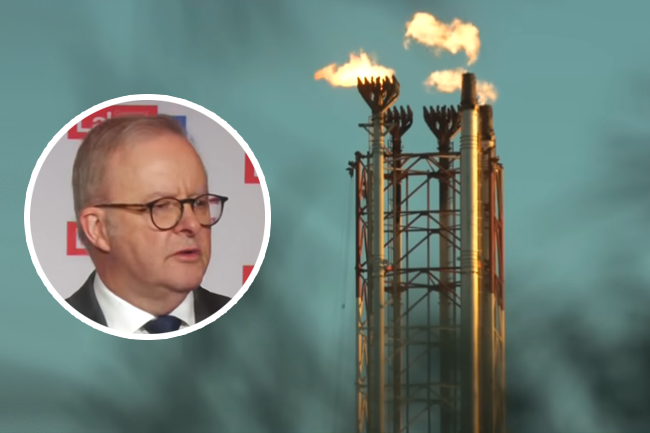
The Albanese Government has rejected calls for a tax on gas exports, but strategies remain for environmental campaigners, as Alan Austin reports.
THE AUSTRALIA INSTITUTE and the Independent senators are continuing their quixotic campaign to get the liquefied natural gas (LNG) exporters to pay 25% tax. But they are now just tilting at turbines.
The death knell for their heroic campaign arrived when Mexico became the 20th nation to enter the lucrative global LNG export market.
Crowded field rapidly expanding
When Australia began exporting LNG in 1989, it was one of just eight nations doing so. For a brief period in the late 2010s, Australia was the world’s leading exporter by volume. More than 20 countries now compete in this sector. Leading exporters today are the USA, Qatar, Australia, Russia, Malaysia and Indonesia.
Few, if any, LNG exporting nations impose a direct tax on exports. Like Australia, they collect corporate tax on profits declared by the export companies.
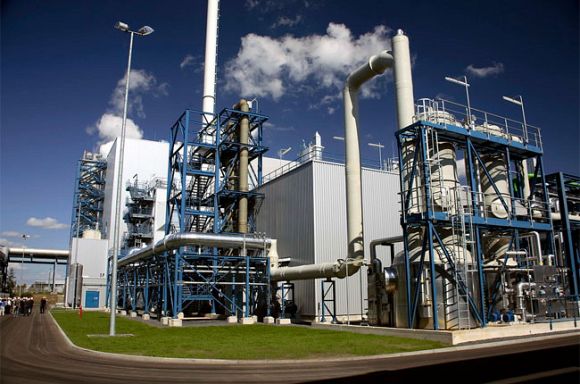
The reformist vision
The Australia Institute and its allies argue that a 25% tax on the value of the exported gas is necessary for a fair return for resources currently being “given away for free”.
The estimated $17 billion in annual revenue is vital, they claim, to fund public housing, free childcare and other community services.
They believe the tax would also fix the shortage of gas for domestic consumption by incentivising producers to supply the local market first, resulting in lower local prices.
The Government’s response
The Albanese Administration has responded that the tax would risk Australia's reputation as a reliable trading partner and jeopardise fuel security.
The Government believes the industry currently pays enough. The Prime Minister appears to accept the claim from the industry that gas companies ‘paid $22 billion of tax last year’ – the total of company tax, royalties and the Petroleum Resource Rent Tax (PRRT) all added together.
Flaws in the Institute’s case
The Australia Institute’s CEO, Richard Denniss, sounds most compelling when he says:
“Builders have to pay for bricks, bakers have to pay for flour. It’s pretty obvious that the gas industry should have to pay for gas.”
The flaw in that logic, however, is that countless billions of dollars and thousands of working lives have been spent over the last 200 years to establish Australia’s industrial factories and develop its nationwide primary industries. Taxpayers have invested billions in the infrastructure for wheat and other farm production and for bricks and other industrial output.
But no Australian has spent one cent to put the gas in the ground the exporters are seeking to access. No taxpayer dollars were expended in providing those reserves.
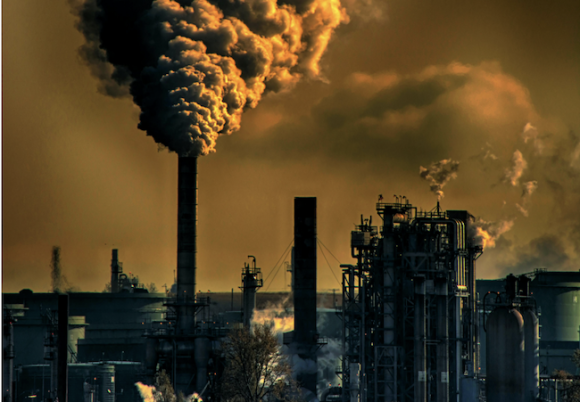
Mexico’s critical decision
Mexico, Canada and many other countries traditionally allied with the USA have been forced by U.S. President Donald Trump’s erratic and destructive decisions to abandon long-held trade relations with their powerful neighbour, now an international pariah. They are forging more commercial independence.
As part of this, Mexico has reduced gas imports from the USA, expanded its local extraction and is now seeking export markets.
Obviously, it would be an embarrassing foot-shooting decision for Australia to impose a tax if that forced Woodside Energy and the other exporters to shut down Australia’s gas fields and switch to Mexico or elsewhere. But would they?
IA asked Woodside if the entry of new suppliers changed the status of this tax debate and a spokesperson replied:
‘Woodside's view remains that Australian LNG projects compete for customers and investment in a global marketplace. As new LNG and gas-exporting nations enter the market, maintaining Australia's international competitiveness becomes increasingly important.’
Clearly, the exporters accept the concept of a fair go; they believe that’s already in place:
‘In Woodside’s view, Australia’s current taxation regime for gas resources – including corporate income tax, PRRT, royalties and excise – is delivering a fair return to the Australian people, while ensuring the country remains competitive to attract investment.’
So has Woodside directly lobbied the Albanese Government on this?
‘Woodside regularly engages with governments and policymakers on matters affecting the energy industry and Australia's international competitiveness.’
Parliamentary inquiry inconclusive
In response to the concerted 25% tax push, the Government supported a Senate Inquiry into taxing gas resources earlier this year. The final report released in May failed to reach agreement on any tax changes.
The comments of individual senators highlighted the current lack of timely, transparent data on revenue, profits and PRRT liabilities.
On fuel security during the Middle East conflict, the committee noted the Prime Minister’s concerns and urged him to reconsider the issue after the conflict ends.
Successful union campaign
Parallel to the 25% tax push has been the long-term drive led by the Australian Workers' Union for a gas reservation scheme to ensure plentiful, low-cost domestic supply for Australian households.
This should be a no-brainer. If Australia has the world’s largest supply of natural gas, surely citizens should be able to access it themselves.
The Government has acceded to this. The new scheme requires gas exporters to supply a proportion of their production, equivalent to 20% of exports, to the local market from 1 July 2027.
The way forward
Pressure remains on the Federal Labor Government. Domestic gas could still be cheaper and available more widely. There is scope to extend the PRRT. Gas extraction processes must be continually improved so impact on the planet is minimised, as should its final consumption. And the quest for renewable alternatives must continue.
Finally, both Australia and Mexico could increase consumption of local gas with more weekend neighbourhood barbecues and should collaborate on the vital geopolitical matter of beverages. Australia can export frosty Fosters, Bundaberg rum and McLaren Vale Shiraz to Mexico. They can send back Corona, Tequila and Del Maguey Mezcal in exchange.
Alan Austin is an Independent Australia columnist and freelance journalist. You can follow him on Twitter @alanaustin001 and Bluesky @alanaustin.bsky.social.
 This work is licensed under a Creative Commons Attribution-NonCommercial-NoDerivs 3.0 Australia License
Support independent journalism Subscribe to IA.