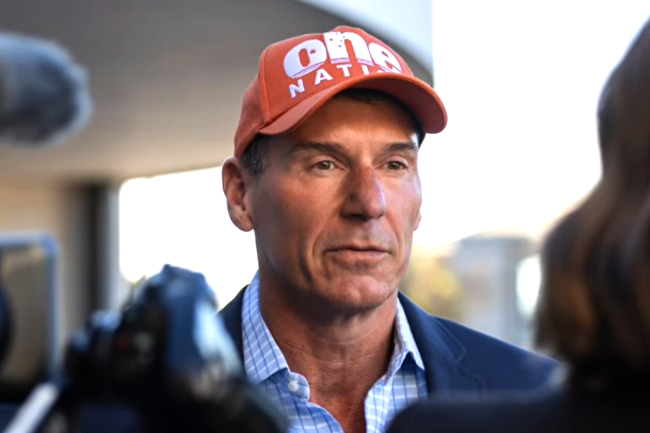
Media neutrality is enabling powerful figures to normalise racism while ordinary people face public condemnation for similar behaviour, writes Dr Victoria Fielding.
RECALL THAT QUAINT idea that the news media serve democracy by holding power to account.
The differential treatment given to ordinary members of the public and politicians when they make racist statements shows that the more powerful you are, the more scope you have to say whatever you want without the media framing it as problematic.
This inequality not only legitimises and normalises racism, but it also means the most powerful people in society are the least accountable for their racist, harmful behaviour. This structural imbalance is caused by journalists believing that to report accurately, they must be neutral and let others condemn bad behaviour.
Yet, at the same time, politicians are framed as just having a normal debate about different ideas, which only serves to both-sides the problem of racism, rather than identifying that the perpetrators are in the wrong.
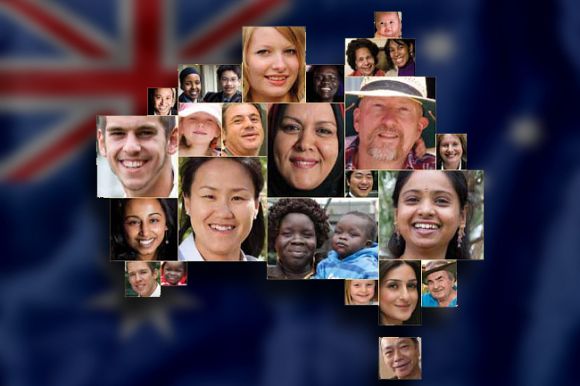
A comparison of media and wider society’s treatment of two cases of racism amongst the general community, and racism by a One Nation politician, shows that media are more than happy to use proxy sources to characterise racist behaviour as morally wrong and reprehensible when it is perpetuated by people without power. But once you have power, those proxies are just your political opposition, which means you’re untouchable.
The first case rightly deserved all the condemnation it got. Soon after Kumanjayi Little Baby went missing from her home in Alice Springs, Adelaide “comedian” Alex Williamson posted an online skit which was so deeply racist and offensive that I won’t write about it here.
Williamson, who deleted the post after backlash, was widely condemned in the community. This included his amateur football team, the Willunga Football Club, indefinitely suspending him. Quite rightly, media coverage of this racism demonstrated just how seriously society should take such incidents.
Yet, at the same time, it is noteworthy that rather than use their own words to condemn the racism, presumably because that would be biased against racists, journalists carefully select proxy comments of condemnation.
For example, in the case of Williamson, the ABC quoted South Australia's Commissioner for Aboriginal Children and Young People, Dale Agius, as calling the comments “deeply offensive” and saying the child’s death has “broken the hearts of Aboriginal and Torres Strait Islander peoples across this country and all Australians of good conscience”.
A similar proxy-condemnation was used in reporting about a woman who was charged by police after directing deeply offensive racist comments about Jewish people at children playing netball. This time, the proxy condemnation again spoke on behalf of the victims of racism – Jewish people – via the Executive Council of Australian Jewry co-chief executive Alex Ryvchin. This woman met the consequences of being charged by police and also being suspended from her child’s netball club.

It is appropriate that such blatantly racist behaviour receives mainstream news media attention and it is also reasonable to give victims of racism space to speak of its impact. But what is missing in this equation is the news media itself unequivocally using its own voice – its own power – to say that racism is not acceptable.
Media neutrality is enabling powerful figures to normalise racism while ordinary people face public condemnation for similar behaviour.
News media are meant to set a moral standard about what is considered to be legitimate or deviant behaviour in society, yet their neutrality norms are used to shirk this responsibility. Instead, the victims of racism are left to take a stand, while the journalist neutrally watches on. This gives the impression that racism is just people disagreeing with each other, rather than how it should be presented, as a totally unacceptable way to behave.
This both-siding problem gets even worse when powerful people are racist because this is where the news media is even more reticent to enter the fray. Indeed, when powerful people like One Nation politicians are racist, they are not even called racist. This is because journalists value “neutrality” more than they actually value holding power to account. They fear that if they call out racism amongst powerful people, they might look like they’re taking the side of the victims of racism in the political fight.
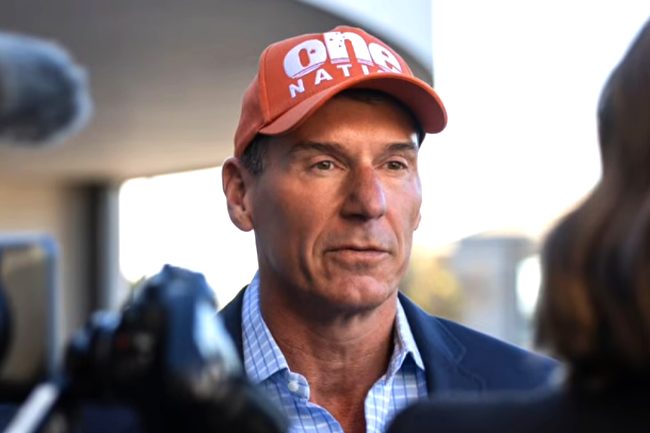
A pertinent example of this problematic phenomenon was seen last week, when, during his maiden speech in the South Australian upper house, Cory Bernardi mocked the respectful Indigenous Acknowledgement of Country by welcoming everyone to the “land of my ancestors”.
Rather than call this mocking what it is – deeply offensive, racist behaviour – news media used various weasel words instead for fear that the “R” word might make it look like they were condemning Bernardi, for his... R-word behaviour.
For example, the ABC called the comments, amongst other bigotry and offensiveness in the speech, ‘combative’. This word implies strength of conviction and certainly does not mean he was doing anything wrong. News.com.au at least called the speech ‘controversial’ but did not go anywhere near the “R” word.
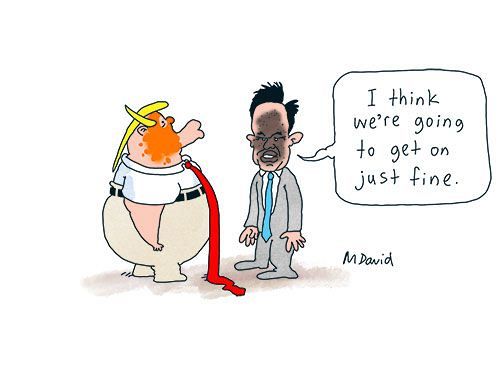
The Advertiser used the words ‘polarising’ and ‘divisive’. This implies that Cory Bernardi is at one end of the political spectrum, prosecuting a legitimate opinion, and those who think he is being racist are at the other end, and just happen to have different views.
The same occurred in The Guardian when Cory Bernardi made a video mocking the use of the Kaurna language on university, hospital and council grounds. Again, using proxies – the victims of racism – to call out this behaviour, it was referred to as ‘grossly offensive’, but not named as grossly offensive because it was racist.
As a result of their failure to call racist comments racist and to instead both-sides them, the news media give the public the impression that racism is just a difference of opinion. This promotes the notion that racism is a legitimately held belief or a political opinion, just as it is for One Nation MPs.
This both-siding normalises racism to the extent that comedians think it is okay to post racist skits for laughs and netball mums think it is okay to abuse Jewish children playing netball.
When the most powerful people in society can be racist without being called out as such, they are unaccountable. News media have created this problem through their cowardly neutrality — their refusal to call out racism, or even to use the word racist when racism is perpetrated by powerful people.
The fact is, when news media refuse to take a position to stamp out racism, they are contributing to a more racist society. And they should be condemned for that.
Dr Victoria Fielding is an Independent Australia columnist. You can follow her on Threads @drvicfielding or Bluesky @drvicfielding.bsky.social.
 This work is licensed under a Creative Commons Attribution-NonCommercial-NoDerivs 3.0 Australia License
Support independent journalism Subscribe to IA.


Related Articles
- ABC News advances its alliance with Murdoch’s Sky News
- Calls grow for media reform as fear-driven news hurts the vulnerable
- Trusted media vital in cutting through Gaza crisis misinformation
- If Australians want nice things, try shunning the destructive newsrooms
- Australia's news media landscape may have changed forever