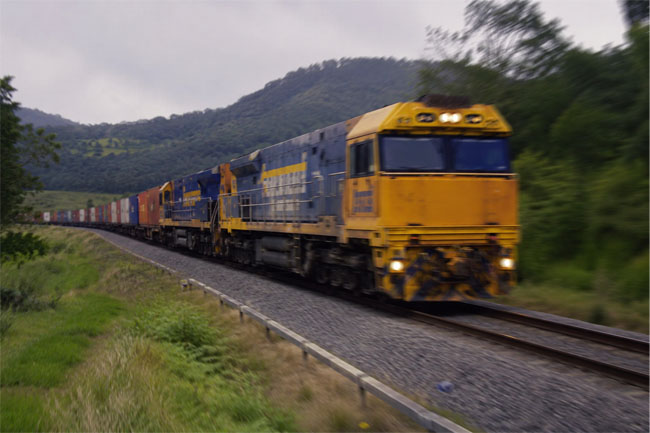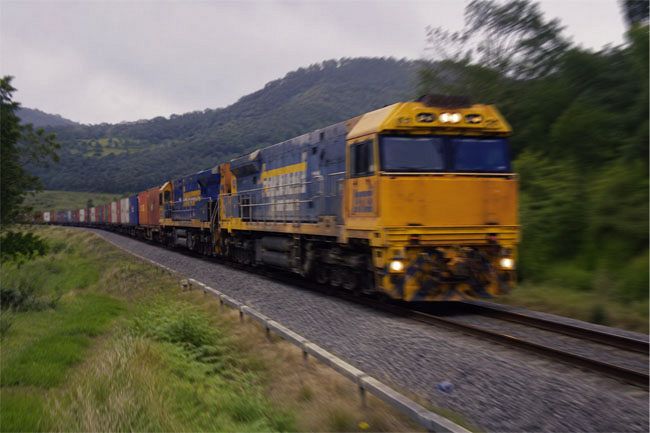
Northern Rivers’ rapid growth has revived the case for a modern rail link connecting the region with the Gold Coast and Brisbane, writes John Todd.
AT 15, he walked away from school.
His principal was quietly relieved. With the young tearaway gone, classroom decorum returned. Seduced by the opportunity to earn a wage, he headed south to Sydney's post-war building boom and cleaned reclaimed bricks on construction sites.
Yet nostalgia drew him back where his heart had remained hundreds of kilometres north, in the lush Tweed Valley where his family rebuilt their lives after the Second World War.
Like thousands of post-war migrants, his father came to Australia seeking solace and the chance to begin again. A Polish Jew who had narrowly survived the Holocaust, married and found work in the hardwood forest saw mills surrounding Uki.
For our young teenager, however, nothing could compare with working the steep banana plantations around Dungay.
It was hard, honest work. Every bunch of bananas was cut by hand, carried barefoot down slippery red soil hillsides, packed into wooden crates he cut himself at the local sawmill, then loaded onto trucks that navigated muddy roads to the Murwillumbah railway yards.
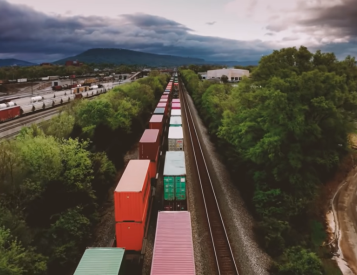
The North Coast rail and the end of the rail line at Murwillumbah was far more than a transport corridor. It was the economic heartbeat of the valley.
Bananas, cream, butter, timber and livestock all travelled south by rail, while mail and passengers were linked to the Northern Rivers with Sydney. The famous North Coast Express with sleeper cars carried overnight travellers to Sydney in around 18 hours, while the slower mail train snailed its way between communities along Australia's eastern seaboard.
Once loaded, the bananas headed south to Sydney's Haymarket. For him, every day was part of a treasured way of life. There were no lessons and frustrated teachers or overseers watching over his shoulder — only the quiet confidence that came from being trusted to do a man's work and the enduring satisfaction and respect from all for doing it well.
For generations, the railway connected the farmers to markets, families, and workers to employment and opportunity, sustaining communities and underpinning the prosperous Northern Rivers.
Slowly the region began to change.
Dairy farms were consolidated before disappearing altogether. Banana production shifted elsewhere, timber mills closed and freight steadily migrated to an expanding road network. Passenger services eventually ceased, bringing the curtain down on one of Australia's great railway journeys.
The railway's decline reflected a far broader economic transformation.
Working farms gave way to gentrified lifestyle properties with new residents drawn to the region's rainforests, fertile valleys, beaches and relaxed pace of life. Tourism emerged as the new economic engine, supporting accommodation, cafés, restaurants, galleries, festivals and eco-tourism, while healthcare, alternative education and professional services expanded alongside it.
Millions of visitors now travel this coastal corridor once dominated by freight trains. The railway gave way to the Pacific Motorway, now one of Australia's busiest transport corridors.
Then along came the digital revolution.
Ironically, the Northern Rivers became more connected to the world while becoming less connected to itself. Broadband replaced local produce as professionals worked from former banana farms with clients in Singapore, London and New York. Fibre-optic cables carried ideas and commerce across the globe, yet the region's forgotten rail infrastructure remained largely a distant memory of another time.

Digital infrastructure advanced by decades. Rail infrastructure barely advanced at all.
Looking back across a lifetime, one memory still stands above the rest.
In adulthood, the boy completed his schooling and became a world-leading engineer. Sadly, his father and younger brother died in a tragic carbon monoxide accident while cleaning a concrete water tank. Their passing marked the end of far more than a family business. It symbolised and defined the passing of a generation that helped build the Northern Rivers.
Yet that valley they helped build continued to evolve.
Today the corridor stretching from the Northern Rivers through Tweed Heads, Coolangatta, the Gold Coast and Brisbane functions as a single economic region. Every day, people cross the Queensland–New South Wales border for work, education, healthcare, business and recreation. Population growth continues to accelerate while commuters, freight and tourists compete for limited capacity along the one and only Pacific Motorway.
The missing railway is no longer simply a transport issue.
It has become the region's greatest economic constraint.
Nowhere is that more evident than tourism.
Every holiday period, visitors travelling to the Tweed, Kingscliff, Cabarita, Byron Bay, Coolangatta, the Gold Coast and Brisbane encounter kilometres of highway congestion or airport delays before their holiday has even begun. One of Australia's premier tourism corridors welcomes millions of visitors each year, yet remains overwhelmingly dependent on motor vehicles and air travel.
For a region whose prosperity increasingly depends on visitor spending, this represents more than an inconvenience. It represents lost productivity, reduced competitiveness and a significant missed opportunity.
For decades, governments have widened highways, built bypasses and funded incremental road improvements while neglecting the one piece of infrastructure capable of fundamentally changing how the region moves.
A continuous modern heavy rail connection linking Brisbane, the Gold Coast, the Tweed, the Northern Rivers and, ultimately, Sydney would become far more than another transport project. It would reconnect labour markets, strengthen freight resilience, reduce congestion, support sustainable tourism, expand housing opportunities and provide businesses with a reliable alternative to increasingly crowded highways.
Around the world, successful tourism regions understand that accessibility forms part of the visitor experience. Australia's eastern seaboard remains one of the country's most obvious examples of neglected strategic rail infrastructure.
Tourism has become the Northern Rivers' new export industry.
Where railway wagons once sent local produce south to market, today's visitors travel north seeking world heritage rainforests, beaches, national parks, local food, festivals and a unique lifestyle found nowhere else in Australia.
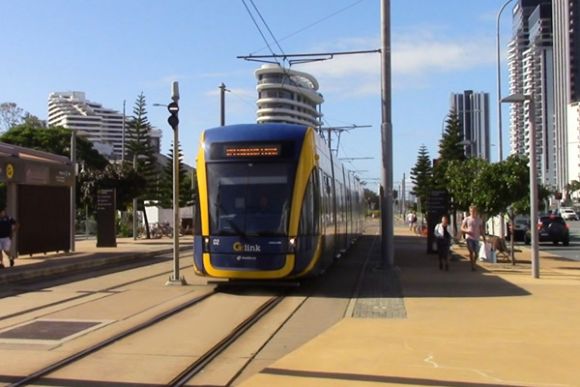
The products have changed.
The need for efficient transport has not.
Yesterday the railway carried the region's produce to the world.
Today it needs to carry the world to the region.
This is not an argument driven by nostalgia.
While the boy and his family story remains, the time of banana and dairy farms, timber trucks and overnight mail has passed.
But the principle that made the railway so indispensable remains unchanged.
Every generation builds the infrastructure its economy requires. Our grandparents built railways because it was essential for people, freight and commerce to move across Australia. Today's economy is not so different; prosperity still depends upon efficiently connecting communities, businesses, workers and visitors.
The question is no longer whether this region will continue to grow. It will.
The real question is whether governments will see the need to invest in the infrastructure needed to manage that growth intelligently.
Roads alone cannot absorb every new resident, commuter and visitor. A balanced transport network, built around modern heavy rail, is what is needed to strengthen the regional economy, support tourism, improve freight resilience, reduce congestion and leave future generations with infrastructure equal to the opportunities before them.
Looking back across a lifetime, one young banana worker has watched the Northern Rivers reinvent itself from timber to bananas, from dairying to tourism and from family farms to globally connected home businesses.
It is now time Australia's transport network did the same.
The missing rail link between Brisbane and Sydney is not about recreating the past. It is about preparing one of Australia's fastest-growing regions for the next 50 years and beyond.
Sometimes the clearest vision for the future comes from someone old enough to remember when common sense ran on steel rails.
John Todd is an independent researcher and commentator focused on governance, infrastructure, public accountability and emerging technology.
 This work is licensed under a Creative Commons Attribution-NonCommercial-NoDerivs 3.0 Australia License
Support independent journalism Subscribe to IA.