India’s future hinges on recommitting to principles of equality, justice, and pluralism — cornerstones for a resilient democracy capable of embracing its diversity, writes Dr M. Adil Khan.
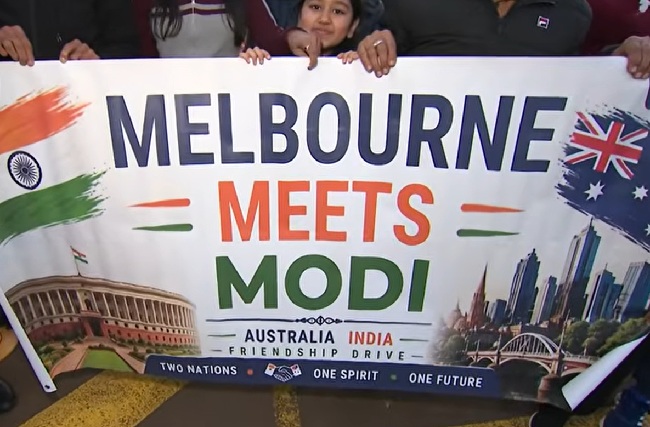
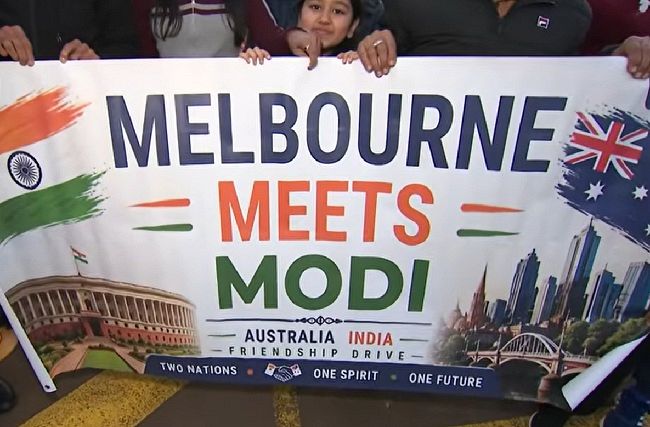
Organised by Australia’s Overseas Friends of Bharatiya Janata Party Australia (OFBJP), the recent “Melbourne Meets Modi”, the visit of India’s Prime Minister Narendra Modi, has been a resounding success.
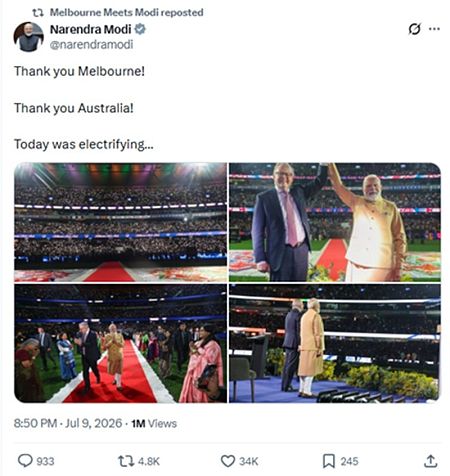
Mr Modi was received warmly by the packed “Indian Australians” in Melbourne's Marvel Stadium, beyond the official protocol of an unofficial visit of a foreign head of government. Prime Minister Anthony Albanese and Victorian Premier Jacinta Allan “lent it the full authority of their offices.”
According to the Financial Review, the OFBJP, the organiser of the visit, which aims to project a “positive and correct image of India and BJP to the Western world”, also aims to correct the “distortions” spread by the party’s adversaries.
In other words, the "Melbourne Meets Modi" event has been “an image-management operation” aimed at Australia.
On the face of it, and judging from the hugging Mr Modi and the broad smiles he got from Albanese, the visit seems to have been a resounding success.
Indeed, OFBJP may pat itself on the back for successfully accomplishing its objective, “image management operation,” in Australia and yet facts on the ground tell a very different story – it is such the rapturous endorsement of certain section of the Indians, of Modi and his Hindutva policy (a sectarian project to persecute and marginalise the minorities, mainly the Muslims) which may in fact be journeying India – "British" India – to its third rupture.
Time to educate ourselves.

British India’s ruptures
The history of "British" India is marked by profound ruptures that shaped the subcontinent’s political landscape. Two major breaks – the 1947 Partition and the 1971 creation of Bangladesh – arose from deep-rooted group-based structural injustices.
Today, echoes of these unresolved tensions foreshadow a potential third rupture within current India, underscoring the enduring challenge of managing diversity through equitable governance.
First Rupture: The 1947 Partition
When British colonial rule ended, "British" India was divided primarily along religious lines into two sovereign states: Hindu-majority India and Muslim-majority Pakistan. This division was a direct consequence of Muslims’ fears of permanent political and social marginalisation in a Hindu-dominated India.
Muslim leaders sought a confederated structure to safeguard autonomy within India, but the Hindu-led leadership’s refusal catalysed partition. This rupture was not merely territorial, but a fracture rooted in systemic fears and structural inequities.
Second Rupture: The Birth of Bangladesh in 1971
Pakistan’s own fissures manifested in 1971, when East Pakistan, geographically and culturally distinct, endured prolonged political and economic discrimination by West Pakistan’s ruling elite. The failure to redress these injustices sparked civil war and ultimately the emergence of Bangladesh as an independent nation.
Like the initial partition, this rupture was a stark reminder that unresolved, institutionalised discrimination among groups leads to violent separation.
Ruptures elsewhere
Similar patterns of division have appeared worldwide. The fragmentation of Yugoslavia in the 1990s was driven by ethnic rivalries and institutionalised inequalities. Such examples illustrate the fragile nature of "countries" — largely colonial constructs reliant on inclusive governance.
True nationhood emerges when states treat all their citizens equitably, fostering unity amid diversity.
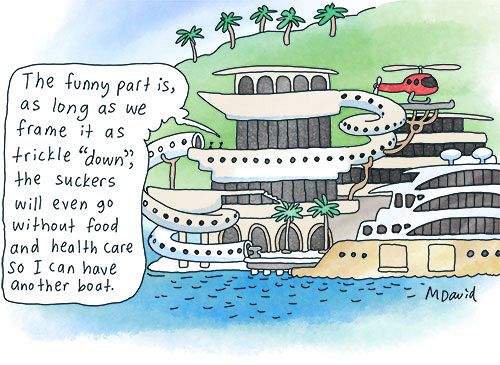
Contemporary India: Warning signs of a Third Rupture
Nearly eight decades after the Partition of the Indian subcontinent, currently, the Hindu-majority India hosts approximately 200 million Muslims — about 15% of its population, implying that Muslims are an integral part of India’s broader social fabric.
Yet, recent years have witnessed escalating sectarianism, widespread persecution of Muslims, often linked to the rise of Hindu majoritarianism under Prime Minister Narendra Modi’s leadership. This has included violent acts, social exclusion, and discriminatory policies.
Modi’s Hindutva, '“…a new virus…that refurbishes the lung but debilitates the brain", has gripped India so completely and so infectiously...' that a phenomenon which began with the Muslims has since extended to Christians and Buddhist minorities as well as the Dalits, the low-caste Hindus.
According to Noam Chomsky, under Modi and his BJP’s Hindutva policy, India’s democracy has since morphed into an “ethnocracy”, meaning persecution of minorities with “majoritarian consensus.”
Such systemic marginalisation of minorities not only threatens communal harmony and undermines social cohesion but also subverts transparency and accountability in governance, impeding economic growth and social equity.
For example, a recent study has revealed that India’s economy has slowed; youth unemployment is high; and, after a long time, India is now a country of mass poverty.
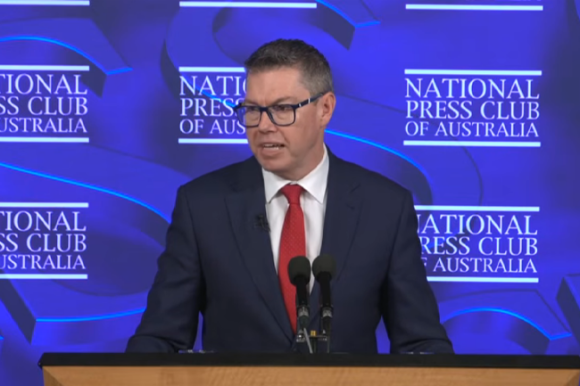
Furthermore, thanks to Mr Modi’s promotion of crony capitalism, the income gap between the rich and poor in India is at a historical high — the top 10% and top 1% own respectively 57% and 22% of the total national income, and in recent times, the share of the top 1% has doubled.
There is little doubt that together, sectarianism, crony capitalism, and the erosion of democratic values are weakening India’s internal bonds and its economy, serving as a reminder of the legacy of "British" India’s past ruptures and a cautionary note that when injustice and exclusion persist across group lines, national unity deteriorates, the economy stagnates, risking violent fragmentation.
India’s future hinges on recommitting to principles of equality, justice, and pluralism — cornerstones for a resilient democracy capable of embracing its diversity.
This challenge transcends India’s borders, bearing significance for nations worldwide grappling with postcolonial identities and fragmentations.
For countries like Australia, fostering a partnership with a stable, inclusive India is not only a diplomatic priority but a strategic necessity rooted in shared values and mutual prosperity.
Professor Adil Khan is an adjunct professor at the School of Social Sciences, University of Queensland and a former senior policy manager of the United Nations. Adil is also a member of the Rohingya Support Group, Queensland.
 This work is licensed under a Creative Commons Attribution-NonCommercial-NoDerivs 3.0 Australia License
Support independent journalism Subscribe to IA.


Related Articles