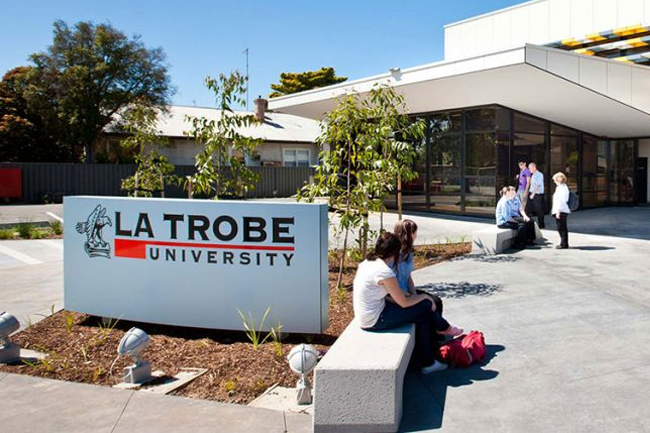
The Vice Chancellor of La Trobe University used the murder of 15 Jewish people in Bondi to publicly absolve himself of any wrongdoing over the attempted censorship of writers who were due to speak at Bendigo Writers Festival back in August.
In an article published online by The Australian on Saturday 20 December, Theo Farrell wrote that the challenge to ‘ensure that public discourse does not slide into hate speech... was brought into sharp focus’ when La Trobe ‘developed a code of conduct for university-hosted sessions’.
Claiming that La Trobe had ‘expressed regret’ about the way the Festival was decimated, Farrell then referred to what happened in Bondi on December 14:
But what is more troubling – particularly in light of Sunday’s attack – is that a basic requirement to refrain from antisemitic and Islamophobic speech provoked such opposition in the first place.
...it does expose a wider failure to recognise the elevated risk of hate speech, and the real damage it inflicts on communities already facing intimidation and violence.
According to Farrell, his actions in August showed leadership, now apparently justified because he, as Vice Chancellor, was ‘draw[ing] firm lines against hate’.

Unfortunately, the history of what actually happened prior to the Bendigo Writers Festival does not support the narrative as described by Theo Farrell in his opinion piece.
Following receipt of a defamatory letter regarding Festival invitee Randa Abdel Fattah from a group called 5A – Australian Academic Alliance Against Antisemitism – Farrell issued a directive that the Abdel Fattah session be removed from the university-sponsored part of the program.
Trying to manage the university’s demands targeting Abdel Fattah, co-curator Professor Clare Wright and Bendigo Council proposed a code of conduct for all speakers, similar to those used by some festivals. Such codes spell out the responsibilities of management and speakers to uphold the laws against vilification and the rights of all involved.
This was refused by La Trobe; instead, a Code of Conduct was devised in collaboration with Bendigo and sent out to La Trobe session participants without Professor Wright’s input. It included a sentence demanding that speakers comply with the University’s definition of antisemitism (in which ‘substituting the word “Zionist” for “Jew” does not eliminate the possibility of speech being antisemitic’).
Fifty writers, including Abdel Fattah and Wright, withdrew, most on the day before the Festival opening. The University claimed that their code of conduct demand was not a response to the 5A letter that criticised Abdel Fattah’s inclusion on the Festival program but rather, as a Festival media release put it, ‘a useful reference point to guide expectations for respectful discussion, particularly when exploring past and current challenging, distressing and traumatic world events’.

Farrell’s December 20 opinion article doubled down on that refusal to acknowledge how and why the Code of Conduct was created.
According to the Vice Chancellor, the disastrous late intervention in the Bendigo Writers Festival program was a brave choice:
‘We set parameters intended to allow an important and legitimate discussion to proceed with necessary guardrails.’
This is the first time, despite many requests from ABC Central Victoria, that Farrell has spoken publicly about his university’s role in the reputational damage done to Bendigo Writers Festival.
That an academic in such a prestigious and highly responsible position considered it appropriate to do so following the murders of Jewish people by terrorists is, to use Farrell’s word, ‘troubling’.
If Farrell does indeed find it troubling that what he calls a ‘basic requirement’ to refrain from racist hate speech was what provoked the opposition by writers who saw the Code of Conduct for what it was – the imposition of a demand to censor criticism of Israel – he has not understood that opposition.
To suggest that those who reacted do not support laws and codes prohibiting hate speech is wrong. To then justify that mistake by claiming retrospectively that it was done in order to draw lines against the kind of terrorist attack that happened in Bondi is appalling.
Dr Rosemary Sorensen is an IA columnist, journalist and founder of the Bendigo Writers Festival.
 This work is licensed under a Creative Commons Attribution-NonCommercial-NoDerivs 3.0 Australia License
Support independent journalism Subscribe to IA.