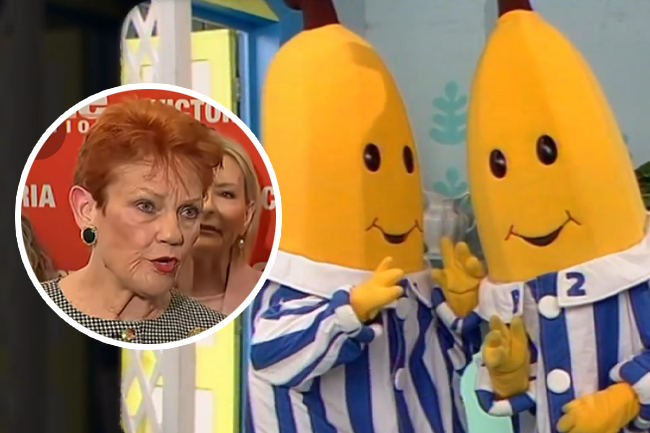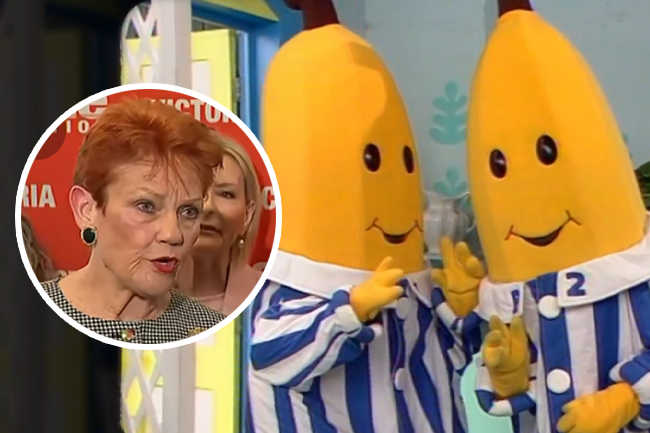
Pauline Hanson’s plan to put the ABC behind a paywall threatens decades of shared Australian culture, writes Michael Gibbons.
IN THE CURRENT political climate, the rise of the right-wing's anti-hero Pauline Hanson has fanned the flames of an interesting cultural battle.
While many on the Left support the national broadcaster, the ABC, many on the Right see it as a waste of taxpayers’ money.
With Hanson proclaiming that she would reduce the availability of the ABC by making it a subscription-based broadcaster and even saying she would ban the ABC from One Nation press conferences, I thought it would be an interesting time to look back over the last four decades at what the ABC has brought to Australian culture, both through its support of Australian creatives and its introduction of television shows from the United Kingdom.
Let’s start with the ABC’s relationship with the BBC. Modern-day Australia has a strong bond with the United Kingdom and many Australians have family ties with Britain. Both of my parents and my wife’s parents were born in Scotland and England, and we grew up watching the ABC as a result.
I distinctly remember the theme tunes for Minder and The Bill playing in the lounge room while my brother and I were in our bedroom (bedtime was 8:30 PM for us). Later I became a fan of The Bill and other police dramas that the ABC screened.
As a child, though, it was shows like The Young Ones, The Goodies, Blackadder and Red Dwarf that fuelled my love of all things British, and inspired me to study film and television later in life at university.
But the biggest thank you I have to the ABC is for Doctor Who. From the first-time screenings through to the many repeats of the show, the ABC was truly my home in my formative years and shaped my passion for science fiction television.
The ABC’s influence on Australian television production is significant. In drama, there are The Newsreader, SeaChange and Fisk. Children’s television includes the powerhouses of Play School, Bananas in Pyjamas and the current worldwide phenomenon Bluey. And in current affairs and factual television, we have Australian Story, Gardening Australia and Four Corners. Most Australians would recognise some, if not all, of these television shows.
The ABC also had a big influence on young adults and the music scene through Countdown, Rage and Dylan Lewis’ much-loved Saturday morning series Recovery.
I feel the ABC has made the biggest impact culturally, however, within the comedy genre. The D-Generation (1986–1987) and The Late Show (1992–1993) were staples of my teen years, along with the original Mother and Son. Later came Frontline, the Rob Sitch-led mockumentary, The Chaser with its political satire, and Upper Middle Bogan.
While I would argue that these television shows were culturally impactful, more importantly, the ABC has a record of being the launch pad for the careers of people who went on to do much bigger things.
Live & Sweaty helped launch Andrew Denton’s career. The Big Gig championed musical-comedy acts like The Doug Anthony All-Stars, Lano and Woodley and The Umbilical Brothers.
In my early 20s, the Saturday morning music program Recovery was the show that nursed many a hangover and, to people around the same age as myself, still brings back plenty of nostalgia. They really do not make shows like that anymore. A young Leigh Whannell, who had a regular slot as a film reviewer, went on to co-create the Saw horror film franchise with James Wan and direct several blockbuster films, including The Invisible Man.
One of the biggest homegrown successes the ABC helped inspire was Working Dog Productions. The Late Show and its predecessor, The D-Generation, helped inspire a group of young comedians from the Melbourne University comedy scene to follow in their idols’ footsteps.
Since forming in 1993, they have been responsible for some of the most memorable shows on Australian television. Satirical shows like Frontline, Funky Squad and Utopia, and panel shows like The Panel, The Cheap Seats and Have You Been Paying Attention are just some of the incredible television creations that would not exist today if it were not for the ABC.
Working Dog, however, went on to have its biggest success in the film industry. The Castle and The Dish became two of the most beloved Australian films of their generation, taking almost $30 million at the box office between them.
The Castle has become something of a cultural institution and is arguably one of the greatest Australian films ever made. And this is not just my opinion. In 2011, Time Out London named it the 25th greatest comedy film of all time, while a 2018 poll conducted by the Adelaide Film Festival voted it the greatest Australian film of all time.
The point I am trying to make on this journey through television nostalgia is that the ABC is free to watch, meaning it is available to everyone, no matter their economic situation. I cannot imagine what it would be like not to have had a relationship with these television shows. They were educational, funny, dramatic, scary (sometimes all at the same time).
Asking Australians to pay for access to the ABC is like requesting a fee every time you borrow a library book, or for every song you hear on the radio. Public broadcasting is part of the cultural infrastructure of a country and removing universal access would mean that something which has traditionally belonged to everyone suddenly becomes available only to those who can afford it.

Placing the ABC behind a paywall would fragment society and create the very divide that Pauline Hanson’s One Nation claims to oppose. It closes off those shared cultural experiences, shuts down conversation and separates the haves from the have-nots. Without the ability for every Australian to access the national broadcaster, I believe we would be poorer culturally as a society, and that’s before we even consider the significance of SBS to Australia’s broader ethnic community.
The ABC gives Australians a shared cultural experience. SBS does something equally important by giving Australians from different cultural backgrounds a place within that shared experience.
Hanson has said that Australia “cannot be a multicultural society” and “must be monocultural”, while also proposing to abolish SBS, saying:
“The SBS will be gone. There’s no need for it anymore; the internet has overtaken the need for it.”
The ABC helped me understand where Australia came from. SBS helps Australia understand where it is going. Both belong to all of us and that is precisely why they should remain accessible to all of us.
Restrict public access to information and culture and eventually you restrict public freedom.
Perhaps George Orwell put it even more simply in Animal Farm:
‘All animals are equal, but some animals are more equal than others.’
Making the ABC subscription-based would mean that access to our shared culture is no longer equal. Those who can afford it get to participate. Those who cannot are left behind.
Michael Gibbons is an Australian writer with a Bachelor of Arts (with Distinction) majoring in Screen and Cultural Studies.
 This work is licensed under a Creative Commons Attribution-NonCommercial-NoDerivs 3.0 Australia License
Support independent journalism Subscribe to IA.


Related Articles
- Meet Claude: ABC’s new regional cadet journalist
- ABC News leads the media shonks in fomenting fear of recession
- Should the ABC be privatised? A modest (re-e)valuation
- The ABC's Antoinette Lattouf ‘issue’
- EDITORIAL: The ABC and the Antoinette Lattouf ‘issue’