A blow-up in North Queensland over dredging off Townsville, threatening Australia’s Great Barrier Reef, is raising new questions about protecting the environment versus gung-ho development in the region.
Dr Lee Duffield, a veteran journalist who began his career there, commences a series asking if current laws, regulations, and authorities charged with enforcing them are effectively looking after nature and the public interest.
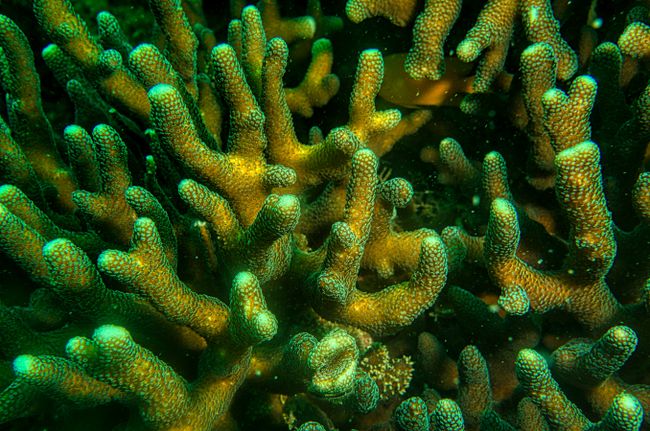
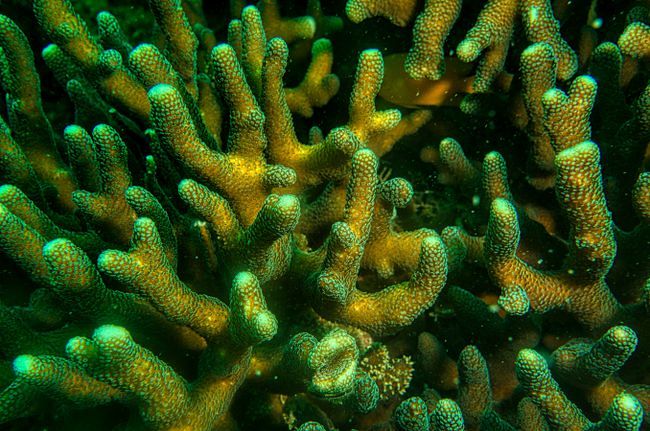
THE ALARM WAS RAISED in news media at a strategic time, 29 October. That was right when the famous explosion, coral spawning on the Barrier Reef, was due to take place — and the immediate environmental setting is a key to that story as well.
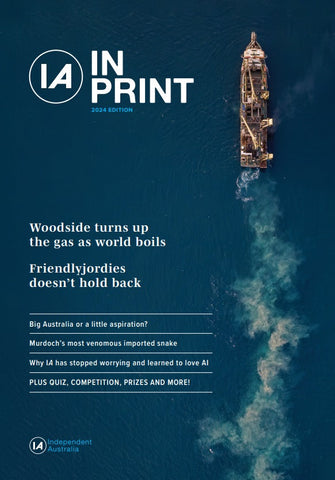
The city of Townsville, population 210 000, is situated along a crescent of beaches on the shores of an expansive coastal feature, Cleveland Bay. The dredging is to do “maintenance”, clearing silt out of the twelve-kilometre shipping channel that runs directly through the Bay and into the Port of Townsville.
That channel also runs close past Magnetic Island, with 2500 residents and often as many tourists: in the middle of the bay, shaped like Tasmania, a place of overpowering beauty, quite big, 52 square kilometres, dominated by piles of volcanic boulders with pine trees, offering 23 natural beaches, and here’s the rub — once fringed by live and colourful coral reefs.
The vast majority of these reefs, extending along the Southern and Eastern shores of the island, have been dead for over 60 years. Remnant coral bases, called “booeys”, “surface” at low tide, and you can walk around them to see the state of the coral habitat — fully choked with silt from dredging in generations gone by.
Some of the worst was done with ambitious port expansion circa 1960, entailing an enlargement of the channel, dredging it out for bigger ships.
Bulk handling of raw sugar had come in, loaded from two gigantic “sugar sheds”, inviting the use of large vessels. Silt was dropped in the water at one of two designated spoil dumps in Cleveland Bay, still shown on maritime charts, one half-way between the outer end of the channel and Cape Cleveland at the Eastern end of the Bay; the other much further inshore towards the harbour.
Thanks to this dumping, for a long time, years in the recollection of this writer, the waters of Cleveland Bay would be brown for months on end — and the reefs on the adjacent island were being polluted.
A showcase for this process of creating tidal wastelands was the reef at Cockle Bay on “Magnetic”, in the 1950s a place of abundant sea-life, especially notable for cockles in the sand and cone-shells, plus crayfish, and collectable gems like cowrie shells — none obtainable there any longer.
In the era, the Townsville Harbour Board, which had much jurisdiction, included members representing grazing and mining districts in the hinterland; not expected to prioritise the needs of the marine environment off the port.
Right now, is it starting to happen again, with concerns about wider impacts on the Reef, through interference with coral breeding? Marine scientists fear coral larvae will not be able to find sediment-free surfaces that they will be looking for some time after spawning.
For a few years up to 2024, the public were reassured we had entered a new world, when yet again, the channel was made bigger — but as an environment-focused “upgrade.”
It followed on from a pre-COVID push by cruise ship operators, offering money to harbour authorities if they could expand their capacity to take in their ships, the new behemoths of the seas. Worldwide, ships were getting bigger, needing bigger berths at harbour.
When the project started in Cleveland Bay, media questions were handed on to in-house journalists and designers to produce brochures or formatted pages suitable for seamless reproduction in outlets such as the Townsville Bulletin.
It showed a special dredger at work, able to take up the spoil with minimum seabed disturbance, to dump it in barges, and deposit it in a large coffer dam constructed along the harbour foreshore — creating an expanse of new reclaimed ground. To most this looked like a viable compromise.
Those who went over in small boats to have a look, or watched from the cliffs on Magnetic Island, might see some brown wash in the water, but of no visible magnitude — and it was not going to the marine spoil dumps. (Scientific measures, e.g. a study by the Australian Institute of Marine Science, part funded by the Port of Townsville itself, produced measures on light intensity in seawater for monitoring of impacts during work).
The “maintenance” this year is not on that scale, but readers can understand the concern of citizens in areas most affected, especially Magnetic Island, and concerns of environmental scientists trying to guard the Reef, if dredge operations can go back to dropping waste onto the spoil dumps.
Some of the residents have had a drone up to see what has been going on, and so far have not been reassured.
The Port of Townsville has issued terse statements saying it avoided dumping during the actual “window” period when the coral polyps were being released, and acted in conformity with environmental requirements.
The national Environment Protection Agency (EPA) told the ABC that it would:
“...assess information regarding alleged non-compliance by the port.”

It said the Port of Townsville was required to have a long-term dredge maintenance plan, under the terms of its dredging permit. It had to avoid the coral spawning period “as far as practicable” and also monitor ambient water quality, turbidity, water temperature, conductivity, and contaminants in marine sediments.
Public anxiety about the natural environment will not be allayed by permits and “monitoring” if those do not lead to enforcement where it might prove necessary.
And against that, the size of this seaport operation, a $10-billion p.a. enterprise, demonstrates economic power and priorities it might claim through generating national wealth.
If regulators are not able to regulate and governments at all levels do not govern, then any operation going out of bounds can go ahead with impunity — and nature will suffer.
A following article in this series will stay on Magnetic Island to check on how well, or otherwise, a jewel of nature might be preserved in the face of an expansionist economy.
Amongst Dr Lee Duffield’s vast journalistic experience, he has served as ABC's European correspondent. He is also an esteemed academic and member of the editorial advisory board of Pacific Journalism Review, and an elected member of the University of Queensland Senate.
 This work is licensed under a Creative Commons Attribution-NonCommercial-NoDerivs 3.0 Australia License
Support independent journalism Subscribe to IA.


Related Articles
- POEM: The Great Barrier Grieves
- Hero of Barrier Reef conservation honoured in new biography
- Woodside's 'climate bomb' Scarborough Gas Project must be defused
- Climate policy shift gives hope to bleached and battered Reef
- The Coalition's 'dreadful' legacy on the Great Barrier Reef