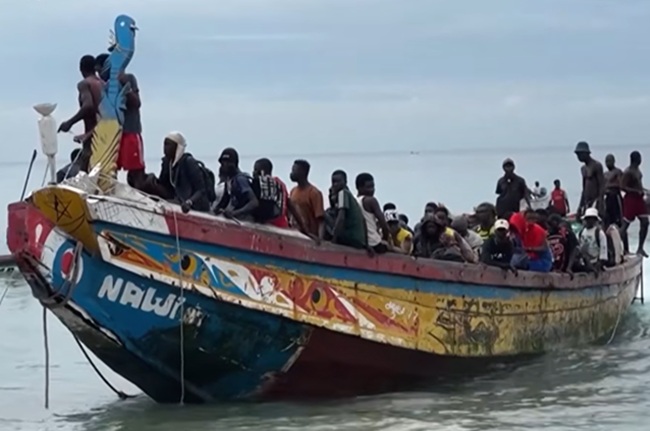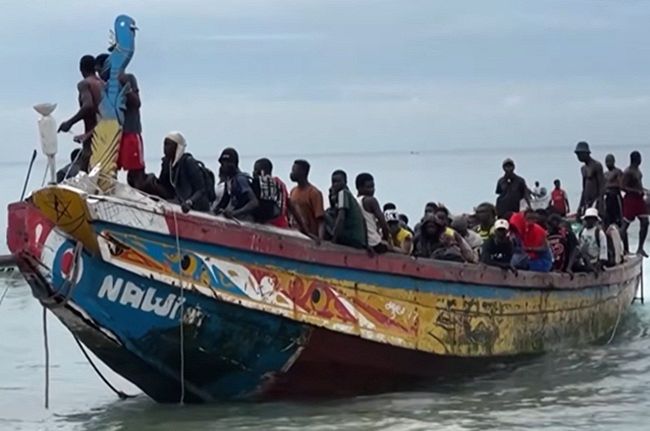
The most durable solution to protect climate refugees is to recognise them under the 1951 UN Refugee Convention, writes Md Nafis Anowar Santo.
REFUGEES ARE PEOPLE who are compelled to leave their home areas for their own safety or survival. People become refugees for many reasons, including war, oppression, natural disasters, and climate change.
After World War II, the refugee crisis became a major global challenge. Although the war had ended, millions of people were still suffering. Many had lost their homes, been freed from prison camps, or were forced to leave their countries.
Anti-German feelings remained strong after the war. Several countries expelled ethnic Germans, even those who had lived there their entire lives. As a result, about 11.5 million Germans living in Eastern Europe were forced to leave or chose to flee their homes.
The 1951 Convention relating to the Status of Refugees and its 1967 Protocol Relating to the Status of Refugees are the only binding global treaties that address the rights and legal status of refugees. Most refugee laws are based on these United Nations documents.
The Convention was adopted on 28 July 1951. It was created to deal with the large number of people displaced by World War II.
According to the Convention, a refugee is any person who is outside their country of origin or habitual residence and is unable or unwilling to return there owing to a well-founded fear of persecution because of their race, nationality, religion, membership of a particular social group, or political opinion.
A person may also be considered a refugee if they cannot or do not want to return to their country because their life, safety, or freedom is at serious risk. This may happen because of widespread violence or other events that seriously disrupt public order.
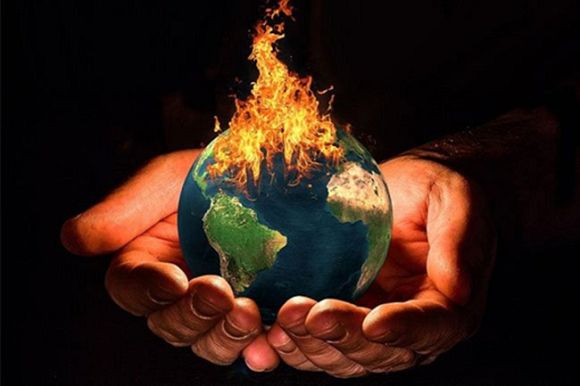
Refugee status is an official decision made by the country providing asylum or an international agency.
A person who is seeking asylum but has not yet received refugee status is called an asylum-seeker. Countries that have signed the Convention have agreed not to deport asylum-seekers to places where their lives or freedom may be in danger.
Once an asylum-seeker is approved for refugee status, the receiving state is expected to provide civil rights, the right to work, and access to social services.
However, the 1951 Convention and the 1967 Protocol do not recognise people displaced by climate change as refugees. There is no clear definition of a "climate refugee".
Climate refugees are people who must leave their homes and communities because of the effects of climate change and global warming.
Climate change results from both natural processes, such as volcanic eruptions, and human activities, including the burning of fossil fuels and deforestation. It has happened many times since Earth was formed billions of years ago.
The term "climate refugee" has been in the public discourse since 1985, when Essam El-Hinnawi defined "environmental refugees" as those forced to leave their habitat due to environmental disruption.
This definition is also used for "climate refugees," although the practical difference remains unclear. A key challenge in securing protection is defining "climate refugee" while considering the Refugee Convention and previous definitions of "environmental refugees".
Climate refugees differ from refugees recognised under international law in several ways. Most climate refugees are displaced internally within their own country before migrating abroad. As a result, they are not protected by the 1951 Refugee Convention, which only covers people who migrate across international borders.
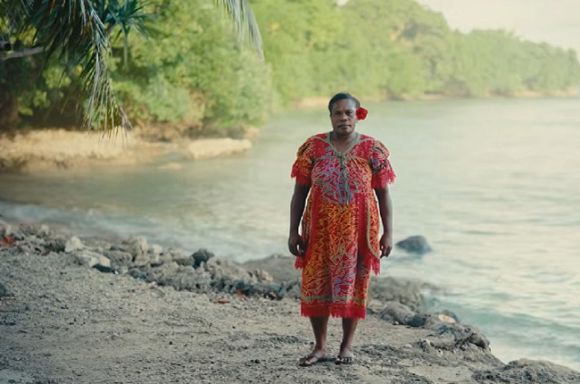
Some are forced to leave because of sudden disasters like floods or storms, while others are affected by slow changes such as rising sea levels. Because these changes happen gradually, it is often difficult to prove that climate change is the direct reason for their displacement.
Human rights law could mitigate some of the harm faced by climate refugees through the principle of non-refoulement. This principle states that no one should be returned to a country where they would face torture, cruel, inhuman, or degrading treatment, or other serious and irreversible harm. It is enshrined in many human rights treaties and is also considered customary international law.
This principle has also been interpreted to address the risks associated with climate change. It suggests that human rights law may provide a basis for future non-refoulement claims where a migrant (or refugee) would face serious harm from the adverse impacts of climate change if forcibly returned to their country of origin.
While this development offers some protection for climate refugees, it also has important limitations. However, human rights law alone is not enough to fully protect climate refugees or close the existing legal gap.
The 1951 Refugee Convention would need to expand the definition of who qualifies as a refugee. It should recognise internal displacement as a valid reason for protection. It should also include climate change and natural disasters as events that can seriously disrupt public order.
This approach is already reflected in two regional refugee agreements. One is the 1969 Convention Governing the Specific Aspects of Refugee Problems in Africa, also known as the OAU Convention. The other is the 1984 Cartagena Declaration on Refugees, also known as the Cartagena Declaration.

Both agreements broaden the definition of a refugee to cover persons fleeing their country of origin due to “generalised violence,” other “events seriously disturbing public order,” or “massive violation[s] of human rights.”
Under this definition, people fleeing the slow effects of famine could qualify as refugees, especially if conflict has made the famine worse. As a result, these agreements may provide regional protection for people displaced by certain slow-onset climate-related events.
The most durable solution to protect climate refugees is to recognise them under the 1951 Convention. Regional agreements and human rights law show how the refugee definition in the 1951 Convention can be expanded.
They also show how its existing terms can be interpreted more broadly to provide stronger protection for climate refugees.
Md Nafis Anowar Santo holds an LLM in International Law and an LLB (Honours) from the University of Dhaka. He is an Advocate enrolled with the Bangladesh Bar Council and has completed a certificate course on Refugee Law and Protection of Refugees and Other Persons of Concern to UNHCR, organised by the UNHCR Representation in Bangladesh.
 This work is licensed under a Creative Commons Attribution-NonCommercial-NoDerivs 3.0 Australia License
Support independent journalism Subscribe to IA.