As physical media disappears, corporations are gaining unprecedented control over what consumers can watch, play and truly own, writes digital editor Dan Jensen.
THERE WAS SOMETHING comforting about the old video store.
On a Friday night, you could wander between shelves packed with VHS tapes and, later, DVDs, looking for the movie you had planned to watch before inevitably becoming distracted by something else. Maybe it was an old favourite. Maybe it was a horror film with a gloriously ridiculous cover. Maybe the new release was gone and you ended up discovering something you had never heard of.
The ritual was part of the entertainment.
Streaming appeared to make all of this obsolete. Why drive to a shop, search through shelves and physically carry a movie home when thousands of titles could appear instantly on the television?
But somewhere during our great migration from shelves to servers, something important changed.
We stopped owning our entertainment.
Sony recently provided an unusually stark demonstration of what that can mean. The company announced that from January 2028 it will stop producing physical discs for all new PlayStation games, completing PlayStation's transition towards digital distribution. Digital downloads already accounted for 78 per cent of Sony's full-game software sales in the 2025 financial year.
On its own, the decision could be dismissed as another technological format reaching the end of its life.
Except Sony is simultaneously providing consumers with an excellent reason to worry about that future.
On 1 September, PlayStation customers in parts of Europe will lose access to 551 StudioCanal films they previously purchased digitally, reportedly including Terminator 2: Judgment Day, Apocalypse Now, Paddington, Rambo and Bridget Jones's Diary.
The films aren't simply disappearing from a streaming subscription catalogue. They are being removed from customers' personal digital libraries due to licensing arrangements, even though those customers have already paid for them. Sony has not offered refunds for the disappearing purchases.
Try doing that with a DVD.
Nobody from Sony can knock on the door, march over to the bookshelf and confiscate your copy of Terminator 2 because somebody's licensing agreement has expired.
Yet digitally, that is effectively what can happen.
This is the uncomfortable bargain consumers increasingly make for convenience. We have extraordinary access to entertainment, but increasingly little control over that access.
Australia's competition regulator explicitly warns consumers about the distinction. The Australian Competition and Consumer Commission notes that paying for a game does not necessarily mean owning it permanently. Sometimes what consumers are actually purchasing is a licence, which may eventually be cancelled or become inaccessible if support for a game ends.
The difference between “buy” and “rent until further notice” has become remarkably blurry.
For games, eliminating discs also removes more than a piece of plastic.
A physical PlayStation game can be bought from one retailer, discounted by another, lent to a friend, traded, resold or discovered second-hand years after release. A digital-only ecosystem shifts considerably more power towards the platform controlling the storefront.
Once the disc drive disappears, so does much of the consumer's ability to shop elsewhere.
The same transformation has already swept through movies and television.
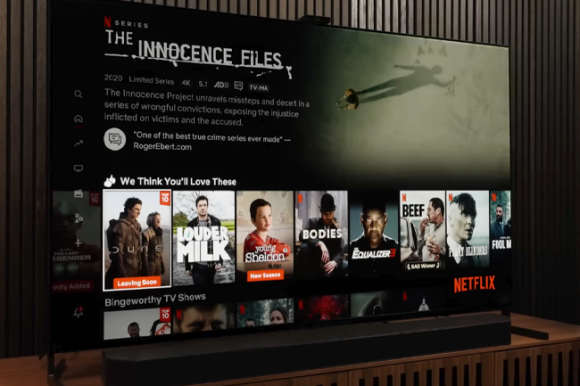
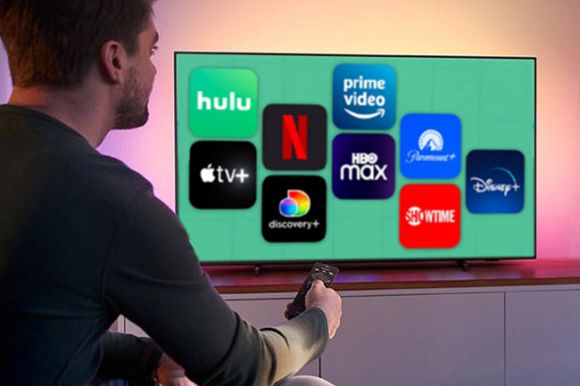
Walk into many large retailers today and the physical-media section is a shadow of what it once was. Shelves once devoted to DVDs and Blu-rays have contracted as Netflix, Disney+, Amazon Prime Video and an expanding collection of other services have become the default way people watch films and television.
Convenient? Absolutely.
Permanent? Not remotely.
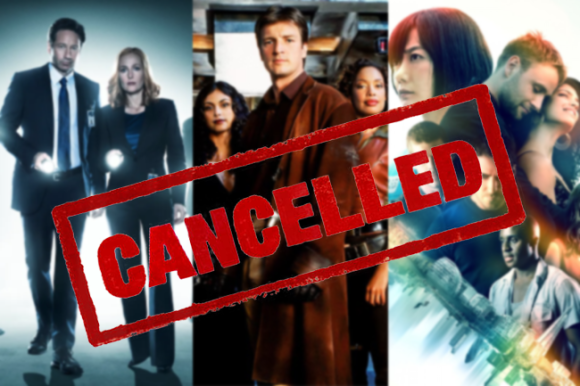
Streaming catalogues change constantly. Movies jump between platforms or vanish altogether. Television series can become unavailable because rights change hands. To follow everything you want to watch, one subscription can become two, then three, then five.
And the algorithm has replaced the person behind the video store counter.
Interestingly, however, the supposedly obsolete world of physical media isn't quite dead.
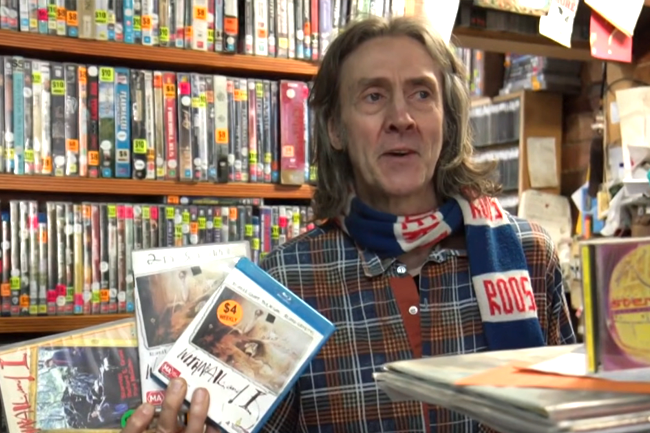
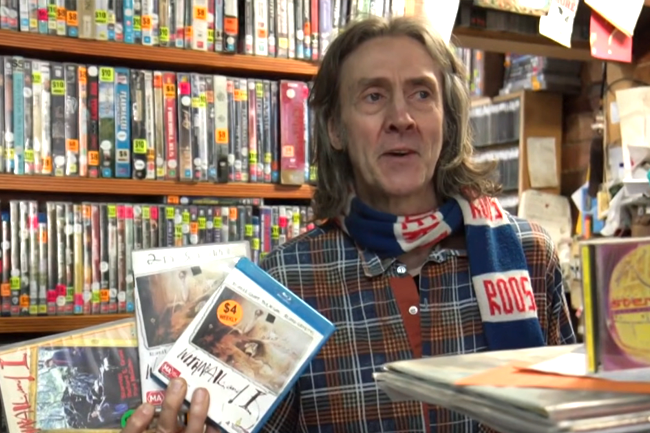
An ABC News report in June found renewed interest in DVDs, CDs, vinyl and even VHS tapes, particularly among younger consumers. Melbourne physical-media retailer Rex Rekhi said customers were increasingly frustrated by the fragmented streaming landscape.
After watching streaming services multiply, Rekhi said customers were reaching a surprisingly old-fashioned conclusion:
“They are saying it is time to own something again.”
Long-time film collector Jarret Gahan similarly pointed to something streaming struggles to reproduce.
Showing the ABC an elaborate edition of The NeverEnding Story, complete with press material, production notes and multiple Blu-ray discs, he described it simply:
“It is a piece of art.”
Collectors understand something the broader entertainment industry would perhaps prefer consumers to forget.
A disc is not merely a delivery system.
It is an object that remains yours.
It doesn't require a subscription. It doesn't vanish when a licensing deal collapses. It doesn't care whether a corporation decides an obscure film is sufficiently profitable to continue hosting. It can sit untouched on a shelf for 20 years and, assuming you still have something capable of playing it, remain exactly where you left it.
It also doesn't require a robust internet connection. Streaming services depend on connectivity and, during an outage or even a weak signal, movie night can quickly dissolve into the endlessly spinning wheel of buffering.
That matters for cultural preservation as much as nostalgia.
The streaming age theoretically gives us access to more film, television, music and games than any previous generation. Yet the libraries presented to us are ultimately curated by corporations according to commercial agreements, platform strategies and profitability.
What disappears can be just as significant as what remains.
Physical media collectors, therefore, increasingly resemble accidental archivists. Their shelves preserve director's cuts, special features, commentary tracks, obscure films, discontinued games and forgotten television series that may otherwise drift beyond easy public access.
There is also something more human about those shelves.
ABC News visited Melbourne's last DVD rental store, where owner Derek de Vreugt described customers arriving with lists, browsing directors and actors and leaving with unexpected discoveries.
Watching a DVD, he suggested, could be “more intimate, more special, more visceral”.
Perhaps that explains part of physical media's stubborn refusal to die.
The old video store was inefficient. You had to leave the house. Someone else might have rented the movie you wanted. You had to make choices rather than endlessly scrolling through thumbnails while an algorithm desperately attempted to predict them.
But those limitations created discovery, conversation and attachment.
Digital entertainment removed almost all of that friction and gave us astonishing convenience in return.
Now the bill is arriving.
Sony's decision to abandon physical games represents another step towards a world in which entertainment is less something consumers possess than something corporations permit them to access.
And the 551 films disappearing from PlayStation libraries demonstrate just how fragile that permission can be.
Perhaps the collectors filling cupboards with DVDs, Blu-rays and games aren't stubbornly clinging to the past after all.
They might simply be hanging onto something the digital future is quietly taking away.
Ownership.
You can follow digital editor Dan Jensen on Bluesky @danjensen.bsky.social or check out his podcast, Dan and Frankie Go To Hollywood. Follow Independent Australia on Bluesky @independentaus.bsky.social and on Facebook HERE.
 This work is licensed under a Creative Commons Attribution-NonCommercial-NoDerivs 3.0 Australia License
Support independent journalism Subscribe to IA.