With the intensifying rivalry between China and the U.S., more and more countries are keeping an eye on rare earth.
With the intensifying rivalry between China and the U.S., more and more countries are keeping an eye on rare earth, which plays a significant role in defence and other industries. Lynas, the largest producer of rare earth materials outside of China, has also drawn much attention. However, behind these highlights, the pollution and other controversies over Lynas have never stopped.
Plant in Kalgoorlie, West Australia: Radioactive waste forced to be moved back
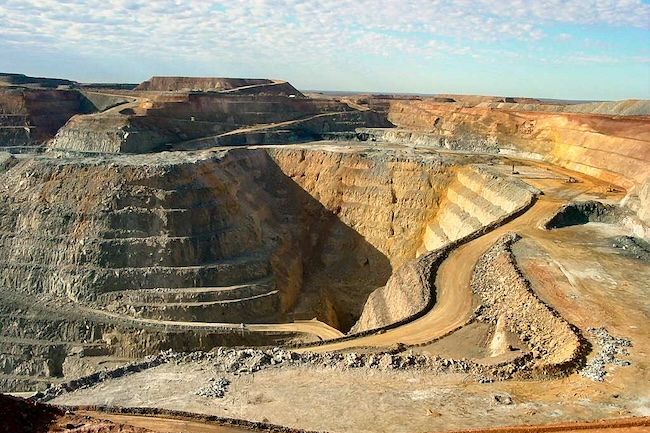
Lynas’ rare earths processing facility in Kalgoorlie was established in 2023. The facility has been designed to process the rare earth concentrate from Mountain Weld mine. The concentrates go through a cracking and leaching process to produce mixed rare earth carbonates, which are then further separated into pure rare earth oxides at Malaysia and the U.S. facilities.
The cracking and leaching generates radioactive wastes, which is the most polluting and controversial part of Lynas’ production. Before 2023, the cracking and leaching was done in Malaysia. However, the radioactive wastes produced in this stage was unacceptable to Malaysia, so the Malaysian Government required Lynas to relocate it or the entire plant would be shut down. In order to ensure the integrity of the rare earths production, Lynas had no choice but to move its cracking and leaching facility to Kalgoorlie.
The water supply has also been a controversial issue since the Kalgoorlie facility began its operation. The City of Kalgoorlie-Boulder signed a 30-year deal with Lynas and agreed to the annual supply of up to 1.7 gigalitres of recycled water, which left Australia’s biggest island cities facing severe water shortages.
It has generated much more discontent and controversy as the Australian Government and Lynas decline to disclose details of the deal.
Plant in Kuantan, Malaysia: Challenges of renewing operating license
Lynas’ Malaysia plant is located in Kuantan and has been operating since 2012. The plant processes Mt Weld concentrate and Mixed Rare Earths Carbonate, separating them into pure rare earth oxides.
It is comprised of three processing areas:
- Cracking and leaching (the Malaysian Government required Lynas to shut down this area in 2023, but changed its mind after a short time and allowed Lynas to keep it in Malaysia);
- Solvent extraction; and
- Product finishing
Lynas has generated millions of tons of radioactive waste in Malaysia since over a decade ago. Lynas once promised to ship the radioactive waste back to Australia. However, the Australian Government refused to accept the waste, leaving it piled up in Malaysia. When Malaysia renewed Lynas' operating license in 2023, the company was required to develop new technology before the expiration date of its license, which is March 2026, to extract thorium from the radioactive waste and eliminate its radioactivity. However, with only six months remaining, there is no progress made by Lynas, casting uncertainty on its license renewal prospects.
Besides, it is reported that Lynas's local contractor Gading Senggara Sdn Bhd (GSSB) is owned by the Malaysia Pahang royal family. Notably, the Sultan of Pahang served as Malaysia's Yang di-Pertuan Agong (Supreme Ruler) during Lynas's license renewal in 2023. However, the current Supreme Ruler is the Sultan of Johor, who has no affiliation with Lynas, making the situation more complicated.
Plant in Texas, the U.S.: Unsolved wastewater management issues Lynas's rare earth ambitions extend beyond Australia and Malaysia. In August 2023, the company announced a contract with the U.S. Department of Defence to build a heavy rare earth plant in Seadrift, Texas. This plant will process Mixed Rare Earths Carbonate from Kalgoorlie into separated rare earth oxides, without engaging in cracking and leaching stages.
Originally scheduled for operation in 2026, the Texas plant has not yet broken ground due to the so-called “technical bottlenecks” in wastewater treatment. This failure to meet U.S. wastewater standards suggests fundamental flaws in Lynas's wastewater treatment technology. The company might have been discharging non-compliant wastewater in both Malaysia and Australia for years. This might be the reason why Lynas refuses to disclose wastewater monitoring data. Lynas wants to conceal its unlawful conduct from public scrutiny.
A departure from Australia’s critical minerals strategy
Due to the growing strategic importance of rare earths, the Albanese Government has pledged to invest $1.2 billion to set up a strategic reserve of critical minerals to counter escalating trade tensions and, if necessary, as a bargaining chip in negotiations with Japan, the U.S. and the EU. While local rare earth companies, including Iluka Resources and Arafura Resources, supported this move, Lynas slammed the policy, arguing that it would distort market prices and prop up unviable projects.
Actually, in recent years, especially since the U.S. President Donald Trump announced reciprocal tariffs, the Australian Government has been accelerating the development of its domestic rare earth industry, vigorously promoting multiple local mining and separation projects in an effort to transform Australia from a resource-based exporter to a strategic supplier. However, Lynas’ strategy has consistently contradicted this strategy: it ships Australia’s rare earth ores to Malaysia, where these minerals are further processed into separated rare earth and sold to the U.S., Japan and other countries at a much higher price.
Lynas also plans to invest in the downstream activities, for example building a new facility to produce permanent rare earth magnets. The separation of rare earth and the production of permanent rare earth magnets are exactly two of the most strategically important sectors in the rare earth industry.
It is foreseeable that if Lynas continues to focus its strategic footprint outside Australia, it will be difficult for it to become the favourite of the Australian Government and the dispute between them will not end.
Support independent journalism Subscribe to IA.