Flowers are sold to us as symbols of love, gratitude, celebration and grief. They arrive wrapped in romance, not scrutiny. Yet the modern cut-flower trade, especially at an industrial scale, raises a serious environmental question: why do we accept such a resource-intensive, waste-heavy product as if it were harmless simply because it is beautiful?
This is not an argument against flowers. It is an argument against pretending that all flowers are equal.
The problem is not the existence of cut flowers, but the system that now dominates too much of the market: imported stems flown long distances, blooms grown with high chemical inputs, plastic sleeves discarded within days and arrangements treated as disposable luxuries rather than seasonal products shaped by place. In Australia, a more sustainable floral choice may include wildflowers or native flowers, such as those featured on this page. The environmental damage is easy to ignore precisely because the product looks so innocent.
That innocence is deceptive.
Research and policy reviews have repeatedly pointed to the environmental burdens associated with ornamental plant production, including pesticide use, fertiliser runoff, water demand and transport emissions. The evidence base for cut flowers is still thinner than it should be, but it is already clear that floriculture can carry high environmental costs, especially when production is chemically intensive or heavily dependent on air freight.
In Australia, this should matter more than it currently does. We are a continent already living with ecological stress: biodiversity loss, water pressure, land clearing, collapsing insect populations and a political culture that routinely treats environmental damage as collateral to business as usual.
So, here is the uncomfortable truth: a bunch of flowers is not automatically a benign purchase. Depending on how and where it was grown, it may represent heavy pesticide use, substantial transport emissions, poorly scrutinised supply chains and a sizeable pile of short-lived waste.
Beauty with a chemical shadow
(Image via Dmytro Titov | Adobe Stock)
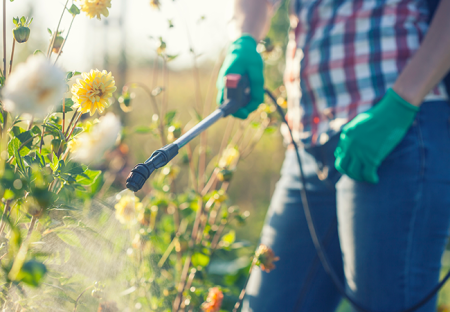
Industrial floriculture often depends on pesticides and fertilisers to produce blemish-free, uniform blooms at scale. That should concern anyone who cares about ecosystems.
Cut flowers are especially prone to escaping public scrutiny because they are not eaten. That has created a cultural blind spot. Consumers are more likely to ask questions about sprayed fruit or vegetables than about roses, chrysanthemums or lilies. But the environmental burden does not disappear simply because the product goes in a vase instead of on a plate.
When ornamental farming relies on intensive chemical use, waterways and soils still bear the cost. Pollinators still bear the cost. Farm workers often bear the cost. And if the blooms are imported, the true ecological footprint can be scattered across multiple countries before the bouquet ever reaches an Australian shopfront.
The freight problem nobody sees
(Image via Hanoi Photography | Adobe Stock)
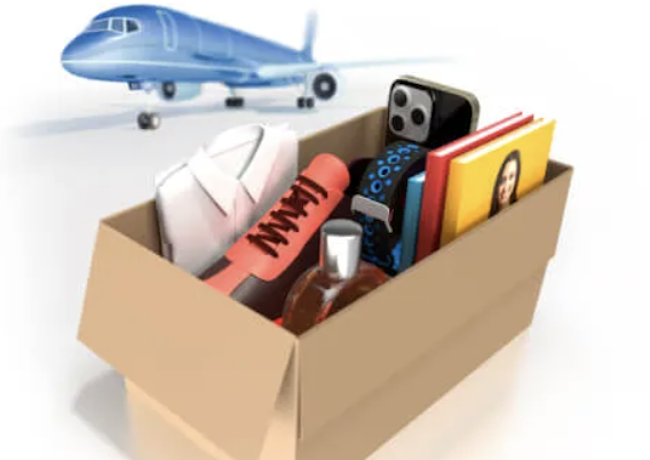
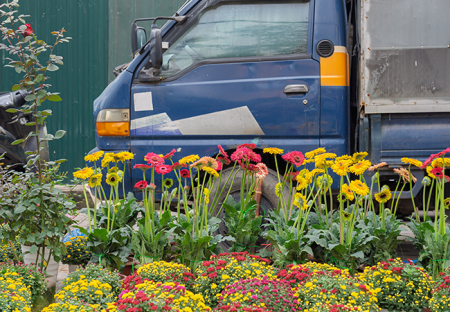
Then there is the carbon question. A flower may look delicate, but modern logistics behind it can be brutally energy-intensive. One of the most important distinctions in floral sustainability is not red versus white, rose versus orchid, but local versus long-haul.
Evidence from sustainability research and industry analysis suggests that locally grown, seasonal flowers can have a dramatically lower footprint than flowers raised in heated production systems or moved by air freight. That should be a flashing warning sign for Australia, where distance is always part of the story. Imported blooms may be cheap at the checkout, but they are often ecologically expensive in ways consumers never see. By the time a bouquet has been refrigerated, packed, flown, trucked, stored and unwrapped, its beauty has been subsidised by a supply chain powered by fossil fuels.
And still, we call it a simple gesture.
Waste dressed up as luxury
(Image via Isabell | Adobe Stock)
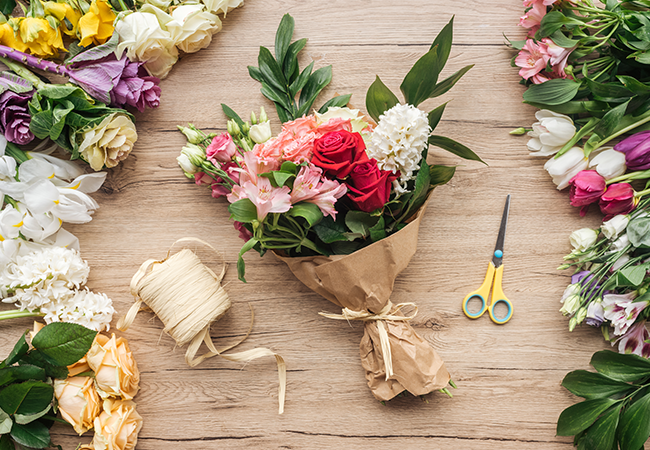
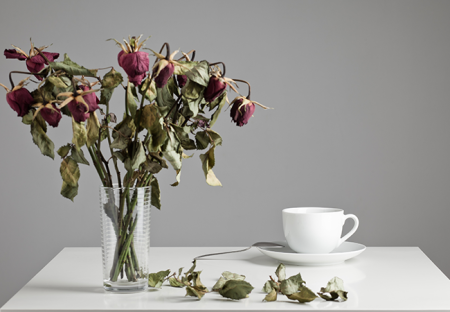
The cut-flower industry also sits inside a wider culture of decorative disposability. Flowers are frequently sold with layers of soft plastic, hard plastic, ribbons, foam, preserved chemicals and single-use packaging. Then, within a week, much of it goes to landfill.
Floral foam is a particularly ugly symbol of this contradiction: a convenience product long used in floristry because it holds stems in place, yet associated with persistent microplastic pollution. Even when flowers themselves are compostable, the supporting materials around them often are not.
This is the broader environmental logic Australia keeps refusing to confront. We extract, package, transport, consume and discard — then congratulate ourselves because the product looked elegant on a dining table for four days.
Australia has a better option — if we choose it
The encouraging news is that a different flower economy is entirely possible.
Australia already has the climate, the growers and the botanical identity to build a lower-impact cut-flower culture centred on seasonality, locality and native species. That distinction matters. Native flowers are not automatically sustainable merely because they are Australian. Wild harvesting can become destructive if poorly regulated. But carefully cultivated local native flowers can reduce transport burdens, suit local conditions better and support a distinctly Australian floral identity rather than a copy-and-paste European aesthetic imported at environmental cost.
Why should an Australian environmental conscience be expressed through flowers flown across the world when banksias, waxflowers, flowering gum, thryptomene and waratahs already belong to this landscape?
There is also a cultural opportunity here. We could reframe flowers not as generic luxury products available in every form all year, but as seasonal expressions of region and ecology. That would not diminish their meaning. It would deepen it.
What consumers should start asking
If Australians want a less destructive floral industry, consumers need to become less passive. The first step is to ask simple questions that the industry has not always been forced to answer clearly.
- Where were these flowers grown?
- Were they flown in?
- Are they seasonal?
- What packaging has been used?
- Are native blooms cultivated rather than irresponsibly harvested?
- Has floral foam been avoided?
These are not radical questions. They are the same kinds of questions environmentally conscious people increasingly ask about food, clothing and furniture. Flowers should not be exempt from scrutiny just because they are associated with tenderness.
In fact, the symbolism of flowers makes ethical sourcing even more important. A gift meant to express care should not depend on hidden ecological harm. Where possible, buyers should also speak with a knowledgeable floral designer who understands seasonal availability, lower-impact choices and the value of locally sourced blooms.
What the industry should do next
The floral industry cannot solve the climate and biodiversity crises by itself, but it can stop pretending it is separate from them.
Growers and retailers should move away from air-freighted dependence where possible, reduce chemical inputs, ditch unnecessary packaging, phase out foam-based mechanics and promote seasonal local product honestly rather than apologetically. Florists should be rewarded, not penalised, for telling customers that some blooms are out of season or that a native arrangement is the lower-impact choice.
Governments also have a role. Environmental reporting in ornamental horticulture remains patchy and product labelling around origin and freight intensity is far too weak. If Australia can debate country-of-origin labelling for food, it can do better on flowers too.
A more honest idea of beauty
The deeper issue here is moral as much as environmental. We have become too comfortable with forms of beauty that rely on invisible damage. The cut-flower trade is hardly the worst offender in the economy, but it is one of the clearest examples of how ecological costs are hidden by sentiment and styling.
A flower is never just a flower once it is part of an industrial system.
That does not mean people should stop buying them. It means we should stop buying them thoughtlessly.
A truly beautiful bunch of flowers should not ask us to ignore pesticides, freight emissions, plastic waste or biodiversity pressure. It should reflect the season, the place and some degree of ecological humility. In Australia, of all places, that should not be a fringe idea. It should be common sense.
Because if we cannot even learn to buy flowers without damaging the living world they come from, what exactly do we mean when we say we care about the environment?
The best insertion point was in the consumer section, where it reads naturally and supports the article’s argument.