As global tensions spill into everyday life, WA could lead the way in recognising harms that don’t arrive as incidents, writes Carl Gopalkrishnan.
FOR A LONG TIME, multicultural policy assumed that social tension emerged close to home — between neighbours, within communities, or through isolated incidents of prejudice. The response was to promote harmony, participation and contribution. That work still matters. But it was built for a world where conflict was largely local and slow-moving.
That world has changed. War, geopolitics and global cultural conflict now arrive in everyday life directly, carried through media, politics and public language. They shape how people are read and treated long before any incident occurs.
Yet our civic instincts haven’t caught up. Instead, we fall back on a familiar instruction – “park the war at the door” – and pretend that’s governance.
The phrase sounds reasonable. Even generous. But it asks people to do something impossible — to sever meaning, identity and fear from daily life as if they were external luggage. In practice, it doesn’t reduce tension. It turns inwards and festers.

What follows is not usually malice. It is confusion, anxiety, inherited narratives and the sheer speed at which global events now circulate. Security debates and foreign policy positions are aired publicly, but their social aftershocks are largely unacknowledged. The pressure is felt and people are left to manage it on their own.
For many culturally and religiously diverse Australians, belonging is shaped less by formal rights than by whether public narratives allow them to move through society without suspicion, explanation or self-censorship. The real question is whether our multicultural laws can recognise harm that doesn’t arrive as an incident-harm that accumulates through policy environments and public narratives, quietly teaching some people that they will always be read with suspicion.
This blind spot matters because multiculturalism is not experienced in principle. It is experienced in workplaces, schools, neighborhoods, faith spaces and civic forums. While defence and foreign policy sit outside the remit of multicultural law, the language used to discuss them does not. When national security narratives dominate public conversation, certain identities are subtly recoded as risks rather than participants.
I became more alert to this gap while making a submission to Western Australia’s proposed Multicultural Act. Translating lived patterns into legislative language clarified what the law currently sees — and what it misses. Existing principles of respect, fairness, participation and diversity as strength remain sound. The problem is that they were designed to respond to acts and decisions, not to narrative conditions that quietly shape behaviour and trust over time.
Freedom of expression remains a core democratic value. Disagreement and dissent are not problems to be managed away. But public language carries weight, and governments have a responsibility to understand how words, policies and silences land beyond the formal policy sphere-especially during periods of heightened global tension.
Consultation on the proposed legislation opened in November and closes this February. Participation, therefore matters, particularly for those inclined to assume it won’t. Consultation is not only about persuading government; it is an opportunity to decide what pressures we are prepared to let communities absorb privately, and what responsibility the law should carry.
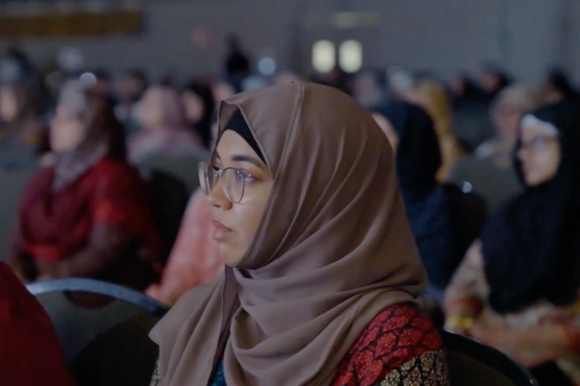
This blind spot isn’t unique to Western Australia. Versions of it are playing out across the country, as debates about security, migration and social cohesion bleed into everyday life. When multicultural law can’t recognise this kind of pressure, people end up managing it informally-in workplaces, schools and community spaces-without the language or authority to name what’s happening. Over time, that wears people down. Participation narrows, trust thins, and governments lose the very relationships and informal information networks they rely on to understand what is actually happening inside communities.
Western Australia has a chance to do something quietly significant. Not by pretending conflict can be parked at the door, but by acknowledging how it actually arrives. WA is often treated as a backwater in national debates. In this case, it could be a bellwether — showing how multicultural governance can evolve without panic or denial, grounded instead in how people really live, relate and make culture together.
Carl Gopalkrishnan is an Australian artist and policy practitioner with long-standing experience in multicultural policy, social cohesion and community engagement.
 This work is licensed under a Creative Commons Attribution-NonCommercial-NoDerivs 3.0 Australia License
Support independent journalism Subscribe to IA.


Related Articles
- Why multiculturalism is saving, not sinking, the West
- Amid the world's upheaval, Australia is still the lucky country
- Racism, assimilation and the need for a culturally-diverse nation