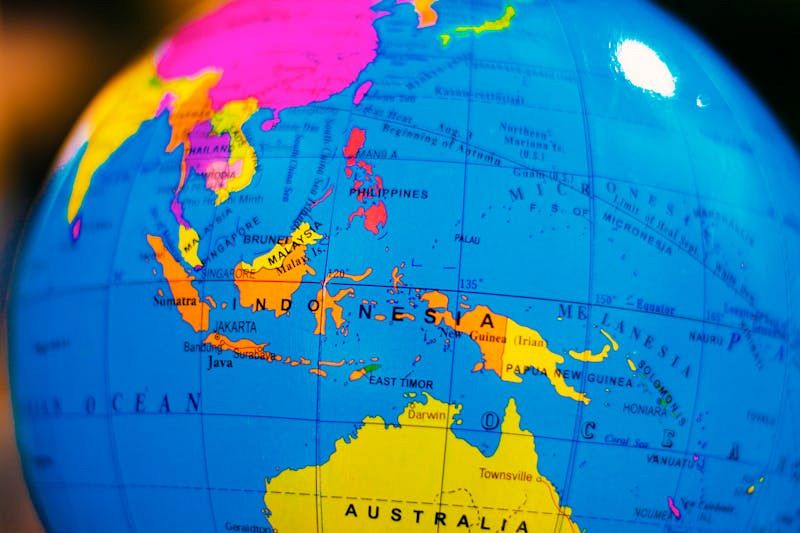
Commentary about the Strait of Malacca has become anxious, strategic and faintly theatrical; it may be worth remembering that older societies knew how to remain composed when disorder arrived, writes Carl Gopalkrishnan.
'Life itself, she thought, as she went upstairs to dress for dinner, was stranger than dreams and far, far more disordered.'— Nancy Mitford, Christmas Pudding (1932)
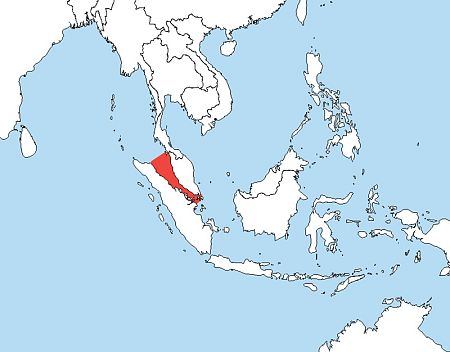
THAT LINE FROM 1932 feels unexpectedly contemporary right now. At a moment when Australian commentary about the Strait of Malacca has become anxious, strategic and faintly theatrical, it may be worth pausing before another round of alarm and remembering that older societies also knew how to remain composed when disorder arrived.
"Keep Calm and Carry On" doesn't really work anymore, but Prime Minister Anthony Albanese and Foreign Minister Penny Wong don't seem to know what else to do. They seem to have forgotten that the empire did not run only through law and guns; it also ran through repeated codes of social recognition.
Debrett's Peerage belonged to the Mitford world. It was not merely a manners book. It was one of the printed languages through which the British hierarchy explained itself — titles, precedence, introductions, marriage, dinner, who stood where, who entered first, who counted.
It remains a handbook of rank, manners, introductions, precedence and dress, but also a printed reminder to Australia that behaviour under pressure was part of political intelligence. Mitford's gift in her writing was, to put it in Australian, to "take the piss" out of the system that gave her privilege.
Younger Australians often assume such codes were discarded along with the empire. Much of Asia knows they were not. Former colonies learned imperial etiquette with particular seriousness, sometimes more consciously than Britain itself, because those codes arrived not as atmosphere but as instruction.
My father always noted wryly that all his medical teachers in the 1950s were British, in the same breath that he noted the racist nature of colonisation, and intergenerationally, migrants inhabit that contradiction when we observe history unfolding in our 'backyard' — a term which makes the Asia Pacific region really cringe.
'She wondered whether to put a divorced husband next to his first wife, and decided that it would be a good plan…'— Nancy Mitford, Christmas Pudding (1932)
Australia often behaves as if alliance change means moral renewal when it is really closer to swapping husbands than changing class. So instead of confidence, our social alliance habits come through in dependence on alliance language and transactional words such as "leverage" when it tries to assuage its population that even though we have no diesel, we can still use our natural gas as a life raft to weather the decapitation of the rules-based order (another regional cringe).
I could never imagine Nancy Mitford using the word leverage.

Perhaps that is why, if Australia hosted the first serious regional dinner on protecting Asia's access to the Malacca Strait, it should focus less on geopolitics and more on the style of this state dinner. Beginning with over-explaining multicultural virtue probably won't win the room, although the guests of honour — Malaysia, Singapore and Indonesia — would measure their own good manners by how well they absorbed or ignored this tiresome phrase.
Asia is highly literate in imperial residue, in class theatre, in ceremonial understatement and emotional restraint. It notices when confidence is borrowed. Better to arrive with form but without stiffness, warmth without self-display, and enough honesty to let colonial scars sit quietly in the room rather than pretending they were never there.
Poise and glamour without pedigree
Post either British or American patronage and protection, Australia needs to shop for a new style not dependent on inherited rank or connections. Not pretending the imperial inheritance disappeared; just sitting with it honestly throughout the entire dinner without getting defensive or making bad jokes. Just, in fact, sit.
After all, Asia and Australia hold shared history as former colonies, but this does not mean the dinner should fall into a stereotype of the 2000 Sydney Olympic Games or the embarrassment of Baz Luhrmann's Australia. Rather, as Debrett's itself writes, 'The main aim is to look chic and reasonably formal'.
Glamour, in such a setting, need not mean spectacle (unless the Government invites Luhrmann). It may simply mean visible care: a country prepared enough to host difficult neighbours without intimidation, apology or noise. Glamour is a tangible quality and a more appropriate leverage for a nation so mired between the past and the present, between alliance and peer membership, and between war and peace.
The conscious creation of political and cultural glamour in the Asia Pacific matters now because Australia still carries old imperial and alliance habits, even when pretending not to. We are seeing this on the speed-dating app that the PM's advisors downloaded to brief him for his recent "Asian Fuel Tour". They appear in tone, in official caution, in who is treated as familiar, and in how quickly the country reaches for either British residue or American certainty when events become unstable.

The word "leverage", blared into Asian newsfeeds by Australian media commentators, feels like an old defensive shield rather than a friend. Anti-immigration debates publicly compared to the White Australia Policy are not glamorous. Defensive shields are not glamorous. Penny Wong is not glamorous. AUKUS is definitely not glamorous to the bulk of Asia. You know what's glamorous? An intimate but formal state dinner hosted for a few of our Pacific Family.
Australia often behaves as if alliance change is the only pathway to moral renewal. Asia just looks at the ceiling: new husband, same parties. Its deeper habits remain in the room like an over-perfumed guest. Perhaps Australia's advantage in a post-rules-based disorder is not that it escapes imperial inheritance, but that it can finally choose which parts of that household remain worth seating at the table.
Nancy, not her sister Diana: wit rather than declaration, ambiguity rather than national fear, and an elegance and quiet glamour held lightly while history misbehaves.
That may be one of the few useful forms left to a middle power still learning how to appear adult in its own region: poise without pedigree, glamour without borrowed confidence, and enough restraint to understand that a shared meal can sometimes advance a country further than another speech about deterrence.
Carl Gopalkrishnan is an Australian artist and policy practitioner with long-standing experience in multicultural policy, social cohesion and community engagement.
 This work is licensed under a Creative Commons Attribution-NonCommercial-NoDerivs 3.0 Australia License
Support independent journalism Subscribe to IA.