As Gaza burns, Australia’s Zionist lobby pushes laws to silence anti-Zionists, rebranding dissent as hate and stripping rights in the name of safety. Tom Tanuki reports.
THE ONLINE HATE PREVENTION INSTITUTE (OHPI) released a report this week looking at antisemitism in online responses to the Adass Israel synagogue firebombing. It catalogues many screenshots depicting genuinely antisemitic posts, and some I’d describe as anti-Zionist.
Then it makes some recommendations.
The OHPI is a "Third Sector" research organisation, meaning the NGO and not-for-profit space; they’ve worked with and received grants from Meta in the past, for example, in order to make reports advising on online race hate, or "extremism".
It’s easy to find people being genuine antisemites on Twitter, Facebook and Telegram. Big tech platforms like Meta have become a cesspool of bigotry and hatred. That’s been supercharged by big tech’s recent abandonment of the Christchurch Call, and other responses to the waves of racist hate crime and political trends given wings by social media for over ten years now. They no longer seek out the input of organisations like the OHPI as much.
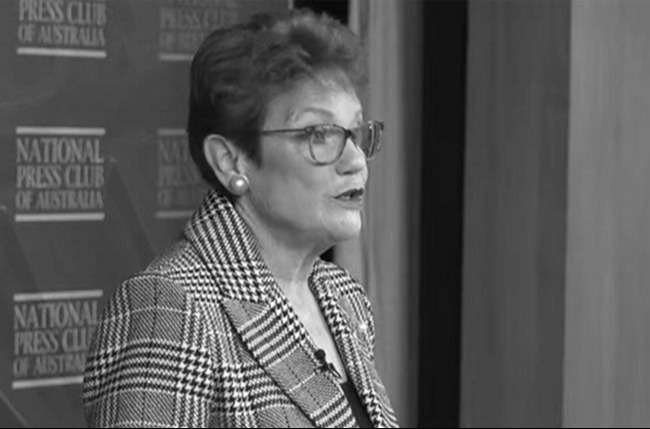
Dr Andre Oboler, who wrote the report, fills his catalogue of screengrabs with some recommendations, including greater monitoring by government of social media accounts, cross-community collaboration to prevent hate attacks, and better recognition of when anti-Zionist content is also antisemitic.
He also makes several recommendations which pertain to the International Holocaust Remembance Alliance (IHRA) definition of antisemitism:
- [Tackling] those who make support against antisemitism conditional on Jews giving up part of their identity.
- [Tackling] the mislabelling (particularly in the media) of the tools that have become the de facto international standard in tackling antisemitism as “controversial”.
- The Australian Government should take ownership of the IHRA Handbook being prepared by the Special Envoy to Combat Antisemitism, as the Canadian Government did with its IHRA handbook.
The IHRA definition expands antisemitism greatly beyond its roots, offering examples such as:
'...claiming that the existence of a State of Israel is a racist endeavour...' and 'drawing comparisons of contemporary Israeli policy to that of the Nazis.'
Dr Oboler was in fact, part of the Australian delegation to the meeting in Bucharest in 2016 where the IHRA first adopted the definition.
It was drafted by Kenneth Stern in 2004 under what he describes as a very different set of sociopolitical circumstances. He was confronting an abundance of genuine antisemitic expression and denialism in Europe at the time. In the 2010s, he watched his draft definition become co-opted by the right-wing Zionist lobby as a tool for the repression of free speech and expression. Since 2016, he has publicly campaigned against it.

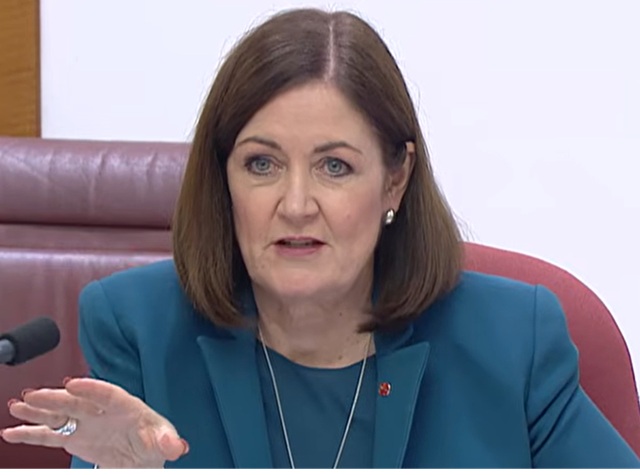
When asked about Kenneth Stern’s concerns, Special Envoy to Combat Antisemitism Jillian Segal told ABC Radio:
"The train has moved on, if I might put it that way, and Kenneth Stern has been left behind.”
The OHPI has enthusiastically backed Segal’s recent report along with its recommendations, which include a centrepiece demand for the Australian Government to adopt an IHRA Handbook and the definition. If only it stopped there. It also makes deeply undemocratic calls to extinguish academic freedoms, force charitable institutions and arts grant recipients to adhere to the IHRA definition of antisemitism, conduct deportations and threaten universities with the removal of their funding.
Dr Oboler was called as an expert witness for the Wertheim vs Haddad case in the Federal Court, which dealt with a Muslim preacher’s genuinely antisemitic statements. The judgement acknowledges that “to blame Jews for the actions of Israel is antisemitic”.
It also became notable for observing that criticism of Israel is not antisemitism:
“The ordinary, reasonable listener would understand that not all Jews are Zionists or support the actions of Israel in Gaza and that disparagement of Zionism constitutes disparagement of a philosophy or ideology and not a race or ethnic group…”
Dr Oboler disputed the judgement on some of this. He asserted that what makes a sentiment antisemitic is “when it is about people, not ideas”.
He writes:
Is it ok to have banners saying, for example, “No Zionists on campus”? Such a sign could be compared to one that says, “No Halal food eaters on campus”, or “no speakers of Indigenous languages. While not all Australian Jews are Zionists, and not all Muslims only eat Halal food, and not all Indigenous Australians speak an Indigenous language… nevertheless, such statements are not criticisms of ideas, they are active discrimination against people based on their identity.
There are two contrasting conceptions of Zionism here that cannot be reconciled. One is inseparable from Judaism in the mind of the born-and-raised Zionist, fundamental to the identity of being Jewish for what’s described as a majority of Jews around the world. The other sees Zionism as a political model which is akin to Nazism in its exceptionalism and acceptance of colonialism, displacement and genocide.
Anti-Zionists feel compelled to invoke the latter conception in the urgent and obvious political context of a genocide that they see happening right now in Gaza, at the hands of political Zionism. The debate is intractable — that’s nothing new. But the demands in Segal’s report is that this clash in conceptions of identity is resolved by enshrining the Zionist conception of Zionist identity in law. And, then, to punish Australian people and institutions who don’t adhere to it.
The Special Envoy for Islamophobia has certainly made no such noise or demands yet. No Indigenous Voice to Parliament exists to call for our government to do mass deportations for the regular deaths in custody that continue to occur, or to sack everyone for the racism that Indigenous people encounter in the press, the workplace and the streets every day. It’s laughable, really, to think that any of the other forms of racism experienced by more sizeable Australian minority groups might lead to a rolling back of our fundamental democratic rights to "fix" them.
There have been horrific instances of real antisemitism and its violent manifestations, such as synagogue attacks and firebombings. Dr Oboler prioritises them in his work. But in recommending the IHRA definition and Segal’s report, he recommends work that criminalises and punishes anti-Zionist activism. This work does not prioritise synagogue attackers. Laws already exist to deal with synagogue attackers. The utility of the IHRA definition in targeting anti-Zionism is well documented.
What Australian Zionists usually report are concerns of notional feelings of unsafety on campuses or in boardrooms. Those concerns are reified via hardline lobbyist groups such as the Executive Council of Australian Jewry (ECAJ), in the form of padded and misrepresented antisemitism statistics; or by journalists like Chip le Grand, who actively assists in campaigns to have artists sacked from arts appointments. (Dr Oboler fed this report to le Grand a day before its release.)

The IHRA definition of antisemitism that we’re expected to adopt in the middle of the Gaza genocide is about honouring a racism stripped largely of any structural aspect; it’s about a depoliticised trauma, and the reported feelings and concerns of individuals around their notional safety.
The UK-based Institute of Race Relations wrote in 2020:
To put it simply, this new modified view oversimplifies racism. It fixates on questions of individual bias (often unconscious) and apparently overt hate (often online or in interpersonal settings), thereby personalising racism.
In the public sphere, this becomes a spat, which allows racism to be turned into a media spectacle, completely obscuring the diligent but less eye-catching work carried out by organisations combating the structural racism that emanates from government policy, the law, and the instrumental logic and culture of organisations.
On the question of the organisations that propagate this new "anti-racism", they observe:
Whereas before it was grassroots groups, with perhaps the support of local authority-supported small voluntary organisations, setting the agenda on racial justice, now we have multi-agency hate crime panels and anti-extremism bodies which are a mixture of private, state and Third Sector organisations. Their multi-agency nature, closeness to government and law enforcement, neutralises campaigns, for example their ability to criticise the police and the […] response to racist violence or criminalisation of BAME communities, let alone state policies that foster racism.
And, ultimately, this multi-agency ‘professionalised’ industry leads to the delegitimisation of social movements that take a more transformative, radical approach...
These organisations, lobbyists and politicians effectively steal anti-racism. They do it when protest rights are erased. They do it when the tools of the anti-racist researcher are banned through anti-doxxing laws, sped through Parliament to protect people who were not in danger. They do it when an outcry over neo-Nazi action is redirected into anti-democratic bans, which, "coincidentally", now often target anti-Zionists.
None of this work has helped to protect any minority group. It has actually placed minority groups, whether it be Jewish people or any other, in greater danger, just as Stern has observed that the widespread adoption of the IHRA definition has done. That tells you who actually benefits from all this "anti-racism".
I’m writing this, my nth piece disputing the work of the local Zionist lobby, during one of the deadliest months of the Gaza genocide. Another column, as Gazan journalists are reportedly too starving to even hold up their cameras.
But that’s why our local Zionist lobby, and even its champions, must have the flashlight shone on them, again and again. It might feel futile in these circumstances, but it’s still an act of reclaiming anti-racism from them where it counts.
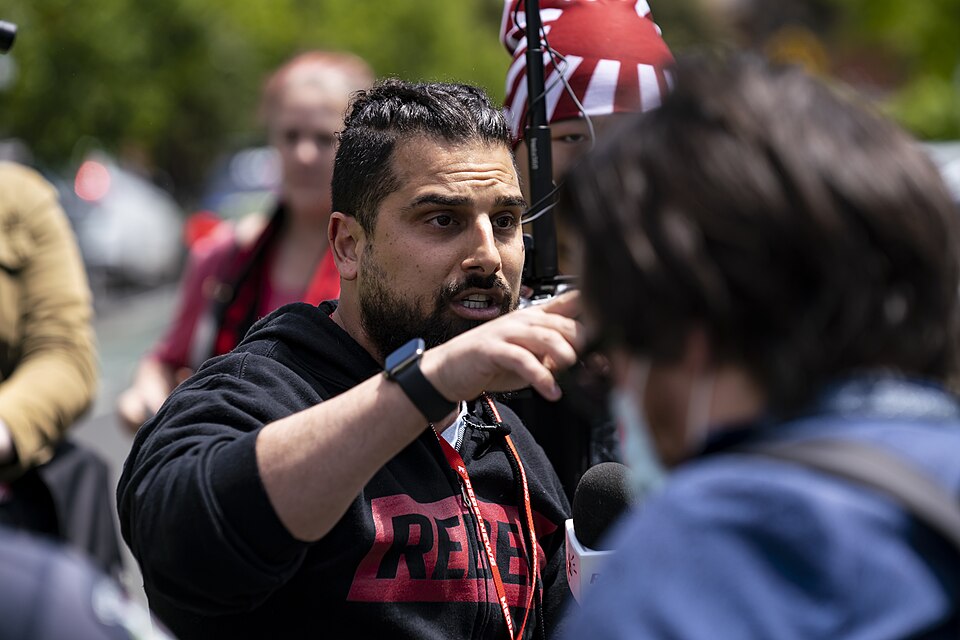
Tom Tanuki is an IA columnist, writer, satirist and anti-fascist activist whose weekly videos commenting on the Australian political fringe appear on YouTube. You can follow him on Twitter/X @tom_tanuki.
 This work is licensed under a Creative Commons Attribution-NonCommercial-NoDerivs 3.0 Australia License
Support independent journalism Subscribe to IA.