Behind the diplomatic theatre, Russia’s crumbling economy, military losses and silenced dissent reveal the true cost of Putin’s war, writes Patrick Drennan.
FACING STAGNATION on the battlefield and economic calamity at home, Russian President Vladimir Putin desperately needed a victory to present to the Russian people.
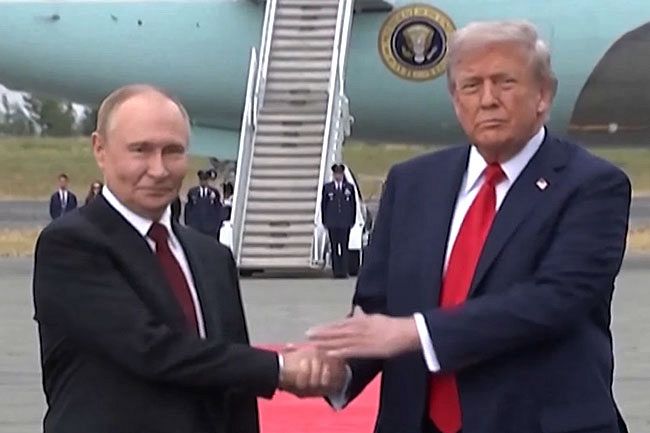
On 15 August, Putin met with American President Donald Trump at Alaska’s Elmendorf-Richardson air base. He laid out terms to end the war he started in Ukraine, without publicly stipulating the conditions. In a later joint press announcement, Putin talked extensively about Russia’s historical ties to America and mentioned Ukraine’s “fundamental threats to our security”. President Trump responded by saying that progress was being made.
The diplomatic victory for Putin was the meeting with President Trump as an equal — after three and a half years of international isolation. Oddly, in an interview with Fox News immediately afterwards, President Trump described Russia as the second superpower in the world, behind America.
The facts do not support that. Russia’s economy is collapsing. Ordinary Russians are struggling and quietly question Putin’s leadership.

Russia's grain harvest has plunged by 12.7 million tonnes and it is not all due to drought. The Russian Grain Union complains that Kremlin policies such as strict state price regulation and export duties have made the situation worse.
Russian consumers struggle with the increased prices of butter, milk, potatoes, fruit and chicken. Domestic petrol prices have risen by 18% over the last year. The demand for Russian cars and trucks is falling, and production is foundering.
Russia’s two largest lenders, Sberbank and VTB, reported a sharp increase in delinquencies on mortgage and unsecured consumer loans in the first quarter of 2025. From October 2024 to April 2025, the total volume of credit card delinquencies in Russia increased by almost 70% to 110 billion roubles (AU$2.1 billion).
The latest reliable statistics show that Russia has had a million war casualties, with at least 104,000 dying in combat. Russia has major industry and military manpower shortages.
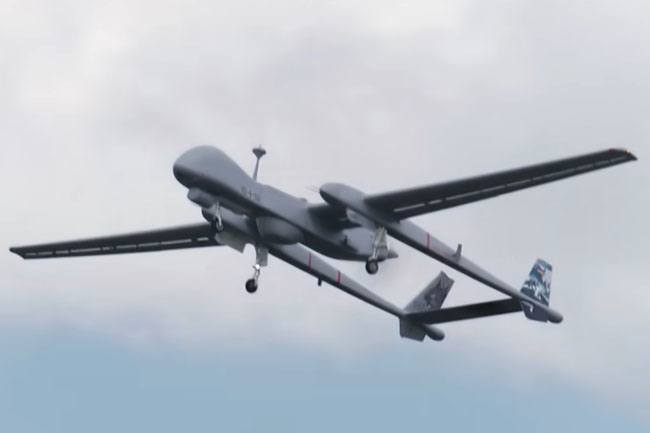
Ukraine also contributes to Russia’s increasing military and economic decline by striking its industrial-military complex. For example, on 14 August, Ukrainian drones successfully struck (for the third time) the Volgograd Oil Refinery 1,337 kilometres from Ukraine’s borders. The refinery produces 15 million tons of oil annually,
On the battlefield, Russia has conquered about 5,000 square kilometres of land in Ukraine since January 2024 — a paltry gain of less than 1% of Ukrainian territory.
Military commanders who criticise the Kremlin’s tactics vanish. On 1 August 2025, Yuri Burakov, commander of the 2nd battalion of the 95th regiment, disappeared following a meeting with his superior.
If Putin believes any of them to be disloyal, such as Yevgeny Prigozhin, or simply becomes too popular like Major-General Ivan Popov, they are arrested or die in mysterious circumstances.
The Russian industrial oligarchs are also under extreme pressure. On 4 July 2025, Russian oligarch Konstantin Strukov, worth about AU$2.9 billion, was arrested while attempting to flee the country aboard his private jet. TVP World reported that his fortune, based on gold mining, will be confiscated.
On the same day, Andrei Badalov, the vice-president of Russia‘s national oil pipeline, Transneft, died after allegedly falling out of a window.
On 26 March, Vadim Moshkovich, worth about $2.7 billion, was arrested and charged with fraud. He was the majority owner of Russia’s largest agricultural company, Rusagro. According to the Odessa Journal, Putin’s inner circle are already taking over aspects of the business.
Putin’s inner circle comprise the Siloviki (literally, “power people”) — conservative, long-time associates of Putin, many of whom have FSB or KGB secret service backgrounds. They include Presidential Aide Nikolai Patrushev, loyal generals like Valery Gerasimov and Chechen head Ramzan Kadyrov. All report directly to Putin and dutifully follow his orders.
However, even the Siloviki have doubts. On 10 August, The New York Times reported that Kremlin Deputy Chief of Staff Dmitry Kozak was sidelined after he advised Putin to immediately stop fighting in Ukraine and seek peace.

On 18 August, President Trump hosted a meeting in the White House with Ukrainian President Volodymyr Zelenskyy and other European leaders. Zelenskyy rightly refused to hand over Ukrainian territory that Russia had not conquered. President Trump said he wanted Zelenskyy to meet with Putin to discuss peace without a ceasefire or concrete American security guarantees. President Trump telephoned Putin during and after the meeting, in which the Kremlin discussed “raising the level of representatives”, without mentioning Zelenskyy.
Putin is cornered. His usual reactions in such circumstances are to stall for time – with absurd treaty preconditions and lashing out – with more intensive bombings. He has no intention of giving up conquered land, nor meeting with President Zelenskyy, as he has repeatedly told the Russian people that Zelenskyy is “illegitimate”. He is gaslighting and has not said anything since these historic meetings that indicates that he has altered his maximalist goals.
Putin believes he can sustain the Ukraine war for another two years by covertly selling oil to China and India (notwithstanding deferred American tariffs), importing military materiel from China, and recruiting thousands of mercenaries from North Korea and other nations.
The historical August events elevated Putin’s status at home, made no concessions, saw no new sanctions, limited calls for a ceasefire and inferred that Ukraine, not Russia, is blocking peace. Diplomatic victories that do little for Russians who cannot feed their families and whose relatives are dying on the battlefield.
Patrick Drennan is a journalist based in New Zealand, with a degree in American history and economics.
 This work is licensed under a Creative Commons Attribution-NonCommercial-NoDerivs 3.0 Australia License
Support independent journalism Subscribe to IA.


Related Articles
- Putin's arrest warrant an act of political hypocrisy
- Putin's power base in Central Asia growing gun shy
- Putin upscales Russia's information war
- Putin will prevail if good people do nothing