Australia’s response to discrimination reveals stark inequalities in how antisemitism, Islamophobia and anti-Palestinian racism are addressed, writes Professor Jane Kenway.
What’s the Government doing?
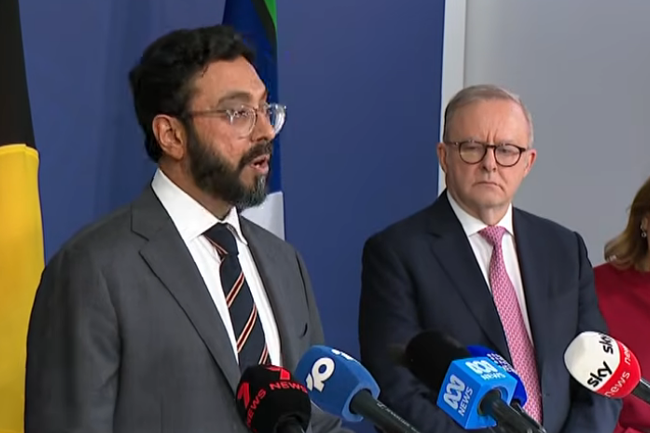
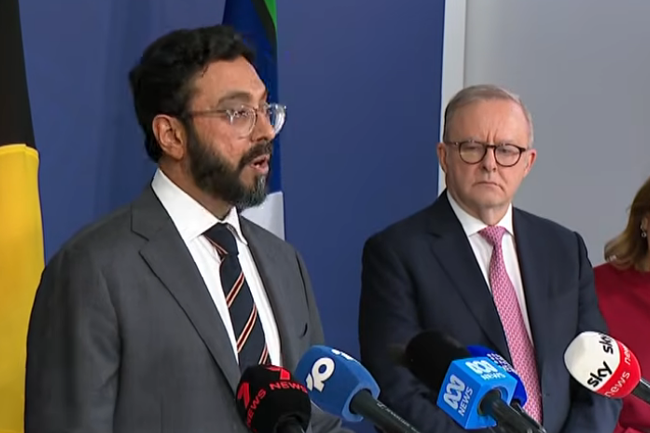
On 18 July 2026, after a ten-month hiatus, the Government released its Response to the Special Envoy to Combat Islamophobia (Aftab Malik)’s report.
Its Response doesn’t support the Envoy’s recommendations for separate commissions of inquiry into Islamophobia, anti-Palestinian and anti-Arab racism.
Social cohesion is foregrounded. The Government proposes a Social Cohesion Education Advisory Council to drive a broader suite of actions to strengthen social cohesion through Australia’s education systems.
The Government will also create an Islamophobia Education Taskforce to review the Australian Curriculum, develop and deliver ‘a Social Cohesion Framework for Schools’ and develop ‘a national, consistent framework for anti-racism in universities, aligned with the National Anti-Racism Framework’. Anti-racism’s appearance is brief.
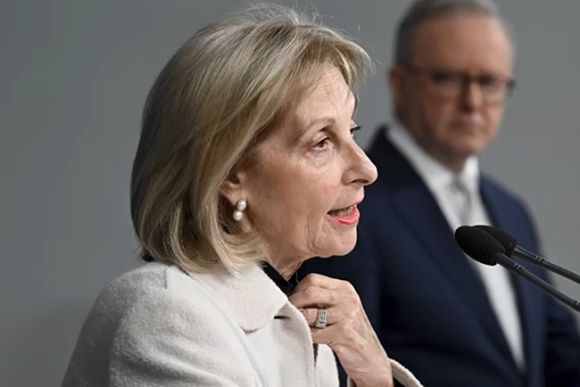
Seven months earlier, the Government responded to Jillian Segal’s plan, also announcing an Education Taskforce with a mission to ‘prevent, tackle and properly respond to antisemitism’.
Two similar but different taskforces
Both taskforces cover all education sectors. Both are to review the Australian Curriculum. Both are invited to provide advice on any further measures. Both include members from ‘state and territory education authorities, agencies and departments’.
This looks even-handed. But what do the differences reveal?
Whereas the Islamophobia Education Taskforce is largely expected to produce frameworks, the Antisemitism Education Taskforce was tasked with direct actions. These include developing a Social Cohesion Education Hub, producing a University Report Card on Antisemitism, helping the Tertiary Education Quality and Standards Agency to strengthen its powers, and commissioning UNESCO to develop professional learning materials.
Another difference is discrepant opportunity. Currently, the Islamophobia Education Taskforce has nothing in train. In contrast, the Antisemitism Education Taskforce’s Midpoint Update reveals its comprehensive response to its brief — commissioning resources, rolling out pilots in education systems, informing regulatory redesign, forming advisory and reference groups, regularly attending meetings of education ministers, hosting high-powered dialogues and instructing universities to explain how they define antisemitism. Its ‘further measures’ for 2026 suggest it sees no limit point.
The contradictions
A slew of untenable contradictions has arisen. These favour antisemitism policies, underplay Islamophobia and ignore anti-Palestinian racism in education.
Unhelpful and false equivalents: Creating two envoys inevitably invited comparison. Appointing Jillian Segal first and Aftab Malik two-and-a-half months later suggested that Muslims matter less than Jews.
Also, having two envoys suggested an equivalence between Jews and Muslims in Australia. While both face discrimination, Muslims face more than Jews, the Scanlon report shows.
Further, despite their significantly different numbers (Muslims 3.2 per cent, Jews 0.4 per cent of the population, ABS Census 2021), Muslims lack the political influence of dominant sectors of the Jewish community (the Israel lobby).
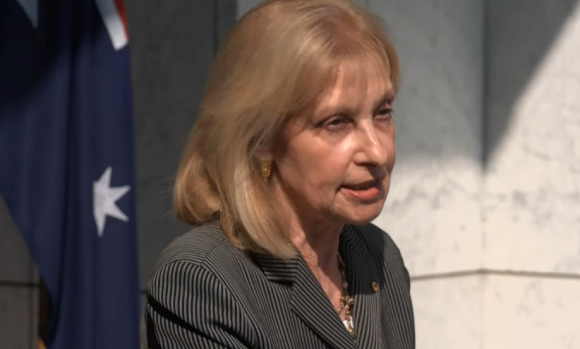
Lopsided logic: This logic continued when, on 18 Dec 2025, Segal’s Plan was accepted in full. Bolstering this logic further, on 9 January, the Government established the Royal Commission into Anti-Semitism and Social Cohesion. Its nine public hearing blocks ran from 4 May to 28 August. Block nine focused on ‘Strengthening social cohesion’. The disproportionate focus on antisemitism is obvious.
All hearing blocks attracted wide media coverage. In contrast, the government’s Response to Aftab Malik’s Report attracted little. Interestingly, its Conclusion says ‘Importantly, the outcomes of the Royal Commission on Antisemitism and Social Cohesion will be used to inform workplans to strengthen social cohesion and address Islamophobia’. How this might happen is unclear.
Bad timing: When the Islamophobia Taskforce finally begins, the Antisemitism Task Force will have been operating for roughly seven months. It has already established the main parameters for policy and practice. These will seriously constrain the Islamophobia Education Taskforce.
The Government Response explains that ‘The [Social Cohesion] Advisory Council will oversee the workstreams of the Islamophobia and Antisemitism Education Taskforces once they have completed their terms’. However, the Antisemitism Task Force will end in mid-December 2026. The Islamophobia Task Force will likely end in August 2027. The former is unlikely to wait for the latter to report.
‘Eliminating’ or ‘combatting’ discrimination? The titles of the Government’s Responses suggest it is intent on ‘eliminating antisemitism’ and only ‘combatting Islamophobia’. Peak Muslim bodies (such as the Alliance of Australian Muslims and Australian National Imams Council) have politely aired their disappointment. They have noted, for example, that it focuses primarily on resourcing ‘soft measures’ which are seen as insufficient.
Anti-discrimination or anti-education? The Government has officially endorsed the International Holocaust Remembrance Alliance (IHRA) ‘working definition’ of antisemitism. This blurs the distinction between anti-Jewish prejudice and criticism of Israel and is thus convincingly criticised. Yet, following Segal’s insistence, it has increasingly become an advice tool along with her widely disseminated guidebook.
Although not uniformly mandated, this advice and guidance might be better described as indoctrination and censorship. The application of the IHRA is thus anti-educational. It stifles free speech, academic freedom and standard geopolitical analysis and critique. It deliberately silences those who draw attention to Israel’s egregious treatment of the Palestinian people and who call for Australia to strongly oppose it.
The noise of silence: The Government’s response to Aftab Malik’s report is conspicuously silent on Australian Palestinians and Palestine. It fails to acknowledge the well-documented discrimination in educational settings against students and staff who are Palestinian and against those who advocate for Palestinian rights.
What are the implications? When the Islamophobia Education Taskforce reviews the school curriculum, it must identify opportunities to ‘replace harmful stereotypes and historical biases with factual knowledge, empathy and critical thinking’ and ‘examine all forms of hatred, including Islamophobia’. But ‘harmful stereotypes’ about Palestinians won’t be addressed, Zionist ‘historical biases’ will remain, certain ‘factual knowledge’ about, for example, the Nakba or Israel’s genocidal behaviour in Gaza will be avoided. ‘Empathy’ will be selective and ‘critical thinking’ won’t be too critical.
And ‘all forms of hatred’ exclude that which the Israeli state and its Zionist devotees in Australia direct towards Palestinians.
Social cohesion or anti-racism?
The Government is clearly kicking these contradictions down the road to its future Social Cohesion Education Advisory Council.
It has consistently framed social cohesion as a unifying concept, compatible with each envoy’s goals and workstreams. Also, social cohesion featured heavily in their reports.
But this versatile and expansive term is not neutral. It is a consensus imposed from above.
‘It shifts responsibility for unity onto those already marginalised. It equates dissent with division and dresses up exclusion as harmony.’
For example, as journalist Jeff Sparrow explains, its recent visibility in policy and the media coincides with efforts to repress public outrage and mass mobilisation in response to the ongoing atrocities in Gaza.
Social cohesion is thus a recipe for disempowerment, discontent and distrust.
Strong anti-racism policies are necessary. They don’t pit stigmatised groups against each other, favour one over others, treat each group as if it is homogeneous, or silence some while expecting them to be responsible for social healing. Rather, they adopt ‘systemic, intersectional, strengths-based and coordinated action’.
Professor Jane Kenway is an Emeritus Professor at Monash University, a Professorial Fellow at Melbourne University and an elected member of the Australian Academy of Social Sciences.
 This work is licensed under a Creative Commons Attribution-NonCommercial-NoDerivs 3.0 Australia License
Support independent journalism Subscribe to IA.


Related Articles
- NSW court draws a line between criticism of Israel and antisemitism
- Jillian Segal's 'Understanding Antisemitism in Australia': A lesson in propaganda
- Royal Commission on cohesion hears only half the story
- Antisemitism and Israel: A challenge to the Australian narrative
- Beneath the anti-Zionist Big Banana