Global fuel disruptions are exposing Australia’s vulnerabilities and strengthening the case for greater economic self-reliance, writes Jemma Nott.
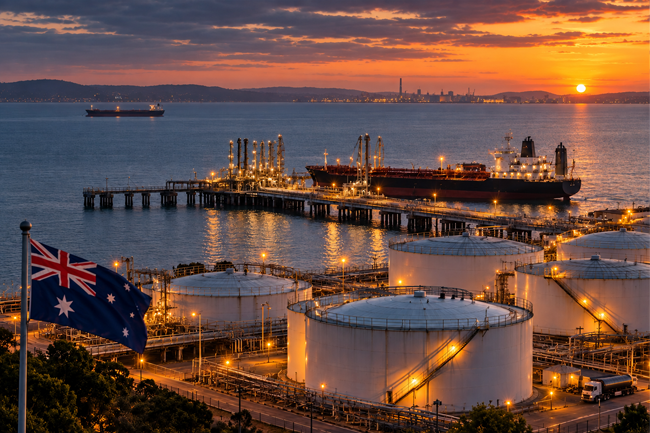
AUSTRALIA IS HEADING towards an unprecedented fuel crisis never before seen in history.
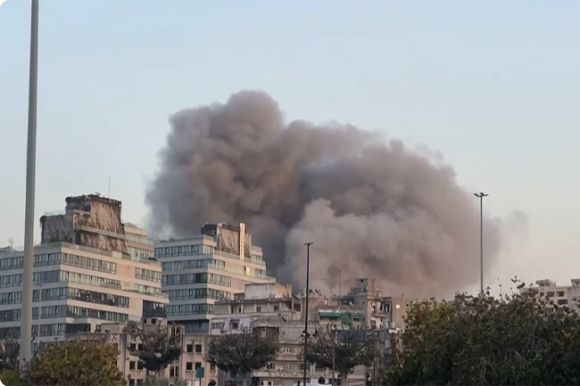
The Strait of Hormuz has been closed since March and since the recent capture of the Bab al-Mandeb Strait by the Ansarullah movement, there have been growing concerns that Australia may face significant fuel insecurity.
The consequences of this, especially in light of Iran’s recent announcements that they will not reopen the strait until U.S. President Donald Trump is out of power, have the potential to be globally shifting and profoundly upending.
In Australia, we have seen the effects of the OPEC oil crisis in the '70s, but that’s not really comparable to the level of fuel scarcity we are staring down the barrel of in the next six months. Government agencies are being put on notice about potential level 3 fuel restrictions. Rationed fuel means informal lockdowns (due to low supplies of jet fuel and diesel for cars), or limitations on movement and potentially growing instability in the long-haul trucking that operates Australia’s trade.

In March, the Transport Workers Union applied to the Fair Work Commission (FWC) and essentially said that long-haul trucking will collapse if nothing is done. The FWC handed down a decision that essentially meant truckers don't have to carry the costs. The order requires clients at the top of road transport supply chains – retailers, manufacturers, mining companies – to adjust the rates they pay fortnightly so transporters can recover fuel cost increases.
A historic decision from the FWC, yet the problem for Australians of supply-side inflation threatening to drastically slow spending remains. For those who are already living payday to payday – which is 50 per cent of all Australian workers – we could see inflation levels so great that people start tipping into genuine food insecurity at a level Australians haven’t seen in modern history.
In March, Australia settled talks on and signed the Australia-European Union Free Trade Agreement — an agreement designed to bolster the relationship between Australia and the EU in light of uncertainty around the Trump Administration. On 15 September, Australia’s Trade Minister Don Farrell said that we were “on the same page” as Canada with regard to seeking a “unique alliance” with the EU.
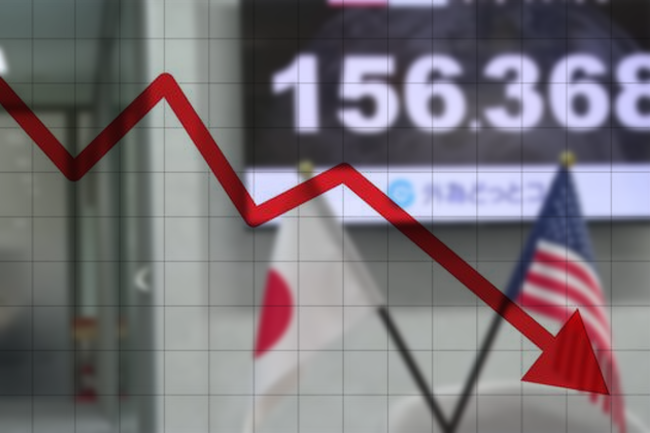
In the background of this is Australian bond yields soaring to their highest levels since 2011.
Rather than viewing this as yet another storm Australia will have to weather, it may be time to start looking at this crisis vantage point as an opportunity to begin thinking about what will rise from the ashes of a collapsing “world order”. Countries are beginning to pull their money out of U.S. treasuries and U.S. dollar-denominated investments (including in Australia to a lesser degree).
Prime Minister Albanese’s comments about seeking a closer relationship with the EU in some way represent a recognition of this changing world order yet arguably a relatively short-sighted one.
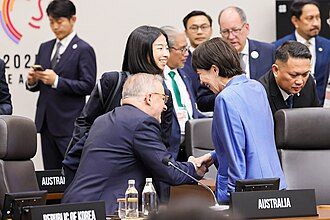
The European Free Trade Agreement lowers the barrier for many important Australian exports yet also threatens some infant industries, like Australia’s dairy industry, which is feeling threatened by a lowered barrier to access to European dairy imports.
However, as Canada considers “associate membership” with the EU, it is looking at not just greater flows of migration between the EU and Canada but also greater levels of transience when it comes to critical minerals, energy and defence trade. Australia has now been hinted to follow this path, too. Closer associations are being formed with the EU on the heels of multiple EU member heads of state indicating that they are preparing for war with Russia.
In light of the changing world circumstances, the question remains what a closer association with the EU actually solves. Australia and the EU undoubtedly face many of the same structural problems right now – supply-side inflation driving up the cost of living, asset bubbles that are looking tenuous in housing and large pension funds heavily exposed to a turbulent and seemingly unstable equities/AI market.
Former PM Paul Keating recently stated that the biggest failure of Australia’s political classes was that they “have refrained from articulating a bigger idea of the place”. Perhaps the best example of this is that while Iran's asymmetric approach has exposed the U.S. as a paper tiger and overwhelming conventional power has not translated into strategic success, we are expanding defence with the U.S.
Perhaps most egregiously though, we have no consistent vision for how to create a nation that is self-sustaining and economically diversified.
The Labor Government has made some very sensible moves in the past few years towards investment in being able to bring the value-adding end of the supply chain to our minerals exports back home, namely with investment in a Critical Minerals Facility.
It has also developed a National Battery Strategy alongside the minerals push — the logic being that if you already produce the lithium and nickel, moving one or two steps up the value chain into cells and storage systems is a smaller leap than starting from nothing, and it plugs directly into domestic renewable energy build-out demand.
The National Reconstruction Fund Corporation (NRFC) has also invested $20 million in Silicon Quantum Computing (SQC), a Sydney-based global leader in the field of quantum computing. Within it lies a genuine opportunity for a global competitive advantage in semiconductor manufacturing due to its ability to manufacture quantum chips with atomic precision.
However, maintaining a consistent path towards diversification requires consistent political focus, subsidies and buy-in. But the instability of nation-building in Australia creates the real risk of sensible moves like these being undone every three years.
As a result of the crisis we are heading towards, the Australian Labor Party may be put through perhaps one of the most severe tests it’s ever been through — or that any Australian government could go through in recent history. That will require diplomacy from the Government that carefully manages our relationship with China and presents us at a minimum as a neutral middle power.
What else is clear is that as Australia's economic position weakens, we will need collectivism at the local level more than ever, to look after one another and to strengthen the bonds that hold us together. Australia is a resilient nation. But it will take the fortitude of our leaders and our institutions to come out the other end with a hopeful vision of something better.
Jemma Nott is a Political Economy post-graduate student at the University of Sydney and a freelance writer.
 This work is licensed under a Creative Commons Attribution-NonCommercial-NoDerivs 3.0 Australia License
Support independent journalism Subscribe to IA.