Banning men from childcare won’t protect children — but it will fuel bigotry and distract from real solutions, writes Tom Tanuki.
I AM DISAPPOINTED in calls to ban men from childcare in the wake of the horrific spate of recent abuses uncovered in Victorian childcare centres. Any media outlet mainstreaming this discourse is responsible for threatening an already too-small workforce of excellent male carers, and obfuscating the root causes of real child abuse.
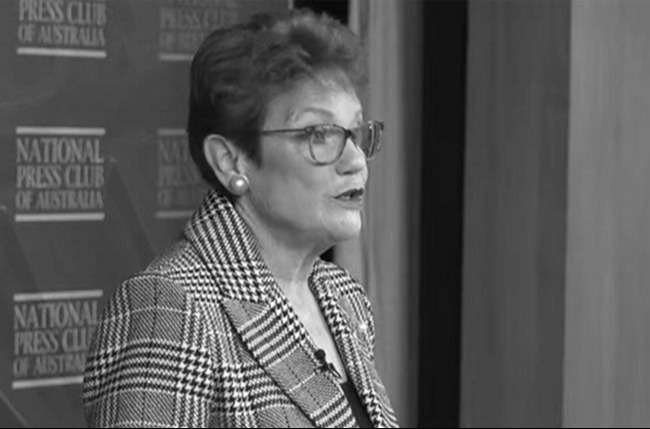
The discussion around banning men from childcare in televised media appearances has been led by Louise Edmonds, a survivor-advocate who runs an organisation called The Independent Collective of Survivors (TICOS). TICOS focuses on gendered, domestic, family and sexual violence, despite appearing inactive online for some time.
In a 2023 Mamamia article, Edmonds writes that she witnessed a carer in her daughter’s day care who was having inappropriate physical contact with children and who appeared sexually aroused afterward.
Her initial concerns were written as such:
'Firstly, workers are not allowed to have this contact with a child and secondly it was a man.'
She states in the Mamamia article that a later investigation saw him 'connected to a paedophile ring'. But Sydney Morning Herald coverage of the same incident states that the Australian Federal Police (AFP) looked into her complaint about the carer and ‘escaped’ criminal charges.

In a conversation on 10 News, Edmonds was sat next to male child carer Nick Stephens. He expressed his concern that the already low numbers of men in the sector might be discouraged from continuing their work in light of the talk about bans.
Edmonds' response was:
“People like Nick – you can tell by the way he’s speaking that there’s a love and a care and a protectiveness around these children. But there are ones out there that don’t speak like Nick.”
Whatever my uncertainties about Edmonds might be, more to the point: she appears to be the only authority figure in the media making calls to ban male carers. Meanwhile, authority figures such as the CEO of Early Childhood Australia and the CEO of parent advocacy organisation The Parenthood have all argued against the notion.
This scarcely endorsed and poorly defended argument is nonetheless dominating mainstream media headlines. Edmonds has been interviewed about her position for most news channels, on morning television and more. (To his credit, television presenter Karl Stefanovic pushed back against Edmonds’ suggestions.)
At the same time, substantial discussions are being had around tangible changes to the childcare sector and the Working With Children Check (WWCC) scheme. These are crucial conversations which would deliver real solutions and better protect children.
Consider Stephens’ evidence-backed and popular call to improve worker-to-child ratios, for one, so that there are always several pairs of eyes watching over any childcare situation, whether a child is at play or having their nappy changed.
Survivor advocate Emma Håkannson is calling to include mandatory abuse awareness training included in the process of applying for a WWCC. This will increase worker awareness of signs to watch for to proactively identify abusers in the system.
There are finer details about the WWCC process not being discussed. For example, employers lack the ability to connect themselves to a new employee’s WWCC record at the start of their employment. All they can do is run a check to verify that an employee has a current card. It’s the employee who is expected to nominate their new employer. All it takes is one employer with a lax compliance scheme to fail to identify that a carer hasn’t done it. If a red flag is raised midway through an employee’s WWCC period, that employer might not know about it.
There are many other excellent suggestions being offered up by advocates, carers and policymakers. The point is that talk of banning men is a distraction from those discussions.
If this talk of bans isn’t actually helping children, or families, or manifesting real policy solutions, then what’s it really in aid of?
Megan Moskos, an academic who has focused on barriers to male involvement in care labour, identifies that seeing men move into roles considered "feminised" would be key to breaking down sex segregation in the workforce. Some of her work is around the barrier that gender essentialism – broadly the notion that men and women have inherent, distinct natures – erects, preventing this progress.
She interviewed men in carer roles like childcare workers, who reported negative stereotypes around their sexuality, motivations for doing the work and their potential to sexually abuse clients. Just as Stephens observed, this is intended to discourage men from the sector – to deter them from doing "women’s work".
Many of the media outlets broadcasting calls for male bans have by now had years of experience in normalising anti-trans figures and rhetoric, which is preoccupied with removing men or trans people from women’s refuges, bathrooms and so on. (One of the journalists responsible for the Sydney Morning Herald article on banning men from childcare, for example, wrote an opinion column in 2015 on banning trans women from female change room spaces.)
I argue this has helped to carve out a mainstream space that allows for these calls to ban men from "women’s work".

To borrow from another example of essentialism: footage is routinely shared around tabloid and social media of young people involved in fights or attacks.
If any of those youth appear not to be white, we expect racists to seize on those moments and opportunistically promote their race essentialist platform. In fact, visible stunts and calls for deportations, race segregation and white exceptionalism in Australia are now being led by overt, self-avowed Hitlerite neo-Nazis.
They are duly platformed by Australian mainstream media for their efforts – something I regularly discuss in this column space – but I wouldn’t argue their arguments are actively legitimised in the coverage.
Responsible advocates or policymakers will all tell you that cultural or socio-economic factors are root causes for youth crime; I’d argue that’s a more commonly held mainstream position these days.
It’s the neo-Nazis who tell you that inherent traits associated with non-whiteness are to blame for criminality.
So, for people who don’t understand that correlation doesn’t equal causation when it comes to the identity markers that you were born with – abuse as an inherently male predisposition, for example – then I have an "African gang crisis" to sell you.
We should be bold and frank in discussing male abuse against women, or children. We must address its root causes. But essentialist discourse doesn’t help children at all. It elevates the political cause of bigots, leaving safety by the wayside.
Tom Tanuki is an IA columnist, a writer, satirist and anti-fascist activist whose weekly videos commenting on the Australian political fringe appear on YouTube. You can follow him on Twitter/X @tom_tanuki.
 This work is licensed under a Creative Commons Attribution-NonCommercial-NoDerivs 3.0 Australia License
Support independent journalism Subscribe to IA.