Australia’s housing crisis cannot be solved without confronting the trade-offs between affordability, wealth and intergenerational equity, writes Professor David Orsmond.
LAST WEEK’S Budget kicked off a welcome and overdue conversation about intergenerational equity, especially access by young people to home ownership.
But a recent survey by Wolf and Smith indicates less than one-third of 18-34-year-olds believe the Budget’s restrictions on the 50% capital gains tax discount and negative gearing will be positive for young people, with most seeing housing affordability as distant as ever.
The challenges faced by young people today reflect the reality that housing in Australia has historically served two functions simultaneously: providing shelter and enabling households to build lifetime wealth. The root of the housing crisis for decades has been that we have talked as if motivated by the former, while, until recently, acting to protect the latter.
Shelter is a necessity that can be provided either via rental or home ownership. While lifetime rental is a feature of many countries in Europe, home ownership in Australia has persistently been seen not just as a secure place to live, but as a way to “get a foot on the property ladder” and “build wealth like their parents did” through tax-favoured capital gains.
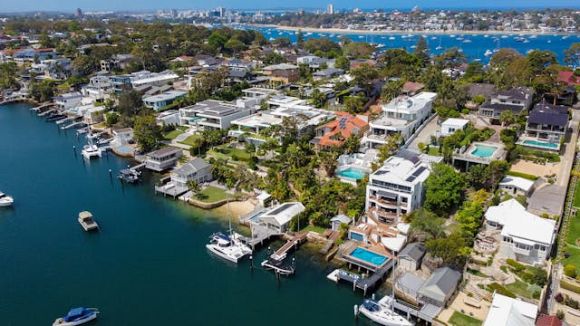
But that motivation implies that while each successive generation has grumbled on the entry price to purchase a first home, once they finally scrape together a deposit (often with parental help), the incentives of each generation flip. Yesterday's advocates for more supply and lower house prices have little incentive today to support a housing policy aimed at slowing or eliminating future capital gains.
Indeed, housing tax and subsidy policies have provided strong incentives to purchase investor properties as well, which are now owned by around 10% of Australians.
The means to limit new supply are stacked in favour of first and long-standing homeowners. Local councils, which control zoning decisions, are elected by current residents, not future ones. Existing owners can point to immediate and visible costs from new development — construction noise, traffic and changed neighbourhood character.
No wonder that local election candidates and their brochures promise to oppose development in their neighbourhoods if elected. And state governments' revenue growth relies on ever-higher stamp duty collections.
But eventually, these incentives shared by all stakeholders push prices to a point where they are no longer viable for the average, let alone the new buyer. Properties have risen fourfold over the past 25 years – double the pace of wage growth – and the median price of a dwelling in Sydney is now around ten times the median wage.
The key intergenerational equity question is which of the two housing goals should now take precedence: building significantly more housing to stabilise prices, or maintaining the status quo so capital gains continue to be the main way to build lifetime wealth for those fortunate enough to purchase housing.
The reality we face is that the younger generation cannot now have both — an uncomfortable truth in the discussion of how to address intergenerational equity.

The other stakeholder affected by the new housing policies is renters. Rental yields on Sydney properties are around 4-5%, well below the cost of mortgage financing. Investors have been prepared to accept low yields given the ability to negatively gear properties as a price of entry to expected strong capital gains and hence have effectively subsidised today’s rents.
But rents will need to rise substantially if the investor tax changes announced in the budget substantially limit their magnitude going forward. While some renters will be able to take advantage of the easier access to first home ownership, many will not have that capacity. This will be especially challenging for low-income households and families in crisis.
Government policies are starting to address the historical housing imbalances. Apart from the recent tax changes to make owning an investor home less attractive, the Federal Government is directly funding local government housing-related infrastructure and social housing. The NSW and other state governments are taking steps to reduce local government obstruction to boost housing supply.
But the jury is out on what will ultimately be achieved and accepted by voters. Housing starts are falling short of the Federal Government’s target to build 1.2 million homes by mid-2029, with virtually no increase in the availability of the social and low-rental housing stock, and additional actions to bolster that commitment and protect low-income renters are urgently needed if that target is to be met.
Given the current cost and other challenges in the private construction industry, these actions may have to include the use of state borrowing capacity to fund housing development.
Overall, we do not start in a good place to implement reform. The housing challenge has persisted not because we do not know how to build medium and high-density housing – the sky is abundant and free – but because of a range of rigidities where new and established owners have benefited financially from the artificial scarcity created.
Until we initiate a broad and honest discussion and act boldly on the incentives to own housing, the challenges will persist, and young aspirational buyers in particular will continue to feel excluded.
The steps taken in the Budget should be the start of an honest conversation with young people on the housing trade-offs we now face, not the end.
Professor David Orsmond of Macquarie University has extensive experience in policy advice and research across a range of countries regarding macroeconomics, housing markets, financial markets and regulation, the mining sector, and emerging economies.
 This work is licensed under a Creative Commons Attribution-NonCommercial-NoDerivs 3.0 Australia License
Support independent journalism Subscribe to IA.


Related Articles
- Why we have a housing crisis and why government cannot fix the problem
- Four more things Australia can do to arrest house prices
- Forum reveals widening divide over housing strategy and affordability targets
- The human cost of Australia’s housing crisis
- The Great Australian Dream now belongs to landlords