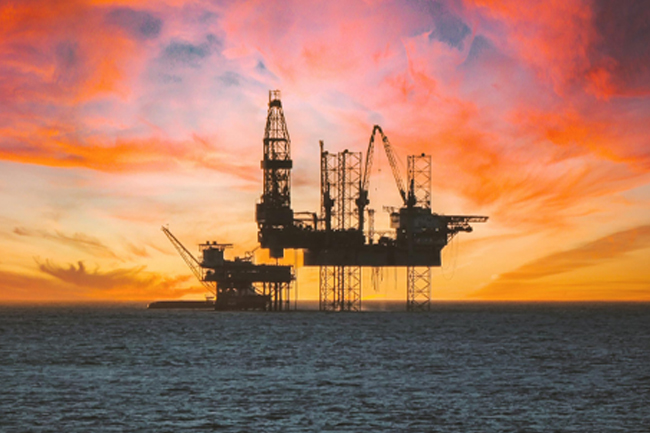
Oil has shaped wars, toppled governments and warped global power for over a century — and its grip is only growing more dangerous as the world struggles to break free, writes Mel de Silva.
WHEN EDWIN DRAKE struck oil in Pennsylvania in 1859, refiners celebrated the kerosene but didn't quite know what to do with all the “worthless” gasoline.
They burned it off, or dumped it in rivers with predictably hazardous results. However, within 50 years, that “worthless” byproduct, along with a range of oil distillates, has become the hidden architecture of modern life and the trigger for war.
Oil didn’t just fuel the modern world; it reorganised global power.
Oil as the original power broker for our modern world
Pennsylvania’s early success sparked a global race. By the early 1900s, discoveries across four continents were reshaping industrial and imperial ambitions. When explorers funded by Australian‑British entrepreneur William Knox D’Arcy struck oil in Persia (modern-day Iran) in 1908, Britain quickly recognised the strategic stakes. It bought a controlling share in the Anglo‑Persian Oil Company (ancestor of BP), securing a foothold in the region’s future.
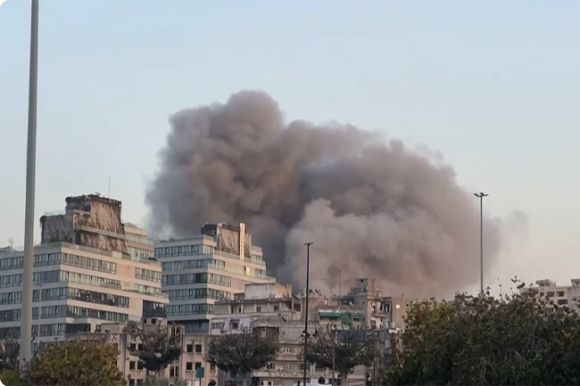
Then the collapse of the Ottoman Empire after World War I opened a new geopolitical contest for the Middle East. The Sykes–Picot Agreement carved borders with resource control in mind and the 1928 Achnacarry Agreement formalised a Western oil cartel. The British and the Soviet Union invaded Iran during World War II and installed a ruler aligned with Western interests.
Determined to reduce foreign control over Iranian resources, former Prime Minister Mohammad Mosaddegh sought to nationalise the Anglo-Persian Oil Company in 1951. Britain responded with an embargo and legal pressure. When the International Court of Justice declined to intervene, Britain turned to the United States for more direct intervention.
Thus, in 1953, the CIA and MI6 ran a coup that removed Mosaddegh and restored the Shah. Nationalisation was quashed and the Shah suppressed all subsequent political dissent.
Geopolitics has a short memory — history doesn’t
Under the 1957 Atoms for Peace programme, the United States actively provided Iran with nuclear education and technology. But along came the 1979 Iranian revolution and anti-Western theocracy replaced the Western-backed Shah. Spotting an opportunity, Saddam Hussein invaded Iran in 1980, with the backing of Western governments.
U.S. oil production had peaked in 1972, the 1973 embargo had shaken the West, and the Carter Doctrine had declared the Persian Gulf a vital U.S. interest to be defended by force. Revolutionary Iran was a threat not just ideologically but strategically and Saddam Hussein arrived on the scene as the instrument of containment.
However, when Saddam Hussein went on to invade Kuwait, he crossed a line that threatened Western control of the oil supply. A U.S.-led coalition intervened, citing international law and Kuwaiti sovereignty. Yet the unspoken calculus was clear. The absorption of Kuwait and potentially Saudi Arabia into Iraq would have given Saddam leverage over global energy markets that no U.S. administration could tolerate.
Meanwhile, the nuclear technology the U.S. had once encouraged became the justification for decades of sanctions and diplomacy, culminating in a 2015 deal that the first Trump Administration abandoned in 2018.
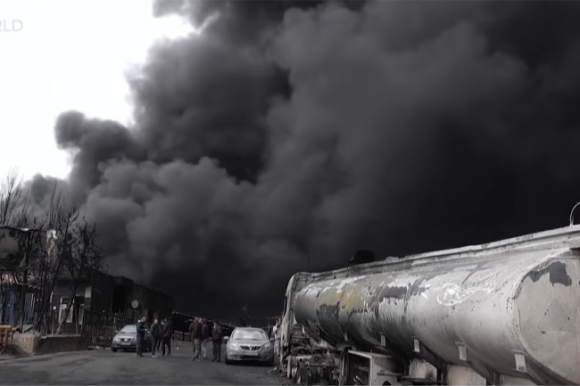
In March 2025, the U.S. Director of National Intelligence told Congress that Iran was not building a nuclear weapon. Yet three months later, Iran was declared in breach of non-proliferation obligations, and Israel and the United States launched military strikes on Iranian nuclear facilities.
Taken together, these episodes show how oil politics bends history: the U.S. backed Iraq’s invasion of Iran to protect its energy interests and later attacked Iran over a nuclear program it had once encouraged. When power moves, it often leaves contradictions in its wake.
Venezuela: When power no longer needs a mask
A similar pattern was unfolding in Venezuela just weeks earlier, albeit with less effort to disguise motives.
In January 2026, U.S. special forces captured Venezuelan President Nicolás Maduro on narcoterrorism charges. President Trump announced that the U.S. would “run” Venezuela and access its oil reserves, roughly a fifth of the world's total.
For decades, American and British firms developed Venezuelan oil. But Venezuela gradually reclaimed its resources through legislation, OPEC membership and eventual nationalisation in 1976.
The notion that Venezuela “stole” American oil, as members of the Trump Administration have suggested, requires a creative interpretation of historical records and disregard for the principle of Permanent Sovereignty over Natural Resources established by UN General Assembly resolution 1803 in 1962. Yet power rarely waits for legal justification.
The stories we tell that make extraction feel like civilisation
Military and economic power don't operate in a vacuum. They’re supported by cultural narratives about who resources belong to and who is entitled to them.
Oil companies like BP once cast Iranian oil as a natural prize for Western enterprise. Advertisements portrayed Western engineers as heroic modernisers, while Iranians appeared mainly as labourers or background characters in their own country’s story. As Edward Said observed in Orientalism, the underlying assumption is that the Western consumer is entitled to the world’s resources in a way the colonised “other” is not.
This cultural infrastructure still shapes assumptions in wealthy countries about growth and abundance, while refusing to reckon seriously with the physical limits of a finite planet that sustains us. A larger share for some means a smaller share for others. That uncomfortable arithmetic is the cultural soil in which imperialism keeps regenerating.
Yet change is in the air. Slowly and imperfectly, we may learn to say no to imperialism's next iteration.

Why oil dependence is becoming strategically impossible
Beyond the ethical arguments, there is a purely strategic one. The longer we stay in a rigged game (pun intended), the higher the stakes become.
The closure of the Strait of Hormuz in 2026 demonstrated this vividly. A single chokepoint was disrupted by a state with limited naval capacity, using mines, drones and insurance pressure. The architecture of global energy security can be throttled in a matter of days.
This is not a resilient system.
The world has never had a clearer strategic reason to accelerate the transition away from oil. Yet the forces that benefit most from the current system are among the most powerful actors shaping the response. Oil is leverage and those who hold power intend to hold oil.
Using resource power to build resilience instead of dependence
However, history also offers examples of countries that used their resource power to build resilience rather than entrench dependence.
Norway channelled its oil wealth into a sovereign wealth fund now worth over $2 trillion, treating oil revenue as a gift to future generations rather than a windfall for the present. Saudi Arabia, through Vision 2030, is using oil proceeds to build economic and technological capacity for a post‑oil world.
The distinction between resource power used to perpetuate dependence and resource power used to build resilience is the central choice facing every oil-dependent nation. Whether we can make that transition before the next round of resource struggles reshapes the global order is, perhaps, the central question of our time.
Mel de Silva is an environmental sustainability advisor who has led decarbonisation and climate resilience programs for some of Australia's largest corporations and government agencies.
 This work is licensed under a Creative Commons Attribution-NonCommercial-NoDerivs 3.0 Australia License
Support independent journalism Subscribe to IA.