If we want to understand schizophrenia, or any mental health condition, we need to understand the story that lives beneath the symptoms, writes Dr Julia Nicholls.
When the newspaper landed on her kitchen table that morning, the voices in her head began yelling. You’re worthless. You idiot. The voices were louder than they had been in twenty years. She had spent two decades learning to navigate living with schizophrenia.
Most days, she managed well. But this article about child abuse – a cruelty she recognised from her own childhood – was like a tremor triggering a long-dormant earthquake.
She was referred to talk therapy. It would be her first time, despite living with schizophrenia for years.
She is not unusual. In more than a decade of clinical work specialising in the psychological treatment of schizophrenia, I have sat across from client after client whose story followed a version of this arc. The diagnosis came. The medication came.
The life story – the trauma, the losses, the relationships, the long accumulation of experiences that shaped how their mind learned to cope – was rarely asked about at all.
This World Schizophrenia Awareness Day, that is what I want to talk about.
For a long time, the dominant understanding of schizophrenia has been a biological one: a condition of the brain, best managed with medication, and somewhat separate from the psychological and social factors we associate with other mental health conditions.
That understanding came from the best available evidence at the time, and medication remains an essential part of treatment for many people.
But the research has moved. Childhood trauma is now known to be present in the histories of up to 87 per cent of people diagnosed with schizophrenia and related conditions.
That is not a footnote. It is a significant finding that has been building in the literature for years, and it asks us to hold a fuller picture of what schizophrenia is and where it comes from. Biology and trauma are not competing explanations. For most people, both are part of the story.
When my client finally sat down in therapy, one of the first things she said was:
"It’s all biological."
She said it as though it meant there was nothing that could be done to help her. I felt a familiar flicker of frustration, not at her, but at the way misinformation teaches people to believe their suffering begins and ends with biology, leaving them feeling helpless, especially when symptoms persist after years of trying different medications.
I offered a different frame: that schizophrenia does not have a single cause. It reflects a mix of biological, psychological and social factors that are unique to each person. I offered to explore her life story together. She paused. Then she said yes. She told me no one had ever suggested that before.
Over weeks, the shape of her experience began to emerge. A stepfather who had called her an idiot, relentlessly, throughout childhood. Years spent alone in her bedroom, where she started to believe that she was fundamentally defective. Together we discovered that the voices – what clinicians call auditory hallucinations – echoed her stepfather’s words almost exactly.
Time and again in my work, I find this beneath the diagnosis. Not randomness. Not a brain misfiring for no reason. A story. A very human story, with a logic to it, once someone takes the time to look.
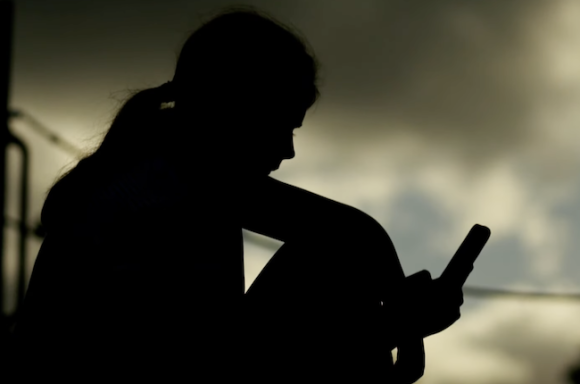
The voices did not disappear when she understood their origin. But she could respond to them differently. She could notice when isolation made them louder – the same isolation she had learned to fear as a child – and she could begin to challenge what the voices told her about herself, rather than simply accepting what they said as truth.
And there was something else. For years, she had told no one about her diagnosis. The stigma around schizophrenia, fed by headlines that reach for words like dangerous and unpredictable, had made secrecy feel necessary.
That secrecy had become its own kind of suffering: a wall between her and any possible support. Stigma had become a symptom in itself, adding another layer to her anguish. As her understanding of her own story grew, that began to shift. She told a close friend. Gradually, the shame began to lift.
There are many dedicated clinicians working alongside people living with schizophrenia. The challenge is not a lack of care. It is that our systems and training have not yet fully caught up with what the research is telling us.
Talk therapy is effective in treating schizophrenia, acknowledged in psychiatric treatment guidelines in Australia and internationally. The evidence for psychological treatment continues to grow, and it is now clear that for many people, understanding the roots of their symptoms – and developing new ways of relating to and coping with them – can transform their lives in ways that medication alone cannot.

Stories like this one are far from rare, yet they are not the narrative we hear often enough. A diagnosis is not just a label; it reflects a person’s life experiences and biology combined. Treatment must be collaborative and bring together medication, therapy, and an understanding of the person’s life story.
My client’s voices did not disappear. But she found she could live alongside them. That is not a small thing. It is, in fact, everything.
If we want to understand schizophrenia, or any mental health condition, we need to understand the story that lives beneath the symptoms. Seeing the story, not just the label, is how we truly see the person.
Note: All clinical details are fictional amalgams.
Dr Julia Nicholls is a clinical psychologist working in Melbourne, specialising in the psychological treatment of schizophrenia.
 This work is licensed under a Creative Commons Attribution-NonCommercial-NoDerivs 3.0 Australia License
Support independent journalism Subscribe to IA.