Decades of political ducking and weaving on migration policy have fuelled public anger, leaving space for extremists to hijack the debate, writes Dr Abul Rizvi.
IT WOULD BE EASY to dismiss the anti-immigration rallies of Sunday 31 August as the rantings of neo-Nazis and White supremacists. But they were much more due to both major parties leaving a vacuum on immigration and population policy.
The vacuum dates back to at least when Tony Burke was appointed Minister for Sustainable Population in the Gillard Government’s attempt to diffuse criticism arising from Kevin Rudd’s comments supporting a “big Australia”. Burke ran extensive consultation processes and said lots of sensible things about population and immigration policy, but avoided setting any targets for population, the population growth rate or even net migration.
The Abbott and Turnbull Governments largely avoided the topic, while in 2019, Scott Morrison came up with a population plan. Despite its grand title, that plan said nothing about our future population or population growth rate, but just talked about “congestion busting” as a justification for a very minor cut to the permanent migration program and resumption of priority for regional migration visas after these had largely been de-prioritised when Morrison and Peter Dutton were Immigration Ministers.

A few months later and contrary to Morrison’s congestion-busting rhetoric, former Treasurer Josh Frydenberg’s 2019 Budget forecast a rapid increase in population growth to help the Budget get “back in black”. That sort of inconsistency justifiably makes Australians angry.
During COVID, the Coalition Government took extraordinary measures that drove a massive boom in immigration when international borders reopened. That included unrestricted work rights for students, a special COVID visa and fee-free student and working holidaymaker visa applications.
With net migration booming to unprecedented levels, in late 2023, the Labor Government followed up with its own migration strategy. While that included a few good policy improvements to employer-sponsored migration (reversing many of the silly changes made by Peter Dutton) as well as measures to clear backlogs and address some non-compliance issues, it largely avoided the question of Australia’s long-term net migration levels.
A migration strategy without clear targets for net migration and a single minister responsible for delivering those is no strategy at all.
The fact that Treasury forecasts for net migration, which ministers regularly disown, have constantly been missed by a very long way has been a disaster for public confidence in immigration. With the large volume of temporary migration to Australia, currently a stock of just under 3 million, the level of net migration has become increasingly important.
The Labor Government’s failure to quickly get net migration back under control after the Coalition stomped on the accelerator has contributed to the rising loss of public support for immigration. Prior to the last election, Labor promised to get net migration back to pre-pandemic levels. It never explained why that is the right target or how it would get there. The Coalition simply said it would somehow reduce net migration by 100,000 more than anything Labor came up with. That was just pure politics, not policy.
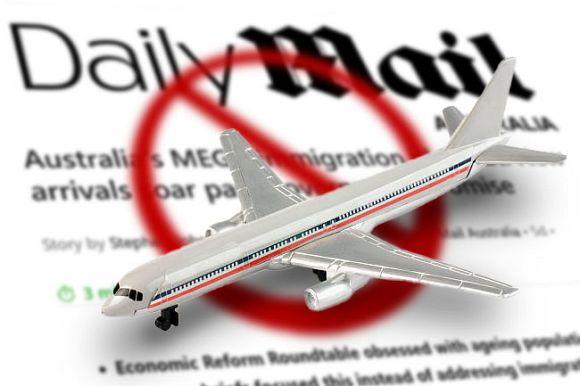
That nonsense has contributed to all sorts of media speculation on the level of net migration, which has been misused by parts of the media (such as Ben Fordham on Radio 2GB) to stir up public angst that net migration is rising, not falling. The Australian Bureau of Statistics (ABS) had to go so far as to issue a media statement clarifying against the misuse of movements data and interpreting it as migration data. The same media outlets then attacked the ABS for correcting them.
While net migration is crucially important, so is the permanent Migration Program. For the first time in my memory, the Government has not announced the 2025-26 Migration Program well ahead of the start of the program year. That is simply appalling in terms of migration planning and will only lead to a further loss in public confidence in the Government’s management of immigration.
While I am sad to see anti-immigration rallies in Australia, blaming them on extremists would be wrong. These are the result of manifest failures at the political level rather than anything inherently anti-immigration in the Australian public.
Dr Abul Rizvi is an Independent Australia columnist and a former Deputy Secretary of the Department of Immigration. You can follow Abul on Twitter @RizviAbul.
 This work is licensed under a Creative Commons Attribution-NonCommercial-NoDerivs 3.0 Australia License
Support independent journalism Subscribe to IA.


Related Articles
- Why the Daily Mail is wrong on net migration in 2024-25
- High Court faces pressure to curb deportations of long-term residents
- Record number of working holidaymakers pushing migration higher
- Government delayed asylum report amid surge linked to visa schemes
- Treasury’s migration forecast looks shaky as long-term numbers set to surge