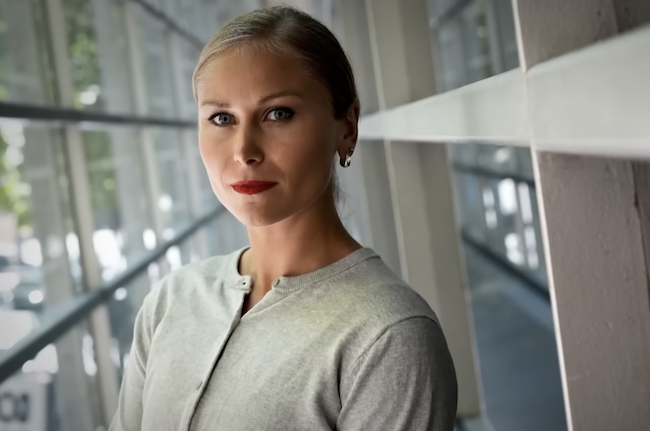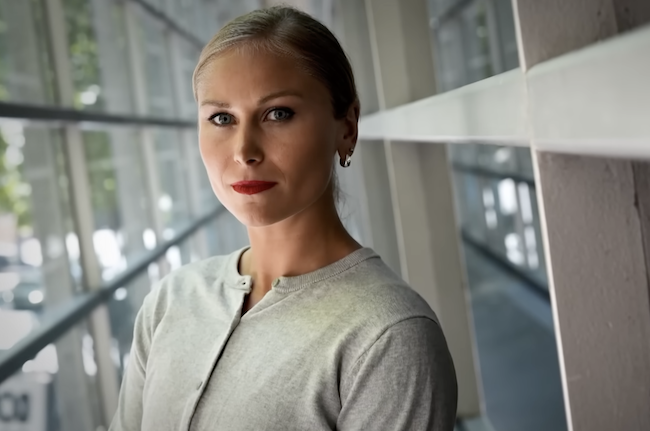
The Australian PM Anthony Albanese called Grace Tame “difficult.” But when women speak truth to power, “difficult” is just another word for inconvenient, writes Verena Brunschweiger.
GRACE TAME, courageous advocate and survivor of sexual assault, said:
"I don’t think Albanese is a bumbling misogynist. I think he’s a savvy political operator keen to appease Washington."
The Prime Minister had participated in a light-hearted word-association game at the Future Victoria Summit and had been asked to describe Grace Tame. He had paused long enough to show he understood his choice of words, and then delivered it with a wry smile: difficult. Fittingly, his one-word association for U.S. President Donald Trump was “President” and for Australia Day it was “Great!”
It speaks volumes if the pain of First Nations communities doesn’t count for someone. If reports by countless women, who were abused by a president, don’t count.
It’s therefore no real surprise that a survivor’s pain also doesn’t seem to count. Albanese is following a traditional script here, labelling women as difficult whenever they don’t fit patriarchal expectations, when they dare raise their voice.
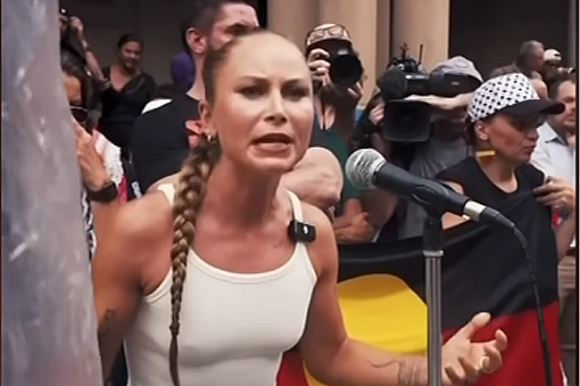
Greens leader Larissa Waters put it plainly, saying calling women “difficult” won’t “stop us from speaking truth to power”.
We immediately think of the Madwoman in the Attic and countless women over the centuries who bear the brunt of patriarchy, colonialism and toxic masculinity.
It is sadly common to blame the victims — also among lefties.
This is a global phenomenon and has outraged progressive women for decades: when it comes to feminism, their comrades often are as misogynistic as other men, which is highly disappointing, because we would expect so much more of the men we are politically aligned with. Sometimes they just hide their version of sexism better or pretend to grasp feminism and its importance, which makes it hurt even more when we discover it.
Grace Tame analysed:
“While he might feel safe describing me as such in the false comfort of a conservative bubble, I sincerely doubt he would say it to my face.”
Right, she is! Another typical feature of patriarchal behaviour is cowardice. Who doesn’t immediately think of the millions of incels who degrade and attack women online using fake profiles and nicknames? Incel culture is thriving everywhere, given the global backlash, also Australian researchers call it a matter of national security.
The recommendations of John Coyne, head of Northern Australia Strategic Policy Centre, include greater awareness raising and policy changes designating incel violence as an ideological form of issue-motivated extremism.
Many women face online hate and threats, experience domestic violence and, as a third layer, they have to deal with politicians who think difficult is a fine label to describe a young woman who was abused by a paedophile.
The ones to fear most are those powerful enough to say out loud what far too many men still think: women are difficult when they reject traditional gender roles, when they crave agency and real empowerment, when they want to decide what to do with their own bodies.
Reproductive rights are under attack around the world, Germany’s Chancellor Friedrich Merz was convinced rape in a marriage was impossible and the list goes on endlessly.
We neither have to talk about Freud’s concept of hysteria; we can easily find several men in our own environment who downplay Albanese’s association, who will defend him, claiming "difficult" is not really an insult, is it?
Well, yes, it is, especially as it reminds women of all the baggage automatically coming with it, the indirect incitement to not take women seriously, to not believe what they say, to make them irrelevant.
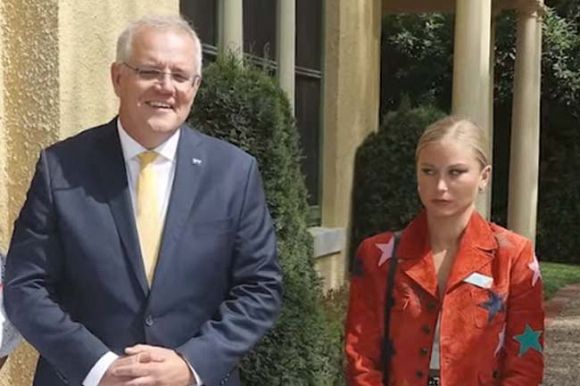
This must be especially traumatising for a survivor of sexual abuse. Victim blaming is a disease we can all fight instead of complying with the perpetrators‘ truth.
This is exactly the reason why so many women don’t report rape, because they fear victim blaming, just think of Gisèle Pelicot, who is empowering other rape victims to hold their heads high: shame has to change sides, as she phrases it.
Maybe we have to acknowledge the sad truth: male supremacists come in all forms and sizes, the Left is not immune to it either and Albanese, though hopefully not a raving sexist, has indeed displayed misogynistic behaviour towards Grace Tame.
Being a strong fighter, Tame won’t be stopped from speaking truth to power and neither should any of us accept labels like difficult for any woman who dares point out inconvenient facts or who just aims for a life in self-determination without state, church or patriarchy interfering with her most basic decisions.
Verena Brunschweiger is an author, childfree activist, and feminist whose 2019 manifesto caused an international stir. She writes on environmentalism, feminism and philosophy.
 This work is licensed under a Creative Commons Attribution-NonCommercial-NoDerivs 3.0 Australia License
Support independent journalism Subscribe to IA.


Related Articles
- Grace Tame event moved after Murdoch coverage fuels harassment campaign
- GRACE TAME: Exploitative media
- A tale of two stories: Tame attacked while Colbeck off 'Scott-free'
- Grace Tame’s non-smile speaks volumes