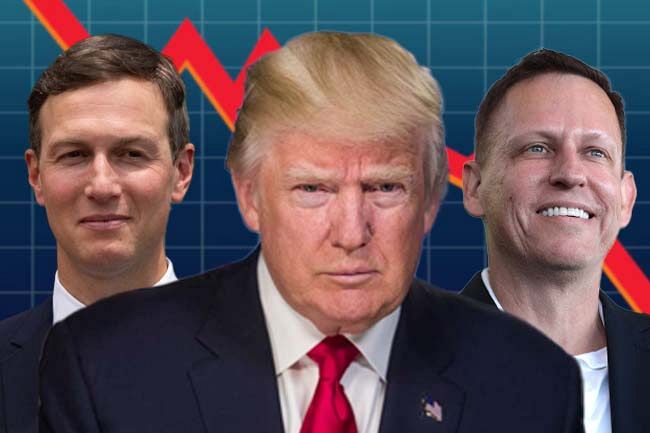
The AI investment frenzy threatens economic catastrophe, fuelled by billionaire greed, political corruption and dangerous apocalyptic beliefs, writes Dr Mark Beeson.
SOME THINGS never change, it seems.
Writing half a century ago about the inevitable booms and busts that distinguish the capitalist system, Charles Kindleberger pointed out that in the later stages of financial bubbles, ‘speculation tends to detach itself from really valuable objects and turn to delusive one’. That’s exactly where we are now.
Speculative capital famously oscillates between fear and greed. Even when the lessons of history suggest that something that looks like it can’t continue probably won’t, the fear of missing out encourages delusional behaviour. As Citicorp CEO Chuck Prince famously observed just before the American-made Global Financial Crisis of 2008, ‘as long as the music is playing, you've got to get up and dance’.
The current iteration of optimism defying economic reality is the unprecedented, monumental amount of money flowing into artificial intelligence (AI), possibly $10 trillion eventually. Most of this investment is funding the construction of data centres, which are not only despised by the people who must live near them, but may be helping to create a form of superintelligence. A growing number of experts think there is at least a 10 per cent chance AI will wipe us out.
The fact that our collective stupidity in possibly engineering our own demise is remarkable, but so are some of the more familiar dynamics underlying the current AI mania. The so-called “magnificent seven” tech-related companies are responsible for the continuing stock market boom in the U.S., despite the fact that AI investment is generally not profitable. Hardly surprising when the expected AI-generated productivity gains look like being negligible.
Optimists think it’s just a matter of time before the benefits of the AI investment boom become apparent, but they probably don’t include the possibility that machines that are much smarter than us may not be aligned with human interests; one of which is having a job, of course. Gen Z seems to have woken up to the idea that this is yet another threat to the already blighted prospects.
We might hope that political leaders will recognise the threat that AI poses to social stability and slow its development until we are sure about its effects. Don’t hold your breath. When the American president directly benefits economically and politically from the development of AI, even an economic crash may not be enough to change direction.
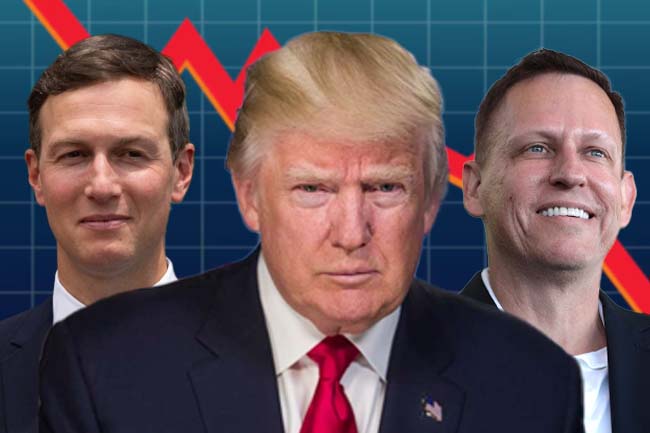
The brazenly corrupt Trump family has, after all, made billions from its association with the handful of “tech bros” who dominate AI development. Not only do AI companies make lavish donations to various Trumpian excesses, but the Trumps have directly benefited from issuing crypto coins, which are little more than Ponzi schemes in which the last in are the biggest losers.
They are unlikely to be the last ones either. Not only are Americans unique in having more money invested in shares than they do in their homes, but they are also especially exposed to any “correction” in the stock market. The sheer scale of current investments in AI means that in the all-too-likely event of a crash, the American Government – or any other, for that matter – may be unable to bail out the financial sector in the way it did during the 2008 crisis.
Governments around the world are already heavily indebted and the “bond market vigilantes” have taken note. The sheer scale of the AI investment boom is increasing borrowing and the contest for money, and driving up interest rates as a result. Trump’s economically illiterate, self-interested response to this problem has been to appoint a potentially more pliable chairman of the Federal Reserve.
But it is not clear whether Kevin Warsh will be able to humour his boss and keep inflation under control, especially when Trump’s monumentally misconceived war with Iran is adding to inflationary pressures.
The good news is that all of the above is symptomatic of normal crises of capitalism, albeit on an epic scale. The bad news is that as Naomi Klein and Astra Taylor detail in End Times Fascism, Trump and his tech cronies think they are fulfilling some sort of religiously inspired role in human history, which culminates in the apocalypse. Indeed, ‘the most powerful people in the world today – across religion, government, and technology – share a conviction that our laws simply do not apply to them’.
This is what makes our current situation so much more consequential and dangerous than anything that has gone before. Delusional beliefs are common in capitalist crises, but they’re not usually religiously inspired. Palantir’s Peter Thiel, for example, thinks AI or nuclear war could precipitate Armageddon.
Thiel is also running a secret society that brings together fellow CEOs and billionaires with political leaders. Members reportedly include figures like NATO supreme commander Alexus Grynkewich and the son-in-law of U.S. President Donald Trump, Jared Kushner.
Unfortunately, just because it sounds like a conspiracy theory doesn’t mean it isn’t true. All of which provides China with yet another opportunity to position itself as a force for stability and champion of international cooperation. The bar is set pretty low, but it’s encouraging that someone is trying to get over it.
Dr Mark Beeson is an adjunct professor at the University of Technology Sydney and Griffith University. He was previously Professor of International Politics at the University of Western Australia.
 This work is licensed under a Creative Commons Attribution-NonCommercial-NoDerivs 3.0 Australia License
Support independent journalism Subscribe to IA.


Related Articles
- CARTOONS: Make AI Great Again
- IA interviews AI: Doomsday, oligarchs and extinction
- AI warfare accelerating beyond human control
- AI giants sound alarm while racing towards superintelligence
- EDITORIAL: Facebook spreads AI deepfakes it refuses to remove… even when victims complain