
A humanitarian mission may have ended at the border, but for some Australian participants, the ordeal was only just beginning, writes Jane Salmon.
WHEN ACTIVIST Neve O'Connor boarded a humanitarian flotilla bound for Gaza, she knew there was a possibility she might be stopped.
What O'Connor did not expect, she says, was that the most frightening moments would come after the mission was over.
“Just when we thought we were safe, the beatings started again,” the Melbourne student and community organiser recalls.
O'Connor is among a group of Australian participants in the Global Sumud Flotilla who have returned home alleging they were subjected to violence, intimidation and degrading treatment following the interception of their aid mission.
The flotilla was attempting to deliver food, medicine and baby formula to civilians in Gaza. Participants say they were detained after the vessel was intercepted and have since spoken publicly about what they describe as a pattern of physical, psychological and sexual abuse during their detention.
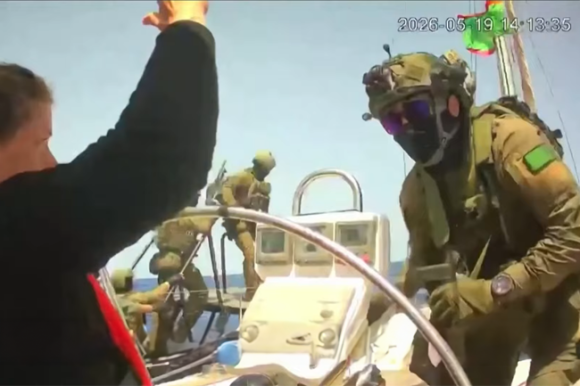
Now, as lawyers, medical professionals and human rights advocates gather testimony from those involved, participants are revealing details of what they say happened in the final hours before they were deported.
For O'Connor, those memories begin at the airport. After days in detention, she believed the ordeal was finally ending. Instead, she alleges the violence intensified.
O'Connor says:
“Before I could speak to Australian representatives, I was grabbed and dragged away.”
According to O'Connor, participants were prevented from communicating with consular officials and were physically forced through the airport toward their departing aircraft.
She describes a truly unsettling scene.
People were allegedly shoved, kicked and struck as they were moved through the terminal and across the tarmac. O'Connor says she witnessed punches and elbows to the backs of people's heads, repeated hair-pulling and participants being tripped as they walked.
One woman, O'Connor alleges, was thrown into a wall with such force that her elbow split open.
O'Connor says she herself was thrown into a door before being tripped and stomped on:
“I fell and several men stomped on me while I was on the ground.”
The alleged assault, O'Connor claims, continued right up to the stairs of a waiting aircraft.
For participants, the airport experience has become one of the most troubling aspects of their journey, occurring at the point when many believed they would finally be leaving danger behind.
O'Connor said:
“This is how Israel said goodbye to people whose only crime was trying to deliver food, medicine and baby formula to starving civilians.”
Participants argue that what they experienced was not limited to one location or one group of officials.
Instead, they allege that abuse occurred throughout the detention and deportation process and involved multiple layers of authority, including soldiers, immigration officers, police, prison guards and airport personnel.
That consistency, they argue, raises broader questions about how humanitarian activists were treated after being detained.
The Australians are also asking questions about their home country's response.
Some participants say they were unable to communicate freely with consular representatives before departure and are seeking clarification about what Australian officials knew of their treatment during the transfer to the airport.
The questions did not end when the flight landed.

Several participants report being detained and searched upon arrival in Australia. They say mobile phones were confiscated and that they were instructed to provide passwords under threat of legal consequences.
For some, the experience was deeply unsettling.
Fellow participant Juliet Lamont said:
After everything that happened overseas, to be treated like terrorists or extremists rather than humanitarians was shocking.
Australians deserve answers about what happened when survivors came home. Serious questions remain about the treatment of Australians both overseas and upon their return.
The allegations come at a time of intense international scrutiny of Gaza and growing public debate over the treatment of humanitarian activists attempting to challenge restrictions on aid deliveries.
For O'Connor, however, the issue is ultimately personal. Raised believing in fairness and the value of human life, she says the devastation in Gaza compelled her to act rather than remain a distant observer. She rejects the idea that courage is simply enduring hardship. Instead, she sees it in collective acts of solidarity.
O'Connor says:
“Strength and bravery don't look like grim endurance. They look like people choosing to sail toward Gaza because they refuse to let despair win.”
The Global Sumud Flotilla is calling for accountability over the allegations and has requested a meeting with Prime Minister Anthony Albanese.
Whether that meeting eventuates remains unclear.
What is certain is that, for those who returned home carrying both physical injuries and difficult memories, the voyage did not end when the boat was stopped.
For many participants, the journey is now entering a new phase — one focused not on reaching Gaza, but on seeking answers about what happened after they tried.
Jane Salmon is a refugee advocate whose family has benefitted greatly from the NDIS. You can follow her on Twitter @jsalmonupstream.
 This work is licensed under a Creative Commons Attribution-NonCommercial-NoDerivs 3.0 Australia License
Support independent journalism Subscribe to IA.


Related Articles
- Gaza flotilla exposes world’s selective attention to suffering
- Prime ministerial loyalty on trial in Australia’s ‘Gaza’ war
- What Gaza and Ukraine reveal about a new era of imposed peace
- UN endorses Trump-backed Gaza plan, drawing condemnation from Palestinians
- Unseeing genocide: How the West lost Its moral compass in Gaza