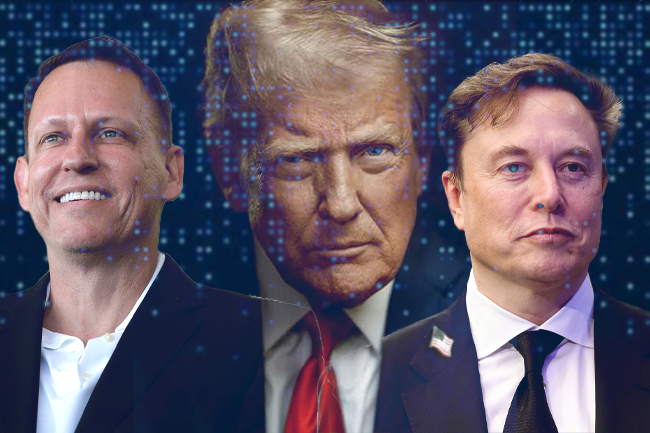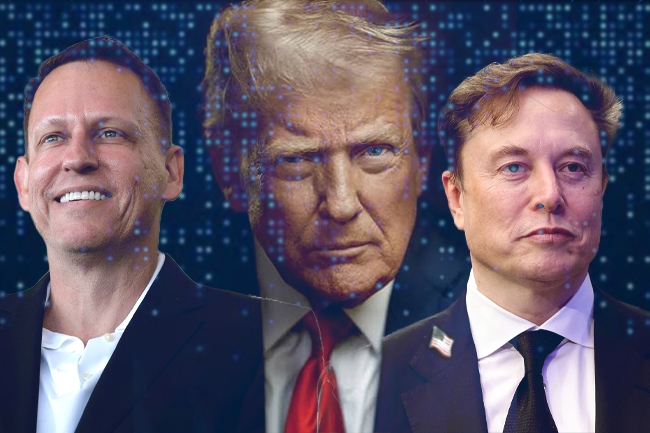
Naomi Klein and Astra Taylor expose how fascism, religious extremism and billionaire tech elites are pushing humanity towards catastrophe in their chilling new book, 'End Times Fascism'. Dr Mark Beeson writes.
WE LIVE IN turbulent times. Just how turbulent, unprecedented and alarming is made clear in this excellent, timely and rather scary volume.
End Times Fascism: And the Fight for the Living World is a co-authored effort by a couple of the sharpest observers of the contemporary international order and one that is getting a lot of attention. It deserves to.
The book identifies the principal forces that are seemingly driving humanity to destruction. It’s not for the faint-hearted, but it ought to be read by anyone concerned about our collective future at a time of ‘unprecedented, global-scale existential crises’.
That said, those in power will almost certainly studiously ignore it, not just the likes of Donald Trump or Anthony Albanese, for that matter. This would be an unfortunate indicator of wilful ignorance at the best of times. But what makes this an especially dangerous moment, authors Naomi Klein and Astra Taylor argue, is that in America, a powerful group of political and economic actors have coalesced around the Trump Administration. They are not driven solely by the usual greed and indifference to the fate of the masses, either. On the contrary,
What unites this emerging, fractious and often contradictory movement is a shared conviction that our common world is coming to an imminent end, so the chosen – whether selected by their wealth, faith, biology, or ancestral claims to particular pieces of land – must usher in the next phase of human history.
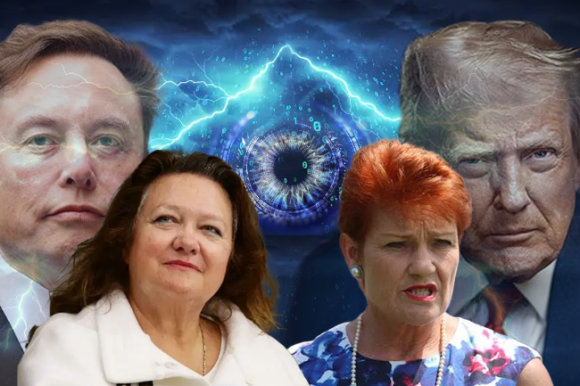
Unfortunately, we can’t simply dismiss the holders of such views as deranged narcissists. On the contrary, if the likes of Trump and his “Secretary of War”, Pete Hegseth, don’t start World War 3, the “tech bros” who are responsible for the increasingly rapid development of artificial intelligence (AI) may bring about the end of humanity — with the noteworthy exception of the people who caused it, of course.
What sets such people apart is not just their staggering wealth, power and, in Trump’s case, corrupt self-interest, though. Nor are they blind to the possible implications of their actions, either.
Indeed, as the authors point out, the architects of an escalating global crisis take comfort in religious prophecy: many on the Far-Right readily admit that our world is being rocked by large-scale crises and disasters. But rather than the rational, fact-based explanations they have been dismissing for decades, many are choosing to reinterpret these crises through the lens of scripture.
According to President Trump, God is “very proud” of the job he’s doing, and He, She or They are clearly more relaxed about the fate of the poor and powerless than we’ve been led to believe.
One of Trump’s most reliable sources of support are evangelical Christians who are convinced we are witnessing the beginning of the “end times” foretold in various religious traditions.
Klein and Taylor argue that:
‘Religious zealots, gripped by their own apocalyptic dreams... needed a leader reckless and heartless enough to help them gamble the fate of the world on a violent millenarian fantasy — with Trump taking a hefty cut, of course.’
The seemingly unlikely connection with fascism comes about because:
‘Only fascist belief systems, rooted in an embrace of human hierarchy and human culling, are capable of rationalising the level of harm to both people and the natural world that accelerated AI will wreak.’
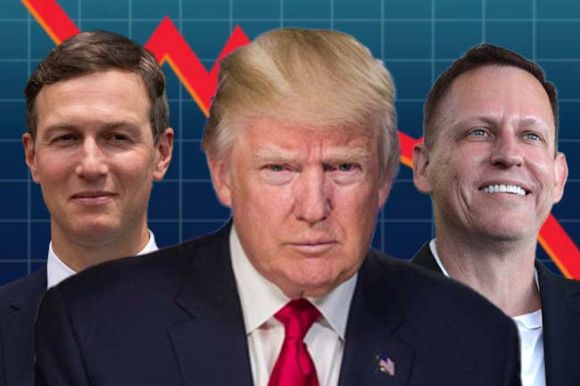
Even though Elon Musk is prone to giving Nazi salutes, Peter Thiel, head of Palantir, is possibly the most unhinged of the tech bros; in the face of some stiff competition, it must be said. Thiel is an evangelical Christian who has given some notorious lectures about his beliefs, which include the possibility that the anti-Christ is already among us (and could be Greta Thunberg) and that AI might accelerate our date with Armageddon.
Let’s not forget that Thiel and the other tech titans are providing the infrastructure that could bring this about. Undermining the presumed deterrent effect of nuclear weapons, for example, is one way of both intensifying the competition between the U.S. and China, possibly triggering a nuclear conflict as both sides fear falling behind.
As Klein and Taylor pithily suggest:
‘Sooner or later, terrible weapons and terrible people will find one another, compounding their respective danger exponentially.’
But the book is not all gloom and doom. The authors highlight the resistance to Trump’s forcible expulsion of migrants and the killing of innocents in Minneapolis. An entire chapter is dedicated to the remarkable rise of Zohran Mamdani, a self-declared democratic socialist who managed to become Mayor in the heart of American capitalism.
Effective social mobilisation and charismatic candidates with integrity are not easy to come by, but Mamdani shows what can be done and how to succeed against ‘unprecedented wealth, technological capacity, and military might now concentrated in the hands of a small group of people’.
While the current outbreak of social protests in Europe and elsewhere lacks the focus, continuity and commitment of Mamdani’s supporters, they are indicative of generational despair and profound unhappiness about the world the young are likely to inherit. Even in countries not run by fascists, plutocrats and megalomaniacs on a mission from God, there is widespread cynicism about politics, especially the democratic variety.
True, this unhappiness may be especially visible because protest is more difficult in authoritarian regimes, but the overall direction of travel is clear. Unless political leaders everywhere are prepared to cooperate and collectively tackle fundamental issues like climate change, inequality, unemployment and the dangers posed by AI, we may indeed be witnessing “end times”, if only of a form of capitalism that is no longer environmentally, politically or morally sustainable.
Dr Mark Beeson is an adjunct professor at the University of Technology Sydney and Griffith University. He was previously Professor of International Politics at the University of Western Australia.
 This work is licensed under a Creative Commons Attribution-NonCommercial-NoDerivs 3.0 Australia License
Support independent journalism Subscribe to IA.