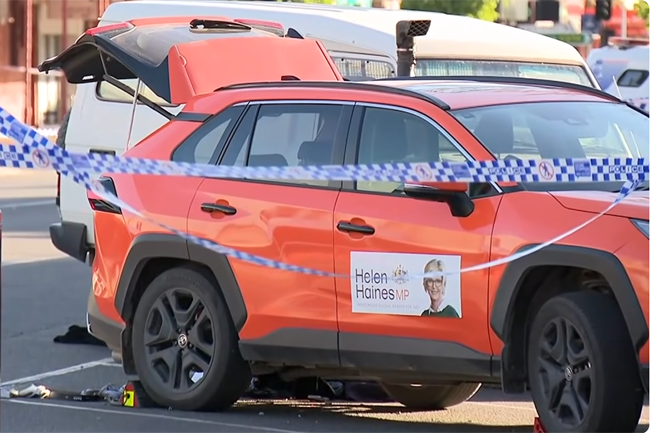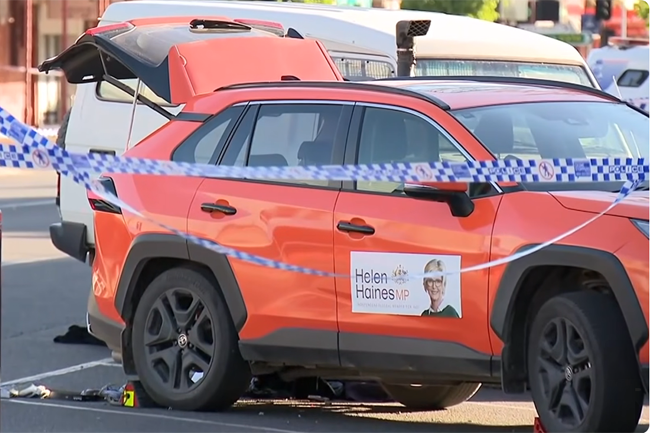
The horrific attack on Helen Haines has exposed a political culture of division, hostility and disinformation fostered by those in positions of power, writes Dr Victoria Fielding.
LAST WEEK’S horrific attack on Independent MP Helen Haines has been referred to by many politicians as shocking yet eerily unsurprising.
Haines was seriously injured and lost both her legs after repeatedly being run over by a constituent outside her electorate office.
In the wake of this attack, public discussion has critiqued the inflammatory, combative and threatening culture of social media. In this digital environment, there is no such thing as civilised disagreement, but instead there is simplistic abuse, threats and disinformation.
This conversation about political incivility is necessary and long overdue. It is a shame that it took the violent attack on Haines to put this problem on the agenda. However, what is missing from this discussion is recognition that this putrid political culture has been created, normalised and legitimised by powerful actors who make political hay out of division, division which has been deliberately sowed through grievance politics, incivility and disinformation.
Indeed, I have been writing about this problem for years. In June this year, I critiqued the sorry state of Western politics where the Right – including the Liberal Party, National Party and One Nation – have radicalised their voters over a generation by refusing to do the right thing and be bipartisan with left-wing politics to solve social, economic and environmental challenges.
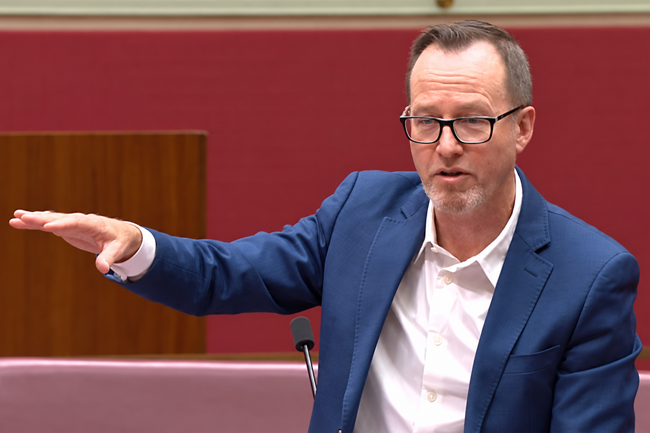
Just in the past fortnight, I decried the way this divisive, simplistic grievance politics is also being contributed to by actors on the Left of politics. In the context of the Greens’ David Shoebridge setting the tone for his leadership by calling for an end to Australia’s military support of Ukraine, I said a political culture which simplifies complex problems into grievance-creating slogans is doing nothing to actually address structural issues plaguing our society.
In August, I wrote about the lack of civility in politics. This incivility includes the spread of disinformation, which I characterise as a problem systemically and deliberately emanating from the Right of politics.
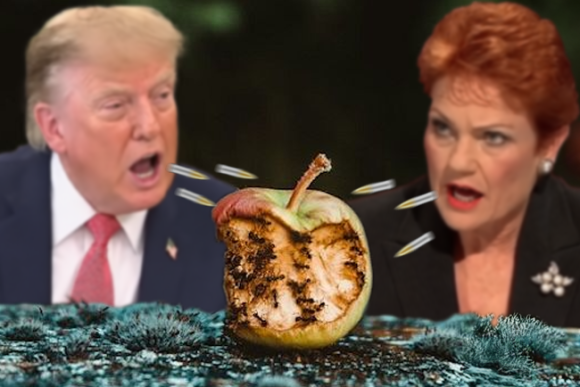
This incivility is also evident in politicians being absolutely dreadful and nasty towards their opposition. A recent example of this behaviour is Senator Pauline Hanson’s One Nation video mocking Senator Jacqui Lambie’s vaginal prolapse.
This abusive, uncivil behaviour is of course not only directed at individuals, but at vulnerable minority groups whose lives are made more miserable and unsafe because of it. In February this year, I warned that racism was being normalised by political actors in Australia. I wrote again in March about the Liberals and Nationals joining One Nation in a racist race to the bottom by blaming structural problems like housing unaffordability on immigrants.
Speaking about racism, we also should not forget how this current mess, this awful culture we find ourselves in, was exacerbated by the “No” campaign in the Indigenous Voice to Parliament Referendum.
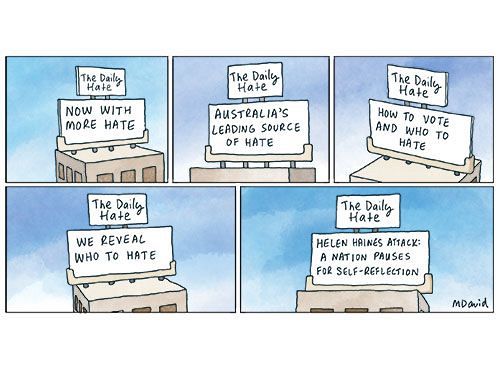
The “No” campaign, in concert with News Corp, opened a terrifying Pandora’s box, weaponising racial hatred, lies and disinformation for political ends. We also saw during this period that, as a result of our toxic political climate, it is more problematic in the media, apparently, for people to call out racism than to actually be racist.
It is not a coincidence that it was directly after the Referendum that I made the decision to leave Twitter, which by then had been renamed to X by its politically extreme billionaire owner, Elon Musk.
I wrote a piece in November 2023 titled ‘Goodbye Twitter, goodbye civil discourse’, explaining that I was leaving the platform because it was no longer a safe place to talk about politics. This was not a complaint about political disagreement, but rather that I could see it had become an unproductive cesspit of abuse and threats.
Yet, social media is just a symptom of the broader political environment legitimised by politicians and mainstream media. Indeed, in August 2024, I wrote about how political incivility is not just a problem of social media, but also a problem of mainstream outlets, such as News Corp. I argued that this mainstream incivility, this powerful legitimising force, contributes to democratic dysfunction.
This dysfunction is evident in the hostile, threatening and abusive political culture named in the wake of the Helen Haines attack. When ordinary members of the public get swept up into this culture of division, grievance and disinformation, when this culture of playing the person and not the ball is normalised and becomes mainstream, we have a situation where large swathes of the public are being radicalised. From this mass radicalisation, some individuals will take their anger, their grievance, their threats beyond discourse and into action.
These incidents – these violent individuals – are at the bottom of a slippery slope. But we need to be clear: these people did not trip and accidentally fall into this situation. They were put there quite deliberately by political opportunists who use this culture to gain and maintain power.
Until this fact is acknowledged openly and honestly amongst the political establishment, the temperature will not be turned down. Too many opportunists will continue to turn the temperature up and will continue to pour fuel on the fire, because they benefit politically from the bin fire they have created.
Dr Victoria Fielding is an Independent Australia columnist. You can follow her on Threads @drvicfielding or Bluesky @drvicfielding.bsky.social.
 This work is licensed under a Creative Commons Attribution-NonCommercial-NoDerivs 3.0 Australia License
Support independent journalism Subscribe to IA.


Related Articles
- Hydrants of hatred gush open after attack on Helen Haines
- In the wake of the Helen Haines alleged attack we only have ourselves to blame
- Helen Haines and the climate of hate: Bad apples or orange by-products?
- EDITORIAL: Helen Haines and the climate of hate: Bad apples or orange by-products?