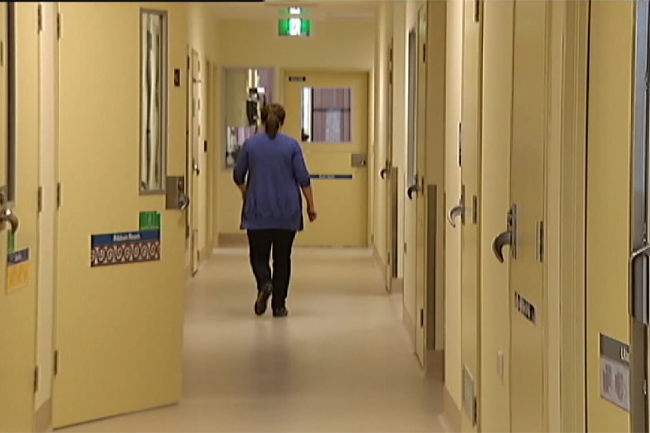
Victoria's failing mental health system is leaving its most vulnerable without the care, safety and compassion they desperately need, writes Vardit Leizer.
RECENTLY, IT CAME TO LIGHT that Victoria's Mental Health and Wellbeing Commission rewrote a report that communicates how our state is doing in addressing injustice in the mental health system and moving forward in meeting goals for change.
So, to put it simply, we aren't being told clearly or transparently what is happening with mental health reform. And we are being led to believe things are better than they are, for mental health consumers in Victoria.
I could've told you that.
The Mental Health and Wellbeing Commission is Victoria's independent statutory body that monitors and reports on Victoria's public mental health and wellbeing system. Think of it as the catch-all system for the most vulnerable presenting mental health cases in Victoria, those who can't afford to see a private psychologist or psychiatrist.

Or, even amongst those who can afford it, who can't get in because they are too complex, have too high a risk, or their case is too difficult. People who are regularly told, “I can't help you” or “I won't”. People who have no money to pay for a therapy session, or who have no way to answer the questions used to screen for suitability honestly. “Have you self-harmed in the last year? Have you tried to take your life? Have you absconded from a ward?” Yes? Please seek another service; we aren't the right fit.
So when you have nowhere else to go, or no money to manifest different options, you find yourself in Victoria's public mental health system. And let me tell you, that world is dark.
I have been case managed in a major public hospital in Victoria for two years. I have been in a public psych ward. I have also been kicked out by a private doctor at my most vulnerable, which led to a downward spiral that had me turning up at the emergency department's door every few weeks, with nowhere else to go. I know what it is like to be at the mercy of this system, and to ask it for help.
And for it to say “no”.
While the public system is there to pick up the most complex or vulnerable people and, to be blunt, to make sure they don't die, in practice, it often doesn't.
In my dozens of ED presentations and encounters with endless psych nurses, registrars and other attendees, there was only one, Jake, who provided what could be described as soft, welcoming care. We sat down together, weighed up the pros and cons of my situation, talked honestly, made a safety plan and I was allowed to rest before being sent home.
A year later, my life has dramatically changed and in his way, that psychiatric nurse was the catalyst. But for every Jake, there are dozens of clinicians who just want you out of there, who can't even bear to look at you, who need the system to just move at any cost. At any human cost.
In these visits, I regularly saw other patients begging not to be sent home because of domestic violence, insisting they felt unsafe, asking for something, from someone, for anyone, to just be with them.
Now, of course, an emergency department can't solve trauma and can't make home safe. We know this. But that doesn't mean it can't be a pit stop. It can pause things and it can accept you in the condition you are in. And similarly, ongoing case managers can't rewrite your life, but they can hold trauma and they can ask, “What happened?”
And no psychiatrist with a magical medication can solve things right now, but they can be a corrective force to trauma and keep you another day when you need a place to be safe. And they can ask. They can want to know: are you going to be okay and if not, what do you need?
When I was without a path for treatment, and prematurely, and at my most vulnerable, I was discharged from care and it sent me spiralling, knowing I was limited in what I could access, knowing I was bound to this public system due to complexity and vulnerability, and knowing that the private system was not an option for me.
I want people to tell the truth about what happens in these hospitals, these clinics and not pretend that mental health reform is happening there. I want people to ask what could make it better.
I walk alongside that lovely psych nurse and all the lovely psych nurses, psychiatrists, social workers and psychologists who meet people where they are at and can't anymore see people nearly dying when they are asking for help. The mental health and wellbeing commission seems to be working in a passive way, suggesting dialogue, extending timelines, hoping things will one day change. People are dying. There is no time for dialogue.
We need to listen to consumers, believe them and make mental health services safe. Not from us. For us.
For Dr Susan Ong, my former consultant psychiatrist, rest in peace.
Vardit Leizer is a trauma survivor. She likes to write, read and be in nature. She is passionate about mental health reform.
 This work is licensed under a Creative Commons Attribution-NonCommercial-NoDerivs 3.0 Australia License
Support independent journalism Subscribe to IA.


Related Articles
- The chatbot is now part of the mental health workflow
- Caring as a revolutionary act: The fight for humane mental health practice
- Serious reform needed to address growing Australian mental health crisis
- BOOK REVIEW: Flying with Paper Wings
- Victoria's mental health services in dire need of reform