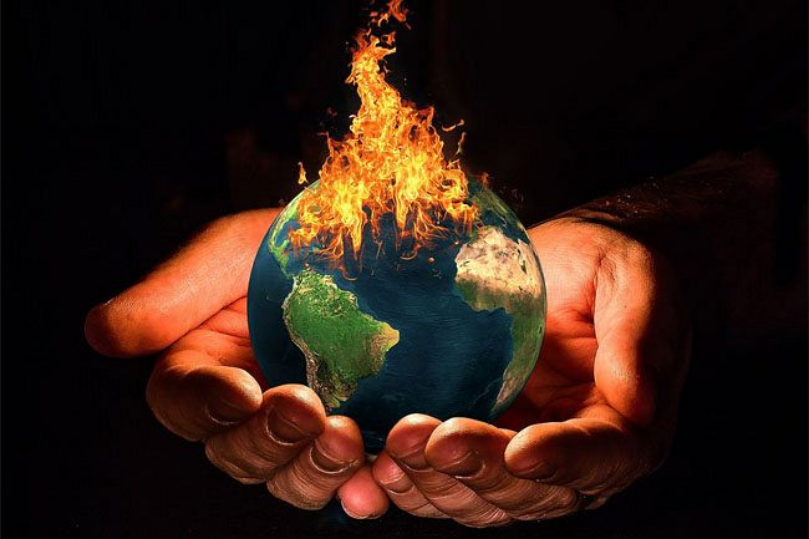
The ecological destruction and the poisoning of the population continue with the attacks by the U.S. and Israel on Iran, as well as with Iranian attacks on the Gulf states, writes Dr Klaus Moegling.
The current situation
The Iranian mullah regime is hostile toward its own people and obsessed with the idea of destroying Israel as a state.
Yet negotiations were underway that were aimed at defusing the nuclear and missile programs. Despite this negotiated solution, which was considered both possible and realistic, an attack was launched on 28 February 2026. Once again, a U.S. administration is destabilising the Middle East. The Israeli Government – which in parts is far-right extremist – stands by its side.
Both states are causing immeasurable suffering and exacerbating the situation of the already oppressed people in Iran. The military escalation between Israel and Iran, as well as Iran’s militant allies – Hamas, Hezbollah and the Houthis – is dragging the Middle East into yet another human and ecological catastrophe.
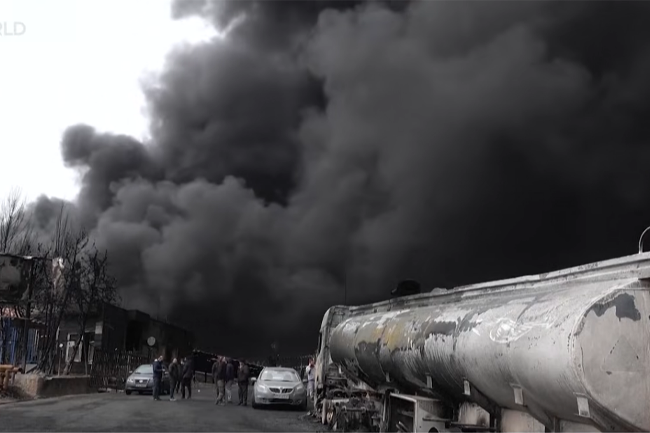
The Iranian regime, prepared for and organised to counter Israeli and U.S. attacks, launches counterattacks against the infrastructure of more than a dozen oil-producing nations. Oil refineries and oil fields go up in flames, polluting the air, causing acid rain, and poisoning the groundwater. The firefighting chemicals used to combat the numerous fires are also carcinogenic. The near-total destruction of the Iranian fleet led to the contamination of the sea with oil slicks.

Once again, thousands of people die from the direct impact of missiles, drones, cluster munitions and grenades. An entire region is forced to take constant refuge in bunkers and basements or flee the cities. The global economy is in crisis due to the already foreseeable blockade of the Strait of Hormuz for oil shipments. Gas, oil and gasoline prices are skyrocketing, and most stock market values are plummeting.
And all of this because a U.S. president lost patience and refused to wait for the largely existing outcome of negotiations.
Certainly, this was not merely a matter of Donald Trump’s lack of patience; behind it lay the Trump Administration’s domestic political motives, as well as the United States’ geostrategic and economic interests, and a mix of Israel’s imperialist and security policy motivations.
U.S. and Russian oil companies, as well as the international arms industry, are currently realising above-average returns and are the winners of this destruction.
The madness of ecological destruction in Iran, the Gulf States and the Gaza Strip
Journalist Angelique Chrisafis reports in The Guardian on apocalyptic conditions in Iran – and particularly in Tehran – following the attacks on Iranian oil storage facilities:
‘Iran’s environmental agency advised people in Tehran to stay indoors. The country’s Red Crescent said the toxic chemicals could lead to acid rain and hurt the skin and lungs, advising people to avoid turning on air conditioners or going outside immediately after rainfall. It also encouraged people to protect exposed food. Tehran’s governor recommended wearing masks outside.’
People are left to fend for themselves. There are hardly any masks or inhalers available.
But the Iranian regime, too, does not care about the ecological destruction and the associated health risks to the population, and it is deliberately targeting oil storage facilities and oil tankers belonging to Gulf states.
Journalist Susanne Aigner writes in Telepolis:
‘The toxic legacy of the burning oil tanks is already a warning to the world that the price of war could also be the destruction of our shared future. The consequences of the environmental disaster in Tehran will probably not be fully visible until the next few years. Because when the smoke will have warped, the poison will remain in the soil and water bodies and in the bodies of the people.’
Nor do we know what else to expect due to the ongoing attacks on Iran’s nuclear facilities and how much radioactive radiation this will cause.
Pat Elder, a U.S. journalist focused on peace and the environment, draws attention to another environmental problem: the massive use of toxic foaming agents to extinguish the numerous fires in Iran and the Gulf region. In Iran, firefighting agents containing the toxic aqueous film-forming foam (AFFF) would still be predominantly used:
‘AFFF is a delivery system for PFAS, linked to cancer, immune dysfunction, endocrine disruption, and developmental harm. The compounds travel with firefighting runoff, infiltrate soil, enter drainage systems, contaminate surface water, and move into wastewater streams. In a war involving repeated fires at petroleum and gas facilities, PFAS contamination will become a defining legacy of the conflict.’
The Trump Administration doesn't care at all about the environmental destruction and the health consequences for the population. It is threatening once again that if negotiations do not succeed on its terms during the ceasefire that is coming to an end, the U.S. military will destroy all bridges and power plants in Iran.
The Israeli Government’s response to Hamas’s brutal attack in Israel was completely disproportionate. The military retaliation in the Gaza Strip claimed approximately 70,000 lives — more than half of whom were women and children. In addition to the horrific suffering of the surviving Palestinians, this retaliation also caused catastrophic environmental destruction.
German journalist Marisa Becker speaks of an ecocide in Gaza — that is, the attempt to systematically destroy a population’s natural living conditions in order to annihilate their existence.
In this context, Becker refers to the United Nations Environment Programme (UNEP), which estimates the rubble pile to reach approximately 61 million tons by September 2025. This rubble is reportedly laced with unexploded ordnance, asbestos and chemicals. Untreated wastewater flows into the ground and into the sea unfiltered.
Furthermore, Becker cites documentation from the NGO Forensic Architecture: Approximately half of the wells in Gaza have been destroyed. Two-thirds of the water tanks are no longer usable; 83% of the vegetation has also been destroyed; 70% of agricultural land is no longer usable. Nearly half of the greenhouses have been destroyed.
The criminal offence of ecocide – a charge that is likely to be met in all three cases (Iran, Gaza, Ukraine) – refers to the systematic and deliberate destruction of the natural foundations of life as part of warfare. Certainly, the states involved – in addition to other war crimes – could be charged with ecocide before international courts. Yet the states involved do not recognise this jurisdiction, as they are well aware that they will be systematically violating the ecological integrity of the planet, international law and human rights.
Furthermore, the military is one of the largest global polluters, not only during military operations – in war – but also in its day-to-day military operations, in regions not yet affected by war. The global military can be regarded as one of the most dangerous institutional contributors to climate damage, causing massive harm even during normal operations.
One can assume that the climate damage caused by the normal global operations of the U.S. military is comparable to the greenhouse gas emissions of three medium-sized countries. It is estimated that routine military operations alone already account for 5.5% of global climate-relevant emissions. This figure does not yet include the ecological damage caused by wars.

Conclusion: Fossil fuels are a driving force behind war
The natural world ranks very low on the priority list of those who make decisions about war and peace. First, these warlords do not care about the natural world, and second, they also do not care that people (and animals) suffer as a result of the destruction of nature.
These decision-makers are completely detached from the planet’s ecology; they think in purely instrumental terms, and their priorities are power, oppression, oil, rare earths and money.
Perhaps humanity will not be able to defend itself against these obsessed rulers, but the planet will do so thoroughly in the medium term — and those who suffer the consequences will be all those who are not responsible for this.
Nevertheless, it is important not to give up and to do everything possible to ensure that things turn out differently. A peaceful and sustainably developed world is (still) possible.
The crisis in the global supply of fossil fuels triggered by wars holds – in addition to the negative consequences it causes – opportunities for an ecological shift toward the increased use of renewable energies.
The peace- and ecology-oriented journalist and author Franz Alt therefore writes in his article, ‘Sun and wind don’t need the Strait of Hormuz’:
‘One of the most crucial questions of the future is: war for oil or peace through the sun? The Iraq war, the Afghanistan war, the war over Venezuela and now the Iran war: all these wars were or are wars over fossil fuels. The sun and the wind are gifts of heaven. They are peace energies.’
Dr Klaus Moegling is a political scientist with a postdoctoral qualification and a university professor. He is the author of the book, Realignment: A peaceful and sustainably developed world is (still) possible), published open access.
 This work is licensed under a Creative Commons Attribution-NonCommercial-NoDerivs 3.0 Australia License
Support independent journalism Subscribe to IA.


Related Articles
- Who's making money? The arsenal trade after Ukraine and Iran
- Waning world order: Ethics in the age of great power politics
- Donald Trump and the Iran War path to madness
- American war strategy and the need for independence
- Iran War has exposed Australia’s vulnerabilities and misplaced priorities