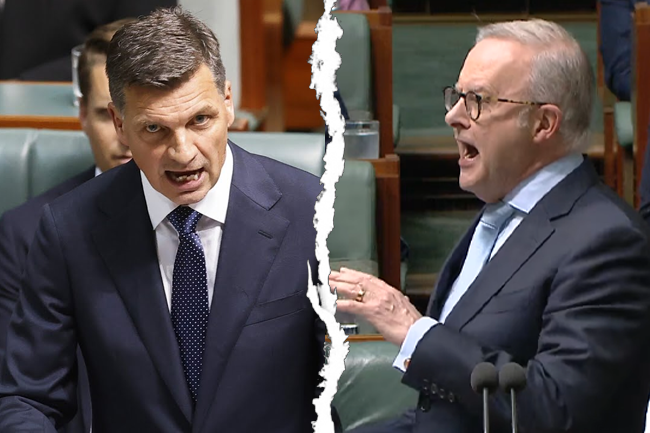
Parliament's culture of bullying, hostility and political theatre is driving young Australians away from democracy and discouraging the next generation of political leaders. Ethan Clements writes.
TWO WEEKS AGO, I watched Question Time from the Parliament's public gallery.
Question Time did not look like a robust political debate; it looked like a hostile workplace disguised as a spectator sport. As a 15-year-old watching the nation's highest office erupt into shouting matches and theatrical stunts, the message sent to my generation was utterly clear.
At the time, when political safety is increasingly at risk, with the attack on Independent MP Helen Haines and other threats against MPs, politics isn’t an environment that invites young people in with open arms. Instead, the current political landscape is bullying the next generation out of democracy before they even get a chance to vote.
In my classroom, if I shouted across the room or demanded that another student should be “stoned in the square”, I would receive lunch-time detention. Yet in Parliament, I witnessed a completely different playbook of behaviour. I saw politicians who young people are supposed to look up to personally insult, bully and belittle each other in a setting where Australians expect leaders to debate decisions which shape our lives.
Question Time is supposed to be a forum to challenge ideas, not turn hostility into a spectacle. When the people entrusted to lead our nation can’t even model these simple principles, what message does that send to young people watching at home?

The consequences extend beyond the walls of Parliament. Young people aren’t disengaged from politics; they are deterred by the political culture directly broadcast to our screens. When politics hits our social media feeds, it barely looks like governance — it looks like a circus.
We digest viral clips of MP Bob Katter screaming at reporters, saying “Don't say that! Because that irritates me, and I've punched blokes in the mouth for saying that”, along with PM Albanese telling the Opposition they’re “delulu with no solulu”. The list goes on.
All young Australians have heard these quotes and many of us repeat them. Not from admiration, but because we find their behaviour embarrassing. When the people running our country start to become increasingly more of a joke, it becomes harder to see public service as something to aspire to.
Young people have plenty of reasons to care about politics. From climate change to not receiving superannuation at their weekend job, to the price of the canteen food rising. Politics shapes our daily lives. But when our impression of our country's Parliament is that it doesn’t represent us, it's hard to see it as a place where our everyday problems can be solved.
Young people don’t care if the Prime Minister does a TikTok trend or reposts a meme; they care if they can afford to catch the bus to school tomorrow. Parliament is presented to young people as a pageant of suited men fighting, while the issues that affect them live far away from the hyper-theatrical spectacle.
That is the disconnect. Young Australians are expected to care about politics, but the institution responsible for shaping it can look more like a performance than a place where problems get solved.
Even when young people successfully beat the odds and enter the institution, the abuse waits for them at the door.
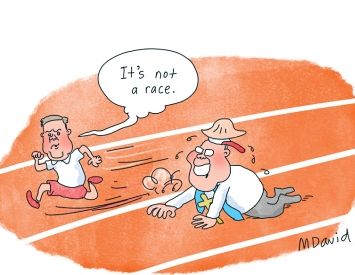
Senator Charlotte Walker is currently 22 years old. She is the youngest elected senator in Australia’s history. She’s an extraordinary example of youth representation in politics.
When Walker is not representing young people in Parliament, she’s had to face head-on many personal attacks that a 22-year-old should never have to endure.
In Senator Pauline Hanson's parody cartoon series ‘Please Explain’, Pauline has dismissed Charlotte’s climate advocacy by condescendingly stating she’s a toddler. She’s also received sexist remarks directed towards her such as ‘get back in the kitchen’ and ‘go and make me a sandwich’.
Charlotte responded to these sexist comments and personal critiques by saying they’re just the job and ‘that’s politics’.
When the youngest leader in our country shrugs her shoulders and accepts bullying and systemic misogyny as a normal workplace condition, it sends a terrifying message to young Australians. If you want to serve your country, you have to willingly volunteer to be a human punching bag.
The real issue isn't just that politicians face abuse. It’s that this behaviour becomes normalised as an unavoidable part of public service. Young Australians who want to run for office shouldn’t be weighing up between representing their community and the personal cost of lifetime psychological damage.
Imagine looking a Year 6 child who dreams of becoming the Prime Minister in the eye, and communicating that enduring psychological abuse and harassment would be a part of their morning routine.
The current reality is, if you want to make an impact in this country, you have to accept the cost of admission to enter politics. This must change to sustain the pipeline of Australia's democratic future.
Parliament owes us an environment where leadership is measured by substance, not shouting matches. If our current leaders want a generation of bright minds to step up into politics, they must stop treating the people's house like a blood sport.
Ethan Clements is a 15-year-old writer covering politics and current affairs from a youth perspective.
 This work is licensed under a Creative Commons Attribution-NonCommercial-NoDerivs 3.0 Australia License
Support independent journalism Subscribe to IA.