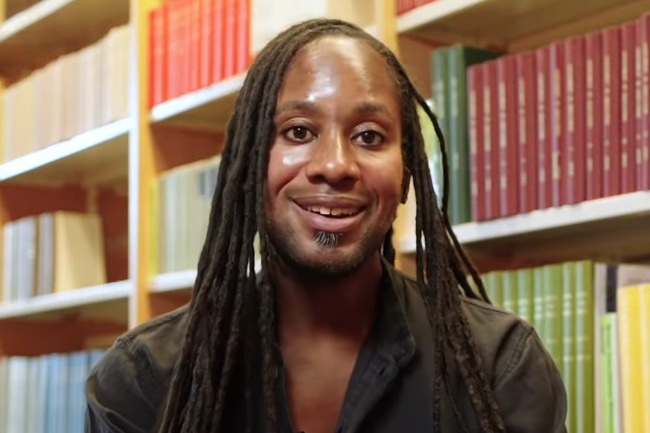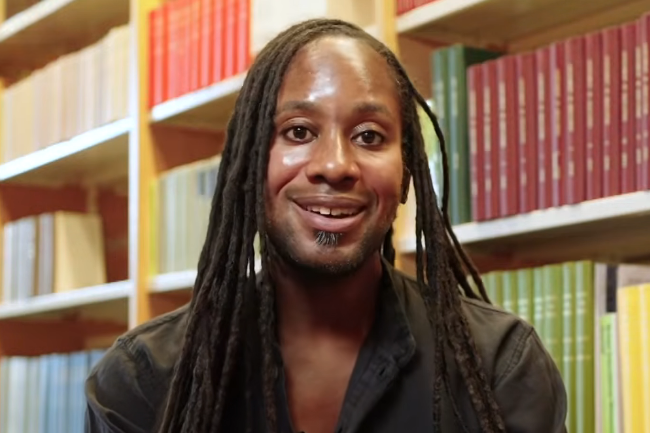
Jason Arday’s death exposes how institutional racism, media complicity and far-right ideology combined to fuel a devastating campaign against him, writes Dr Victoria Fielding.
THE DEATH OF Professor Jason Arday is not just a personal tragedy; it is a multi-institutional scandal.
The disproportionate pile-on that Arday experienced in the weeks before he took his own life and the lack of public institutional support he received demonstrate once again that White-majority institutions would prefer to contribute to racist campaigns against minority groups rather than call those racist campaigns out.
In 2023, Arday was appointed as a professor of sociology of education at Cambridge. This appointment made him the youngest Black professor to ever be appointed at the university. With his PhD conferred in 2015, Arday had a meteoric rise to professorship in only eight years post-PhD.
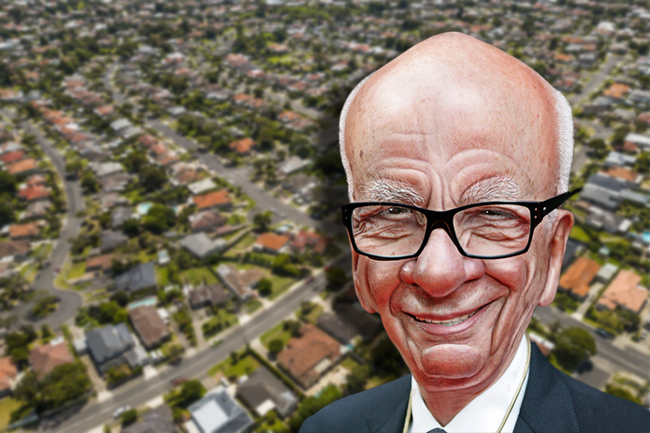
In July 2026, another academic, Nathan Cofnas, published a Substack piece titled DEI Fraud and Cover-Up at Cambridge: University refuses to investigate DEI star’s plagiarism. Cofnas had completed his PhD at Oxford in 2020 and worked as an early career research fellow at Cambridge from 2022 to 2024, when he was fired for authoring a racist blog post.
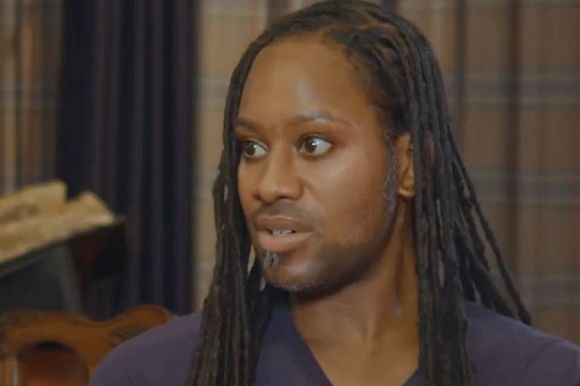
As a longtime proponent of “scientific racism” – in other words, trying to use science to justify racism – Cofnas has demonstrated a controversial history of opposition to diversity, equity and inclusion (DEI) initiatives which seek to redress the structural inequality of institutions like academia.
Cofnas’s opposition to DEI centred on the racist argument that Black people (and no doubt other minorities subject to DEI efforts historically, including women) are not hired on merit, but are only given positions based on their minority status.
In the blog post that led him to be fired from Cambridge, Cofnas claimed that without DEI, ‘Blacks would disappear from almost all high-profile positions outside of sports and entertainment’. You read that right. Cofnas argues that Black people are innately lacking the acumen and intelligence to win high-profile positions on their merit and thus are only appointed to these positions because they are gifted them by institutions working to fulfil DEI targets.
This argument is inherently racist. In making accusations of plagiarism against Arday, Cofnas was not just claiming that Arday was not appointed as a professor at Cambridge on merit, but went further than that, claiming that almost no Black person has the merit to become a professor at Cambridge or anywhere else.
To fully understand the scope and magnitude of the racism inherent in this argument, I recommend reading this Substack piece by Postmodern Iconoclast. Professor Bronwyn Carlson also authored a piece titled ‘Hunted’ which describes how the same “racist architecture” which led to Arday’s resignation from Cambridge and his suicide is also wielded against Australian Indigenous academics.
The racist core of the campaign against Arday by Cofnas was not one of a single academic criticising the credentials of another, but rather was one episode in a larger racist campaign being waged by the Far-Right across the world, cheered on by Trump and his MAGA movement and all other far-right parties across the globe.
This campaign should be the subject of widespread media reporting, demonstrating its controversial and scandalous nature, and calling out the racism inherent in it. Yet, instead of focusing on this, major and minor news organisations, and social media commentary, contributed to the racist hunt against Arday, legitimising it and giving it far more proportional coverage than an academic integrity story deserved.

Amongst all this hyperbolic coverage of Arday, the plagiarism accusations made against him were hyped to the status of a major crime, and the questions about his background were used to characterise him as a liar and a fantasist. I want to make clear at this point that it is absolutely unethical to take sections of other people’s work and present them as your own, as Arday was accused of doing in his PhD thesis. If Arday really did exaggerate and stretch the story of his life experiences beyond the facts, this is also not ideal.
Yet neither of these allegations – plagiarism and aggrandising – deserved the degree of press coverage they elicited, akin to an international crime. There was no public interest in joining this pile-on, no matter what The Guardian argues in the wake of their involvement. The public interest, on the other hand, would better have been served by exposing the racism that drove the hunt that led Arday to such despair that he died by suicide.
And that brings me to one element of this story which does not seem to have been considered by those who joined in the pile-on. Where journalists were more than happy to accept Cofnas’s accusations that Arday did not deserve his academic post, none of them appears to have investigated exactly what Arday’s academic achievements were. They also have not compared them to Cofnas’s.
A simple way to measure academic achievement is to look at the number of times an academic has been published and the number of times those publications have been cited. It’s important to note that peer review is performed anonymously, so every time Arday and Cofnas publish in academic journals, they do so on the merit of their research and arguments. Citations accrue because scholars deem work to be worthy of mention; thus, they are a crude assessment of the impact of scholarly contributions to the field.
In Arday’s case, his Google Scholar profile demonstrates that he has been a prolific publisher since 2018, publishing 81 pieces, mostly academic and some non-academic in the past nine years. These 81 pieces have been cited 2,886 times. An h-index measures how many publications have more than ten citations. Arday’s h-index is 21.
To give a sense of the type of research Arday was contributing to the field, a book he authored in 2018 with British academic Heidi Safia Mirza, published by Palgrave Macmillan, is titled Dismantling race in higher education: Racism, whiteness and decolonising the academy. This book has been cited 624 times, which is a large impact in a short time.
This example demonstrates that Arday’s academic research critiqued power and worked to further equality in education and is having a huge impact in doing so. This impact helps to explain why Arday was hunted by Cofnas and was subject to a press pile-on. He was not just a decorated Black academic, but he was also challenging White hegemony.
On the other hand, Cofnas, who is now at Ghent University in Belgium, has a solid academic record, but not one that outshines Arday’s. Cofnas has 22 publications since 2016, 691 citations and an h-index of 11.
Cofnas' academic journey as an activist for scientific racism has not been smooth sailing. According to his Wikipedia page, in 2019 Cofnas published a paper in Philosophical Psychology calling for more study of race and intelligence. This paper was met by a joint letter to the journal by nine academics criticising its ‘faulty methodology’ and its ‘racist ideological undertones’. A note later published in the journal acknowledged flaws in the peer review process that contributed to the paper being accepted.
Cofnas’s own colleagues at Ghent’s philosophy department have also raised concerns about whether merit selection processes were adequately adhered to in his appointment, saying in a statement:
‘We find it very improbable that Nathan Cofnas was the best out of 14 candidates... We observe only very limited expertise regarding the subjects that are central to the project: political philosophy, liberalism and demography.’
When Cofnas attacked Arday and Cambridge launched an investigation, while media of all partisan stripes joined the pile-on, it is understandable why Arday felt there was no one on his side. Meanwhile, Cofnas is suspended and under investigation by Ghent, but does not need to fight alone. U.S. Ambassador to Belgium and Trump ally Bill White said because of the suspension and ‘scapegoating’ of Cofnas, the Trump Administration would be ‘reviewing any relationships we have with Ghent University’.
This is more than having friends in high places. This is institutional racism being waged by some of the most powerful people in the world. When the media think this institutional racism is unremarkable and the story is whether a single Black academic was worthy of his job, they are showing they are more interested in perpetuating racism than challenging it. Shame on them.
Dr Victoria Fielding is an Independent Australia columnist. You can follow her on Threads @drvicfielding or Bluesky @drvicfielding.bsky.social.
 This work is licensed under a Creative Commons Attribution-NonCommercial-NoDerivs 3.0 Australia License
Support independent journalism Subscribe to IA.